How to Verify EUDAMED Registration for Orthopedic Power Tools requires more than checking whether a company name appears online. A reliable review follows the device’s complete regulatory trail. Confirm the manufacturer’s Single Registration Number, the authorised representative’s details, and the relevant Basic UDI-DI. Then compare the UDI-DI, model name, intended purpose, and risk classification with the technical documentation. Small mismatches matter.
“Regulatory confidence comes from traceability, not from a single database entry,” says Erik Vollebregt, a European medical-device regulatory lawyer. His observation captures the practical challenge. EUDAMED information should be checked against certificates, declarations, registration records, and official manufacturer evidence. Do not rely on a supplier’s screenshot alone.
For orthopedic power tools, verification should also consider handpieces, batteries, chargers, attachments, and sterile accessories. These items may follow different identification or conformity pathways. Check whether the tool is sold as a system or as separate devices. Review notified-body details where applicable. Confirm certificate scope, expiry dates, and the manufacturer named on each document. Keep dated copies of your checks.
The process is not perfectly simple. EUDAMED availability, transitional provisions, and national implementation practices can create uncertainty. A database result may look complete while supporting evidence remains outdated. That is where professional judgment matters. Record every unresolved point, request clarification, and escalate high-risk gaps to a qualified regulatory professional. The safest answer is sometimes, “Evidence is incomplete.” This 2026 guide explains a practical, evidence-led method for making that decision.
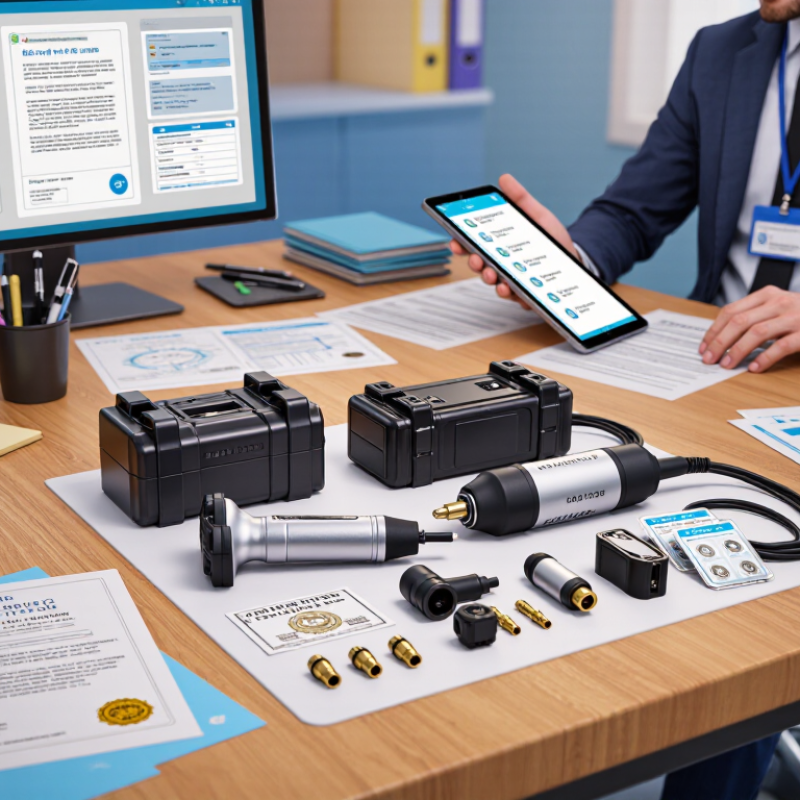
For orthopedic power tools, EUDAMED verification begins with scope, not a database search. MDR 2017/745 connects six modules: Actor Registration, UDI/Device Registration, Notified Bodies and Certificates, Vigilance, Clinical Investigations and Performance Studies, and Market Surveillance. Each module answers a different compliance question.
Confirm the legal manufacturer, authorised representative, and importer in Actor Registration. Check the Basic UDI-DI, UDI-DI, device status, risk class, and intended purpose in the UDI module. A powered handpiece, attachment, battery, and software may require separate assessments. Do not assume they share one registration. Classification depends on intended use, duration, invasiveness, and surgical risk. That review often needs technical judgment.
Examine the certificate scope and notified-body details, including applicable device families and expiry information. Then compare complaints, serious incidents, trend reports, and corrective actions with the Vigilance records. Clinical investigation data may matter when the tool introduces a new surgical function or lacks sufficient clinical evidence. Market Surveillance supports authority-led checks after placement. A green database entry is not proof of conformity. I would retain screenshots, UDI evidence, certificates, and decision notes with clear dates. Even a careful spreadsheet can miss a changed device status. Human review remains necessary in 2026.
| EUDAMED Module | Primary Regulatory Purpose | 2026 Scope and Status | Relevant Data for Orthopedic Power Tools | Verification Checks | Typical Evidence or Record |
|---|---|---|---|---|---|
| 1. Actor Registration | Identifies economic operators and other regulated actors that participate in the medical-device supply chain. |
Mandatory milestone: 28 May 2026 This is one of the first four EUDAMED modules covered by the 2024 EU legislative changes and the related functionality notice. |
Manufacturer, authorised representative, importer, and, where applicable, system or procedure-pack producer associated with the device. |
|
EUDAMED actor record, SRN, mandate information, and documented responsibility assignments. |
| 2. UDI and Devices Registration | Creates the central device record and links the device to its Basic UDI-DI, UDI-DI, intended purpose, classification, and essential regulatory attributes. |
Mandatory milestone: 28 May 2026 This module is part of the first four modules subject to mandatory use under the applicable EUDAMED transition framework. |
Reusable orthopedic drills, saws, reamers, powered handpieces, controllers, batteries, chargers, and dedicated accessories, where they qualify as medical devices or device accessories under the MDR. |
|
Basic UDI-DI, UDI-DI, EMDN code, device classification, intended purpose, UDI carrier specification, label artwork, and technical documentation. |
| 3. Notified Bodies and Certificates | Provides information about designated conformity-assessment bodies and certificates issued under the MDR and related legislation. |
Mandatory milestone: 28 May 2026 This is one of the first four modules included in the 2026 mandatory-use milestone. |
The applicable MDR conformity-assessment route for the tool and its accessories, depending on intended purpose, classification, sterile status, measuring function, and other relevant characteristics. |
|
MDR certificate record, notified-body identification, certificate scope, declaration of conformity, and applicable conformity-assessment documentation. |
| 4. Clinical Investigations and Performance Studies | Supports transparency and regulatory oversight of clinical investigations for devices and performance studies for in vitro diagnostic devices. |
Not part of the first four-module 28 May 2026 milestone The module remains part of EUDAMED’s six-module architecture; mandatory-use timing depends on the applicable legal implementation and functionality notice. |
Clinical investigations involving orthopedic power tools, powered surgical accessories, or new intended purposes requiring clinical evidence under the MDR. |
|
Clinical investigation application or record, investigation plan, ethics and competent-authority documentation, clinical evaluation, and final report. |
| 5. Vigilance | Supports reporting and analysis of serious incidents, field safety corrective actions, and relevant safety signals. |
Not part of the first four-module 28 May 2026 milestone Vigilance obligations under the MDR continue to apply independently of the timing of mandatory EUDAMED module use. |
Serious incidents involving overheating, unexpected shutdown, loss of cutting or drilling performance, battery failure, electrical safety problems, breakage, contamination, or injury during orthopedic procedures. |
|
Serious-incident report, field safety notice, corrective-action record, investigation file, trend analysis, and updated risk-management documentation. |
| 6. Market Surveillance | Enables competent authorities to coordinate market-surveillance activities and exchange information about devices and economic operators. |
Mandatory milestone: 28 May 2026 Market Surveillance is included among the first four EUDAMED modules covered by the 2026 mandatory-use milestone. |
Regulatory inspection, sampling, safety notices, non-compliance findings, recalls, corrective actions, and supply-chain information for orthopedic power tools and accessories. |
|
Market-surveillance record, inspection correspondence, sampling result, recall or corrective-action notice, distribution traceability file, and closure evidence. |
| 2026 verification principle: For an orthopedic power tool, begin with the Actor Registration, UDI and Devices Registration, Notified Bodies and Certificates, and Market Surveillance modules because these are the four modules associated with the 28 May 2026 mandatory-use milestone. Clinical investigation and vigilance information remains relevant to MDR compliance, but its EUDAMED mandatory-use timing follows the applicable implementation provisions. EUDAMED data should always be reconciled with the device label, declaration of conformity, technical documentation, certificate scope, post-market surveillance plan, and traceability records. | |||||
Its intended purpose, energy output, invasiveness, and surgical application determine the classification. Appearance alone is insufficient.
It may qualify as Class I when manually controlled and safely reusable. Powered operation usually requires deeper review.
Class IIa may apply to transient surgical use without a potentially hazardous energy profile.
Class IIb becomes more likely when energy could seriously injure tissue. Speed, power density, and treatment location matter.
Yes, but this is uncommon for the power unit alone. High-risk functions or implantable connections may increase the classification.
No. A battery, console, attachment, or accessory may need separate classification analysis.
Review the intended-purpose statement, risk records, clinical evidence, UDI details, and conformity assessment route.
Check the SRN, legal entity, address, registration status, and related device records in the official database.
Compare the notified body number, scope, certificate reference, issue date, expiry date, and surveillance status.
Keep dated screenshots, certificate copies, contact records, and unresolved questions. Small model-number differences deserve attention.
This guide explains How to Verify EUDAMED Registration for Orthopedic Power Tools in 2026 by applying a structured review under the MDR 2017/745 framework. It begins by identifying which of EUDAMED’s six modules are relevant and then classifying each tool as Class I, IIa, IIb, or III according to its intended purpose, risk, and applicable rules. The classification determines the depth of registration, conformity assessment, and documentation checks required.
The process then matches each product’s Basic UDI-DI, UDI-DI, and EMDN records to ensure consistent identification across technical and regulatory files. It also cross-checks the Single Registration Number, notified body information, CE status, and certificate validity dates. Finally, the guide reviews MDR vigilance readiness, including procedures for meeting applicable two-, ten-, and fifteen-day reporting deadlines, helping organizations maintain accurate records and respond promptly to safety-related events.

