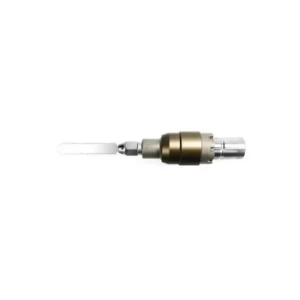
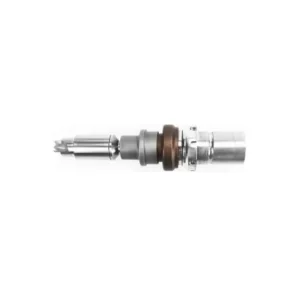
Pre-qualified medical handpieces engineered for orthopedic trauma, joint arthroplasty, and general osteotomy procedures with standardized autoclave sterilization resilience.
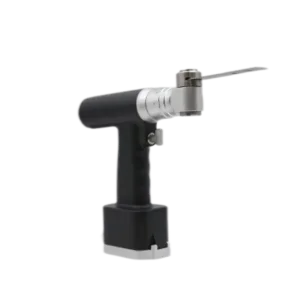

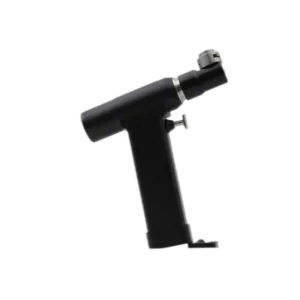




In high-throughput surgical environments, hospital procurement boards, international distributor consortia, and military medical supply commands evaluate power tools not merely on unit cost, but through the rigorous lens of Total Cost of Ownership (TCO), sterilization resilience, and mechanical dependability.
While brushless architectures dominate ultra-premium continuous-use surgical segments, verified carbon-brush motor systems provide an unbeatable capital efficiency ratio. Hospital networks procuring regional tender kits reduce acquisition CAPEX by 35% to 55% while maintaining surgical cutting torque up to 16 N·m and precision variable speed trigger control (0–1,200 RPM).
Government healthcare tenders across EMEA, Latin America, and Southeast Asia demand stringent compliance documentation. SNK ensures every carbon motor handpiece is cataloged under CE-MDR (EU) 2017/745 Class IIa/IIb rules with comprehensive technical files, biocompatibility dossiers (ISO 10993), and risk assessment records (ISO 14971).
Unscheduled OR downtime costs medical facilities thousands of dollars per hour. Procurement teams deploying SNK carbon motor systems benefit from standardized drive shafts, universal quick-coupling chucks (AO, Jacobs, Hudson, and Zimmer styles), and hot-swap battery enclosures across all bone drill and oscillating saw handpieces.
From decentralized emergency field hospitals to dedicated regional trauma centers, carbon motor power tools provide the mechanical robustness and operational flexibility required across distinct clinical disciplines.
During intramedullary nailing and external fixation, cannulated carbon-motor drills provide steady low-speed, high-torque feed without stall. The high-capacity cannulated shaft (φ 4.2–4.5 mm) easily accommodates Kirschner wires and Steinmann pins under dynamic fluoroscopic guidance.
Total knee (TKA) and total hip (THA) replacements require uniform osteotomy surfaces. The NS-1511 and NS-1011 oscillating saws deliver over 12,000 oscillations per minute with blade deflection under 0.03 mm, preventing unintended micro-fractures in cancellous bone beds.
In mobile surgical units and austere combat casualty stations, sensitive electronic brushless sensors are vulnerable to high humidity and unregulated generator surges. Carbon-brush commutator systems operate on raw DC voltage with zero sensor failure risks.
High-volume veterinary referral centers handling canine cranial cruciate ligament repairs (TPLO) and fracture osteosynthesis select carbon-motor systems for their superior ROI, rapid turn-around times, and dependable mechanical torque curves under variable load.
| Evaluation Parameter | SNK Medical Carbon-Brush Series | Brushless Motor Systems | Pneumatic Surgical Drills |
|---|---|---|---|
| Initial Capital Outlay | Optimal Economy (Baseline) | +60% to +120% Premium | +40% + Central Compressor Piping |
| Sterilization Validation | Steam Autoclave 134°C / EO / Plasma | Steam Autoclave 134°C / EO / Plasma | Steam Autoclave (Requires Lubrication) |
| Electronic Complexity | Direct Commutation / Pure Analog Trigger | Hall Sensors + Inverter Board | Zero Electronics (Air Vanes) |
| Field Repairability | High (Modular Brush Replacement) | Low (Factory Recalibration Required) | Moderate (O-Ring Replacement) |
| Thermal Rise at Cut Site | < 2.5°C with Fluid Irrigation (ISO 6475) | < 2.0°C with Fluid Irrigation | < 1.8°C (Self-Cooling Exhaust) |
A granular engineering deep-dive into the mechanical and electrical innovations that elevate modern surgical carbon motors above commercial grade commutated tools.
Ordinary carbon brushes deposit conductive dust that damages surgical windings. SNK incorporates custom electrographitic carbon impregnated with 15–20% micronized silver. This composite ensures lower electrical contact resistance, self-passivating brush wear, and zero particulate migration into the sterile handpiece channel.
Repetitive steam exposure at 134°C with 2.2 bar pressure forces moisture past conventional O-rings. Our engineering architecture utilizes high-fluorine fluoroelastomer (FKM) quad-rings paired with a pressurized stainless labyrinth barrier, preventing moisture ingress into the commutator chamber across 200+ autoclave runs.
Dynamic runout at 12,000 RPM causes surgeon hand fatigue and osteonecrosis from thermal friction. SNK armatures are dynamically balanced on dual-plane Schenck balancing rigs, achieving ISO 1940 Grade G1.0 balancing with concentricity deviation held below 0.015 mm.
SNK Medical R&D is currently executing a phased technological enhancement roadmap designed to further extend the operational lifespan and clinical capabilities of carbon-motor driven surgical instruments:
A tour of our Shanghai manufacturing facility: from ISO Class 7 cleanroom packaging to multi-axis CNC micro-machining and rigorous DIN 13972 drill precision verification.
Operated by Snaikang Technology Development Co., Ltd., our 16 automated production lines produce over 38,000 surgical sets annually. Every single stage—from rotor winding, commutator micro-welding, and dynamic torque calibration—is controlled under strict medical device QMS protocols.
Our in-house clinical precision laboratory evaluates bone drill concentricity, chuck axial runout, and thermal escalation during continuous load cycles. Trauma drill torque output is guaranteed to deviate by less than ±1.5%, vastly exceeding the ±3.2% global industry standard.
With more than 200 ready-to-dispatch backup orthopedic tool sets maintained in climate-controlled buffers, our logistics hub supports rapid dispatch: emergency surgical replacement kits are shipped within 24 hours, with regional warehouse response under 48 hours for Europe and 24 hours for Asia-Pacific.
Empowering medical distributors worldwide with localized technical files, registration dossier assembly, and comprehensive post-market surveillance (PMS) data.
Entering national healthcare tenders requires comprehensive administrative files. SNK supplies accredited test summaries, biological evaluation reports (ISO 10993 series), usability engineering files (IEC 62366), and localized bilingual Instructions for Use (IFU).
For orthotics, fixation plate manufacturers, and international brand owners seeking complementary power tools, our flexible manufacturing process delivers complete OEM programs within 3 weeks, including custom laser housing markings, customized anodized finishes, and sterile blister packaging.
We provide biomedical maintenance teams with dedicated video modules, exploded CAD schematics, and calibrated torque-screwdriver toolkits to support in-hospital preventive maintenance, commutator inspection, and spring-tension verification.
In-depth responses curated for hospital purchasing directors, operating room managers, and medical device distributors.
Carbon-brush motors offer a mature, direct-drive electro-mechanical architecture that avoids fragile sensor electronics and costly microinverters. In public tenders, emergency field hospitals, and secondary health centers, carbon motor tools provide an optimal acquisition cost (saving 35% to 55%), robust resistance to power grid variations during battery charging, and simple field repairability. Their torque output remains exceptionally linear and dependable for trauma fixation and general osteotomies.
Bone thermal necrosis occurs when temperatures exceed 47°C for more than one minute. SNK carbon motor systems are engineered with high-efficiency silver-graphite commutation that reduces internal heat buildup. Coupled with heat-dissipating aerospace aluminum alloy housings and precision-ground saw teeth with optimized chip clearance, cutting site temperature rise is maintained below 2.5°C under continuous saline irrigation in compliance with ASTM F2180 guidelines.
All SNK carbon motor surgical power tool handpieces (excluding non-autoclavable battery packs, which use aseptic transfer shields) are fully validated for repeated steam autoclave sterilization at 134°C (273.2°F) at 2.2 bar pressure for 4 to 18 minutes. They are also certified for Ethylene Oxide (EO) and Low-Temperature Hydrogen Peroxide Gas Plasma sterilization cycles. Transmission error remains under 0.03 mm even after 200 high-temperature, high-pressure cycles.
Under normal hospital surgical schedules (averaging 3 to 5 procedures per day), our specialized high-density silver-graphite brushes provide an operational life exceeding 450 continuous operating hours. For most clinical institutions, this translates to an inspection interval of 12 to 18 months. Brush inspection and replacement can be performed by in-hospital biomedical engineering staff in under 5 minutes using the external access ports.
Yes. SNK designs universal quick-coupling interfaces. Our handpieces accommodate industry-standard connection geometries including AO Large & Small Synthes types, Jacobs tapered chucks, Hudson fittings, Zimmer drive adapters, and standard sagittal saw keyless collets, allowing seamless integration into existing hospital instrument trays.
Shipments are accompanied by an authenticated CE-MDR Declaration of Conformity (DoC), ISO 13485:2016 factory certificates, batch-specific autoclave and torque inspection reports, Certificate of Origin (COO), Free Sale Certificate (CFS), and localized multilingual IFUs. Complete 510(k) and STED technical dossiers are available for local Ministry of Health registration.
Complete your surgical theater configuration with certified cannulated systems, cranial access adapters, reaming attachments, and bone resection tools.