China Best Orthopedic Devices CE MDR vs MDD Guide?

Time:2026-10-13 Author:Isabella
0%

China’s orthopedic device market offers implants, fixation systems, and surgical instruments for hospitals worldwide. Yet product quality is only one part of importer responsibility. Regulatory evidence matters just as much.

CE-MDR vs. MDD: What Orthopedic Device Importers Need to Know explains the practical differences between the Medical Devices Regulation and the former Medical Devices Directive. Importers must examine the manufacturer’s technical documentation, clinical evaluation, risk management file, and post-market surveillance plan. They should also verify the notified body, declaration of conformity, UDI details, labeling, and implant-card requirements. Small inconsistencies can delay customs clearance or hospital approval.

“The implementation of the MDR remains a major challenge for the medical technology industry,” said Serge Bernasconi, former CEO of MedTech Europe. His observation remains relevant for orthopedic importers assessing Chinese suppliers. An MDD certificate alone may not prove current MDR compliance. Transitional provisions can apply, but eligibility depends on the device, certificate status, and documented conditions. Check carefully.

A reliable importer does more than collect certificates. They compare the certificate scope with the exact product model, material, intended use, and packaging label. For an orthopedic implant, that means checking details such as titanium grade, sterilization method, shelf life, and clinical evidence. A polished certificate package can still hide gaps. Reality is less tidy.

This guide offers a practical framework for supplier due diligence, documentation review, and risk-aware purchasing decisions. It does not replace advice from a qualified regulatory professional or the relevant competent authority.
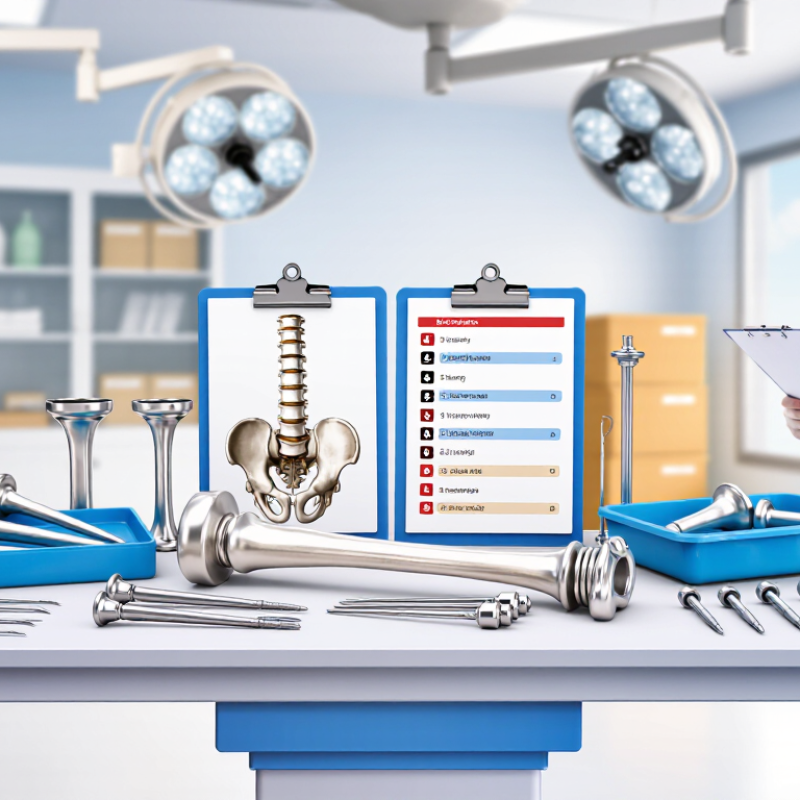
China Best Orthopedic Devices CE MDR vs MDD Guide?

What CE Marking Means for Orthopedic Devices Made in China

CE marking is not a “Made in China” quality label. It shows that an orthopedic device meets European Union safety, performance, and clinical requirements. For Chinese manufacturers, the same rules apply as for European manufacturers. Under the Medical Device Regulation (MDR), many implantable orthopedic products are classified as Class IIb or Class III. Their technical files need stronger clinical evidence, risk controls, post-market surveillance, UDI, and traceable economic operators.

The Medical Device Directive (MDD) was less demanding in several areas. However, some MDD-certified devices may continue under transitional rules until 2027 or 2028, if specific conditions are met. This is not an automatic extension. The European Commission’s 2024 MDR monitoring data shows a continuing certification workload, while MedTech Europe’s 2024 Facts & Figures report values Europe’s medical technology market at more than €160 billion. These figures show why regulatory planning matters. In practical reviews, a polished file can still fail when clinical claims lack implant-specific evidence. That gap is easy to underestimate.

Tips: Map each product claim to clinical data before selecting a conformity route. Confirm the device classification early. Keep design history, sterilization records, supplier controls, and complaint files consistent. An experienced EU regulatory consultant or notified body can identify missing evidence, but the manufacturer remains responsible for accuracy.

One more reflection: translation quality is often treated as administrative work. For orthopedic devices, one unclear warning can change clinical meaning.

How the EU MDR Differs from the Former MDD

For orthopedic devices entering Europe, the EU Medical Device Regulation (MDR) is not simply an updated version of the former Medical Device Directive (MDD). MDR creates a more demanding compliance system. It applies stronger clinical evidence requirements, clearer device classification rules, Unique Device Identification, and deeper post-market surveillance. For implants, manufacturers may need long-term clinical data and post-market clinical follow-up. Under MDD, technical files often received greater attention than continuing clinical performance.

MDR also increases responsibilities for manufacturers, importers, distributors, and the person responsible for regulatory compliance. Notified body involvement can become more detailed, especially for higher-risk orthopedic products. Existing MDD certificates may benefit from limited transitional provisions, but only when specific conditions are met. They should not be treated as permanent approvals. In practice, some teams underestimate the work needed to update clinical evaluations, risk management files, labeling, and surveillance plans. That mistake can delay market access.

Tips: Build an MDR gap assessment around each device, not only the product family. Check implant duration, intended anatomy, clinical claims, and applicable common specifications. Keep evidence traceable from design inputs to clinical conclusions. Review supplier records and complaint trends regularly. A checklist helps, but it cannot replace technical judgment. Requirements can also change during a project, so periodic review remains necessary.

EU MDR vs MDD: Key CE Compliance Timeline for Orthopedic Devices

The Medical Devices Regulation (EU) 2017/745 replaced Directive 93/42/EEC and introduced broader, more detailed requirements for medical devices placed on the EU market.

MDD framework
Directive 93/42/EEC was adopted in 1993 and formed the principal EU framework for general medical devices before the MDR became applicable.
MDR framework
Regulation (EU) 2017/745 entered into force in 2017 and became applicable on 26 May 2021, with expanded clinical, post-market surveillance, traceability and safety requirements.
Orthopedic device impact
Manufacturers should reassess classification, clinical evidence, technical documentation, UDI obligations, PMS planning and the role of the notified body under the MDR.

How Orthopedic Devices Are Classified Under the EU MDR

Under the EU MDR, orthopedic device classification begins with the manufacturer’s intended purpose. A bone plate, trauma screw, or joint implant is not classified by appearance alone. Regulators examine invasiveness, contact duration, implantation site, active functions, and whether the device is sterile or measuring.

Non-invasive supports may fall under Class I when they present limited risk. Surgically invasive instruments can be Class I if they are reusable and properly controlled. Temporary surgical devices often reach Class IIa, while long-term implants generally become Class IIb. Total or partial hip, knee, and shoulder replacement systems are usually Class III. Spinal disc implants and devices contacting the spinal column also require Class III classification. Small differences matter.

The MDR demands a closer review than the former MDD framework. A manufacturer should map every component to its intended purpose, including screws, plates, wedges, and delivery instruments. Some ancillary parts may follow different rules from the primary implant. Clinical evidence must reflect real surgical use, patient anatomy, expected duration, and foreseeable complications. Post-market surveillance also supports the classification decision.

A practical warning: classification is not always obvious. Experts can disagree when a device combines fixation, drug delivery, and diagnostic functions. The safest approach is to document the reasoning, test alternative rules, and seek qualified regulatory review before preparing the conformity assessment. Mistakes here can delay certification. They can also weaken clinical credibility.

China Best Orthopedic Devices CE MDR vs MDD Guide? - How Orthopedic Devices Are Classified Under the EU MDR

Orthopedic Device Category Typical Intended Purpose Typical MDD Class Typical MDR Class Relevant MDR Classification Rule Key Compliance Implication
External orthopedic supports and braces Non-invasive support, stabilization, protection, or limitation of movement of a limb or joint Class I Usually Class I Annex VIII, Rule 1, unless the device has a higher-risk function or is supplied sterile or with a measuring function Self-declaration may be possible for ordinary Class I devices. A notified body is required for the applicable sterile or measuring aspects.
Plasters, dressings, and orthopedic wound-care products Protection, compression, or management of wounds associated with orthopedic treatment Class I or IIa Class I or IIa Rules 1, 4, or 14, depending on whether the product manages a wound, contains a medicinal substance, or has another active function Classification depends on the principal mode of action, contact with damaged skin, and any medicinal or biological substance.
Reusable orthopedic surgical instruments Cutting, drilling, grasping, retracting, or otherwise assisting surgery without connection to an active device Class I Class I Annex VIII, Rule 6 The manufacturer generally self-declares the device class, while a notified body assesses the aspects related to reuse, cleaning, disinfection, sterilization, maintenance, and functional testing.
Temporary orthopedic fixation pins, wires, or external fixation components Temporary stabilization of fractured or surgically treated bone Usually Class IIa Usually Class IIa Rule 7 for short-term surgically invasive devices; Rule 6 may apply to transient use The duration of contact, anatomical site, intended mechanical function, and whether the device is absorbable or biologically active must be documented.
Bone plates, screws, nails, and fixation systems Internal stabilization and alignment of fractured or surgically treated bone Class IIb or III Usually Class IIb Rule 8 for implantable or long-term surgically invasive devices; Rule 7 may apply where the intended use is short-term Under the MDR, orthopedic fixation implants are generally Class IIb unless another rule triggers Class III, such as absorbability, a drug-like biological effect, or direct contact with specified critical structures.
Total or partial joint replacement implants Replacement or functional restoration of a hip, knee, shoulder, or other joint Class IIb or III Class III Rule 8 specifically classifies joint replacement devices as Class III A comprehensive clinical evaluation, clinical investigation or equivalent clinical evidence, risk management, biocompatibility evidence, and notified-body conformity assessment are normally required.
Intervertebral disc replacement implants Replacement of an intervertebral disc or restoration of spinal motion Class IIb or III Class III Rule 8 for implantable devices intended to be used in direct contact with the spinal column The device is subject to the highest MDR conformity-assessment requirements and may require expert-panel consultation where the applicable procedure requires it.
Spinal fixation screws, rods, cages, plates, and wedges Stabilization, fusion, correction, or alignment of the spinal column Class IIb or III Usually Class IIb Rule 8; the MDR excludes screws, wedges, spinal plates, and similar components from the specific Class III provision for direct contact with the spinal column The intended purpose and exact design must be assessed carefully. A spinal implant with a different principal function may fall under a higher-risk rule.
Absorbable orthopedic implants or bone void fillers Temporary fixation, filling of bone defects, or support that is gradually absorbed by the body Class IIb or III Class III Rule 8 classifies absorbable implantable devices as Class III Absorption profile, degradation products, local and systemic biological effects, mechanical performance, and long-term clinical outcomes require strong technical and clinical evidence.
Orthopedic implants delivering medicinal substances Implantation of a device that incorporates or administers a medicinal substance as an integral part of its function Class III Class III Rules 8 and 14 The medicinal-substance component may require consultation with a medicines authority or laboratory, in addition to notified-body assessment.
Powered orthopedic surgical equipment Powered drilling, sawing, cutting, or other surgical treatment using electrical, pneumatic, or mechanical energy Class IIa or IIb Class IIa or IIb Rule 9 for active therapeutic devices; classification depends on the energy characteristics and potential hazard Output energy, tissue exposure, foreseeable misuse, software controls, alarms, and electrical and mechanical safety must be addressed in the risk-management file.
Orthopedic planning or navigation software Planning surgery, supporting implant positioning, or providing information used for diagnosis or treatment decisions Often Class I or unclassified under MDD Usually Class IIa or higher Rule 11; software influencing diagnostic or therapeutic decisions is at least Class IIa and may be Class IIb or III according to the potential impact of an incorrect decision The MDR requires a documented software lifecycle, cybersecurity controls, clinical evaluation, usability engineering where applicable, and post-market surveillance.
Custom-made orthopedic implantable devices A device manufactured specifically for an individual patient based on a written prescription and design characteristics Custom-made device procedure Custom-made procedure; Class III implants require notified-body involvement Article 2(3), Article 52(8), and Annex XIII Custom-made devices generally do not bear the CE marking under the ordinary route. Custom-made implantable Class III devices are subject to additional conformity-assessment requirements.

MDD versus MDR: Main Changes Relevant to Orthopedic Devices

Comparison Area MDD Approach MDR Approach
Legal framework Directive 93/42/EEC, implemented through national legislation Regulation (EU) 2017/745, directly applicable in EU Member States
Classification rules 18 classification rules in Annex IX 22 classification rules in Annex VIII, including more detailed rules for software, implantables, and active devices
Implantable orthopedic devices Many fixation implants were commonly classified as Class IIb, depending on the applicable rule and intended purpose Joint replacements, absorbable implants, and certain critical-site implants are specifically Class III; ordinary fixation systems are generally Class IIb
Clinical evidence Clinical evaluation requirements were generally less prescriptive More stringent clinical evaluation, clinical investigation, equivalence justification, post-market clinical follow-up, and periodic safety reporting requirements
Product scope Software and certain borderline products were less explicitly addressed Software, devices without an intended medical purpose listed in Annex XVI, and certain reprocessed or reusable products are addressed more explicitly
Post-market surveillance General vigilance and post-market obligations More structured post-market surveillance plans, trend reporting, periodic safety update reports, vigilance, and post-market clinical follow-up
Economic operator obligations Manufacturer, authorized representative, importer, and distributor obligations were less harmonized Defined responsibilities for manufacturers, authorized representatives, importers, and distributors, including registration and verification duties
Identification and registration No fully operational EU-wide UDI framework Unique Device Identification and EUDAMED-related registration obligations are introduced progressively

Note: The classifications shown are typical examples based on the intended purpose and design characteristics described. The legally applicable classification must be determined under the complete device description, duration and site of use, invasiveness, active or non-active status, biological effects, and all applicable MDR rules. Where more than one rule applies, the higher classification generally prevails.

How to Verify a Chinese Manufacturer’s MDR Compliance

China Best Orthopedic Devices CE MDR vs MDD Guide: How to Verify a Chinese Manufacturer’s MDR Compliance

A CE mark is not proof of full MDR compliance. Verify the legal manufacturer, device classification, intended purpose, and certificate scope. The notified body should appear in the EU NANDO database. Its certificate must match the exact product family, factory address, and sterile or measuring claims. Check the declaration of conformity, technical documentation index, clinical evaluation, post-market surveillance plan, and vigilance procedure. Paperwork is evidence. It is not the whole answer.

European Commission guidance explains that MDD certificates may continue only under strict Article 120 conditions. These include an existing certificate, no significant device changes, and an MDR-compliant quality system by 26 May 2024. Transition periods may run until 2027 or 2028, depending on risk class. Confirm the applicable deadline in writing. MedTech Europe’s 2024 Facts & Figures reports more than 500,000 medical technologies in Europe and a market value near €170 billion. That scale increases regulatory scrutiny.

Request recent audit findings, corrective-action records, supplier controls, and complaint trends. Match production records with sample labels, UDI data, batch numbers, and sterilization reports. Confirm whether critical processes are subcontracted in China. Then audit the subcontractor, not only the trading office. A polished certificate can still hide weak traceability. That is an uncomfortable gap. Also review translation controls and change-notification clauses. If the manufacturer cannot explain who owns the technical file, pause the purchase decision.

How to Select Reliable CE-Marked Orthopedic Devices from China

China Best Orthopedic Devices CE MDR vs MDD Guide?

Selecting reliable CE-marked orthopedic devices from China requires more than checking a logo. Confirm the device classification, intended use, and applicable conformity route. For newer products, ask whether the manufacturer follows the EU MDR. Some eligible legacy devices may still use MDD transition provisions, but their status and expiry dates require careful verification.

Request the EU Declaration of Conformity and check that it matches the exact product model. Review the certificate scope, issuing notified body, and manufacturer’s legal details. The technical file should include risk management, clinical evaluation, biocompatibility data, sterilization validation, and shelf-life evidence. Small details matter. A mismatched model number is a warning sign.

Visit the production site when possible. Observe cleanroom controls, incoming material checks, torque testing, and batch traceability. Ask for sample inspection records, packaging tests, and complaint-handling procedures. ISO 13485 certification supports confidence, but it does not replace product-specific evidence. I have found that clear answers often matter more than impressive brochures. Still, supplier communication can be incomplete, especially across technical languages. Use an independent regulatory specialist for high-risk implants or unclear certificates. Confirm post-market surveillance responsibilities, UDI information, and change-notification processes before placing an order. Reliability is built through records, repeatable testing, and honest review—not through the CE symbol alone.

FAQS

What determines an orthopedic device’s classification under the EU MDR?

Classification depends on intended purpose, invasiveness, contact duration, implant location, and active functions. Sterile or measuring features may also affect the result. Appearance alone is insufficient.

How are non-invasive orthopedic supports usually classified?

Non-invasive supports may fall under Class I when they present limited risk. The exact classification still depends on intended use and design. Risk remains important.

What classification commonly applies to temporary surgical orthopedic devices?

Temporary surgical devices often fall under Class IIa. Reusable surgical instruments may remain Class I with suitable controls. The device’s duration and function must be documented.

Which orthopedic implants commonly require Class III classification?

Total or partial hip, knee, and shoulder replacements usually require Class III. Spinal disc implants and devices contacting the spinal column also require Class III. Small differences matter.

Should every implant component be reviewed separately?

Yes. Manufacturers should map screws, plates, wedges, and delivery instruments to their intended purposes. Ancillary parts may follow different classification rules.

What clinical evidence should support orthopedic device classification?

Evidence should reflect real surgery, patient anatomy, expected use duration, and foreseeable complications. Post-market surveillance can strengthen the classification reasoning. It may still be incomplete.

How can buyers verify a CE-marked orthopedic device?

Request the EU Declaration of Conformity and compare its product model exactly. Review the certificate scope, notified body, and manufacturer’s legal details. A mismatched model number is a warning sign.

What production records should a buyer examine?

Check cleanroom controls, incoming material inspections, torque testing, and batch traceability. Review sample inspections, packaging tests, and complaint handling. Records reveal more than brochures.

Does ISO 13485 certification prove product reliability?

No. It supports confidence but does not replace product-specific evidence. Review risk management, clinical evaluation, biocompatibility, sterilization, and shelf-life data.

What should buyers confirm before ordering higher-risk implants?

Confirm post-market surveillance duties, UDI information, and change-notification procedures. Use independent regulatory review when certificates are unclear. Communication can fail across technical languages.

Conclusion

This guide, “CE-MDR vs. MDD: What Orthopedic Device Importers Need to Know,” explains what CE marking means for orthopedic devices manufactured in China and why regulatory requirements changed after the EU Medical Device Regulation replaced the former Medical Devices Directive. It outlines how the MDR strengthens expectations for clinical evidence, risk management, post-market surveillance, technical documentation, labeling, and supply-chain responsibilities.

The article also introduces the main factors used to classify orthopedic devices under the MDR, since classification determines the level of conformity assessment and oversight required. Importers will learn how to verify a manufacturer’s MDR compliance by reviewing relevant certificates, declarations, technical documentation, quality-management evidence, and authorized representative information. Finally, it provides practical guidance for selecting reliable CE-marked orthopedic devices from China, emphasizing traceability, transparent communication, consistent product quality, documented testing, and ongoing regulatory support rather than relying solely on a CE mark or marketing claims.


Isabella

Isabella

Isabella is a dedicated marketing professional with a sharp focus on driving brand growth and engagement through strategic content creation. With an extensive background in digital marketing, she combines her passion for storytelling with her keen understanding of industry trends to deliver......