Explore our CE-certified, high-torque brushless surgical instruments designed for sterile OR environments, complex osteotomies, acetabular reaming, and high-frequency orthopedic resection.



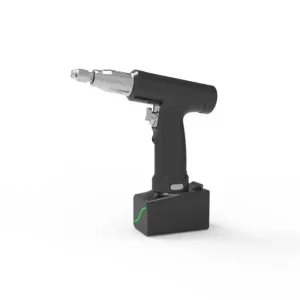



In modern orthopedic, cardiothoracic, and traumatology surgical procedures, the term "Sawzall" colloquially describes the high-powered medical reciprocating bone saw. Unlike industrial reciprocating saws, an orthopedic medical sawzall operates under rigid biomedical tolerances where blade trajectory, micro-stroke frequency, thermal dissipation, and sterilization endurance dictate clinical survivability and patient recovery outcomes.
Bone tissue cellular vitality diminishes rapidly when temperatures exceed 47°C for more than one minute (the classic Eriksson & Albrektsson threshold). Premium CE-certified medical reciprocating saws incorporate optimized stroke lengths (typically 2.5 mm to 3.2 mm) and harmonic frequency balance. This micro-reciprocation clears debris effortlessly, preventing friction buildup, minimizing thermal necrosis during deep femoral resections, and accelerating postoperative osteointegration.
Hospital operating theaters execute repeated steam autoclave sterilization protocols (134°C at 2.1 bar for 18 minutes), alongside volatile vaporized hydrogen peroxide (VHP) cycles. Medical sawzall factories certified under CE and ISO 13485 utilize aerospace-grade fluoroelastomer dynamic seals and laser-welded titanium or surgical stainless alloy handpiece housings. This barrier safeguards inner drive motors against moisture ingress, vapor corrosion, and lubricant degradation across hundreds of duty cycles.
Operating theater surgeons frequently experience muscle fatigue during extended joint reconstruction and corrective osteotomies. Advanced medical sawzall engineering incorporates counterbalanced internal Scotch-yoke mechanisms. By counteracting inertial forces during 12,500 rpm reciprocation, handpiece vibration is dampened by over 65%, providing orthopedic surgeons with surgical cut control and preventing unintended deviation into neurovascular tissue bundles.
For hospital procurement directors, OEM brand managers, and medical distributors, securing products from a certified medical sawzall factory is no longer just about possessing a CE mark. The European Medical Device Regulation (MDR) has introduced strict clinical evaluation mandates, technical documentation audits, and supply chain traceability requirements.
Under CE-MDR Annex VIII, active powered surgical instruments such as reciprocating bone saws and cannulated drills are classified under stringent safety gates. Saws contacting bone for temporary cutting require comprehensive verification under IEC 60601-1 (Electrical Safety), IEC 60601-1-2 (Electromagnetic Compatibility), and ISO 10993 (Biocompatibility) for patient-contact handpiece elements and blade attachments.
A legitimate CE certification medical sawzall factory operates under an uncompromised ISO 13485:2016 audited quality management system. From component machining to sterile cleanroom packaging, every process variable is documented: material traceability certificates for medical-grade 316L and 440C stainless steel, automated torque calibration records, and lifetime cycle tests ensuring zero cross-contamination risks.
CE-MDR establishes complete post-market surveillance. Certified sawzall factories integrate laser-etched Unique Device Identification (UDI) barcodes on each bone saw handpiece, battery module, charger unit, and saw blade pack. This ensures real-time synchronicity with the European Database on Medical Devices (EUDAMED), streamlining batch tracking, field safety notices, and hospital equipment audits.
Under CE-MDR, grandfathering is permanently abolished. Medical sawzall manufacturing plants must maintain continuous Post-Market Clinical Follow-up (PMCF) plans. Verified clinical dossiers compile feedback from multi-center clinical trials, confirming cut stability, low noise emissions (<72 dBA), ergonomic grip fatigue rates, and thermal safety under authentic surgical theater loads.
Over the past decade, Chinese medical manufacturing has evolved from basic mechanical assembly into a digitalized, high-precision Industry 4.0 ecosystem. Today's premier Chinese orthopedic power tool factories deliver high engineering tolerances, reliable supply chains, and superior cost-performance benefits to global medical device distributors.
Our intelligent factories deploy 5-axis Swiss CNC turning and high-speed milling centers operating in temperature-regulated clean environments. Transmission gears, eccentric rocker bearings, and quick-release blade chuck mechanisms are produced within micro-tolerances (±0.005 mm). This precision minimizes frictional backlash, ensuring minimal mechanical noise, near-zero handpiece vibration, and a service lifespan exceeding 5,000 surgical hours.
Cleanroom environments conforming to ISO 14644-1 Class 7/Class 100,000 standards prevent bioburden accumulation and particulate contamination. From motor armature winding to final robotic sealing, every medical sawzall handpiece undergoes rigorous testing: optical coordinate measuring machine (CMM) inspections, pneumatic water-tightness vacuum tests, and dynamic rotational balance screening.
Operating within China's medical device industrial clusters (such as the Yangtze River Delta), leading factories maintain direct integration with raw material suppliers of biocompatible titanium, medical silicones, neodymium rare-earth magnets, and sterile barrier packaging. This tight cluster model compresses prototype-to-production cycles from six months down to three weeks, offering defense against global geopolitical trade disruptions.
International health networks, GPOs (Group Purchasing Organizations), and tier-1 distributors are restructuring their surgical power tool portfolios. As legacy Western brands demand elevated replacement premiums and rigid proprietary blade locking systems, global procurement officers are turning to certified OEM/ODM factories for cost stability and system interoperability.
Capital equipment depreciation and continuous consumable spend represent major budget burdens. By partnering directly with a CE-certified medical sawzall factory, healthcare groups reduce initial acquisition costs by 40% to 55%. Furthermore, open-architecture blade chuck adapters accommodate industry-standard saw blades, driving down per-procedure consumable costs without compromising resection precision.
Global medical brands rely on tailored OEM/ODM manufacturing partnerships. Our factories provide private-label branding, customized speed and torque parameters (500 to 15,000 RPM), bespoke handpiece ergonomics, personalized color-anodized surgical accents, and multi-language technical documentation customized for local ministry registrations across 80+ partner nations.
Surgical theaters cannot tolerate supply delays. Premier Chinese factories maintain bonded inventories of standby surgical handpieces, brushless motors, lithium battery cells, and autoclavable transmission shafts. With fulfillment SLAs guaranteeing warehouse dispatch within 24 to 48 hours, distributor partners prevent tender penalties and hospital supply stockouts.
Penetrating emerging markets requires extensive regulatory documentation. Certified factories supply comprehensive technical files, Certificate of Free Sale (CFS), ISO 13485:2016 declarations, risk assessment files (ISO 14971), biocompatibility data, and sterilization validation dossiers (ISO 11134 / ISO 11135 / ISO 17665) directly accelerating local ministry of health clearance.
From human polytrauma stabilization to small-animal orthopedics, a CE-certified reciprocating saw system ("Sawzall") serves as a critical surgical asset across diverse clinical theaters, requiring distinct blade geometries, stroke lengths, and torque thresholds.
In acute traumatic shaft fractures and limb-salvage reconstruction, orthopedic surgeons rely on reciprocating bone saws to produce clean, linear transverse or oblique osteotomies through thick cortical bone. The controlled stroke prevents blade deflection, preserving bone stock for internal fixation plates and intramedullary nailing systems.
Equipped with specialized sternum guard adapters, reciprocating bone saws provide high safety margins during open-heart sternotomies. The guard shoe gently displaces the pericardium and mediastinal vessels downward while the forward-cutting blade transects the sternum along the midline, preventing catastrophic soft-tissue injury.
In advanced veterinary surgery, canine cranial cruciate ligament ruptures are resolved using Tibial Plateau Leveling Osteotomy (TPLO). High-frequency reciprocating saws, equipped with specialized crescent and radial blades, allow veterinary surgeons to execute radial cuts through the proximal tibia with high stability.
The internal electromechanical architecture differentiates industrial reciprocating saws from certified surgical bone saws. Understanding motor commutations and power transfer systems is critical for clinical engineering teams evaluating factory reliability.
Modern surgical reciprocating saws integrate high-efficiency Brushless DC (BLDC) motors with neodymium magnets. Because mechanical carbon brushes are eliminated, friction wear, carbon dusting, and sparking are completely prevented. Hall-effect sensors deliver instantaneous closed-loop electronic commutation, ensuring linear speed retention even when cutting dense cortical femurs.
Medical sawzalls utilize sterile battery packs incorporating Grade-A lithium-ion cells with integrated battery management systems (BMS). The BMS safeguards against overcurrent, thermal runaway, and deep discharge. Handpieces feature rapid latching mechanisms, allowing circulating nurses to exchange aseptic battery transfer rings without compromising sterile field integrity.
In high-pressure emergency surgeries, blade swapping must occur within seconds. Our medical sawzall systems feature a tool-less, rotational push-and-click stainless steel collet chuck. The mechanism locks blades securely with zero axial backlash, preventing loose oscillation chatter while withstanding autoclave steam sterilization up to 134°C.
When commissioning high-volume tenders or contracting OEM manufacturing runs, biomedical procurement departments should evaluate prospective factories against these five verification benchmarks.
Verify whether the CE certificate is issued by an officially accredited EU Notified Body under Regulation (EU) 2017/745 (MDR) rather than an invalid self-declaration or expired MDD directive. Always authenticate the four-digit Notified Body number via the NANDO database.
Request verified laboratory test certificates demonstrating handpiece survivability after 200 consecutive high-temperature, high-pressure steam sterilization cycles (134°C, 2.1 bar). Inspect test reports for lubricant breakdown or insulation breakdown resistance.
Audit whether the manufacturing facility possesses in-house 5-axis CNC machining, gear-grinding machinery, and certified Class 100,000 cleanrooms. Factories relying on outsourced machining frequently encounter batch-to-batch quality fluctuations.
Ensure that the factory possesses a mature Post-Market Surveillance (PMS) system, traceable laser UDI marking, and transparent handling procedures for Field Safety Corrective Actions (FSCA) in full compliance with EUDAMED mandates.
Clear answers to questions encountered by clinical engineers, hospital supply chain directors, and medical equipment distributors during the procurement evaluation cycle.
Engineered for precision bone access across micro-trauma, neurosurgery, sternotomy procedures, and veterinary orthopedics with interchangeable high-frequency brushless drive motors.



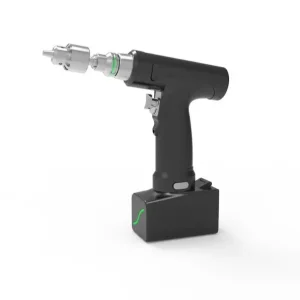

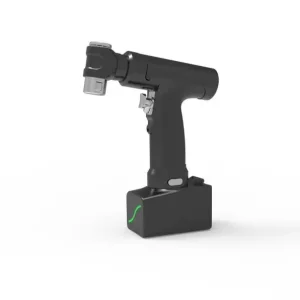

Whether you require CE-MDR compliant surgical reciprocating saws for government tenders, bespoke OEM engineering, or complete orthopedic power sets, our engineering team provides direct technical dossiers and competitive manufacturing quotes.
