Certified medical power systems, reciprocating cutting modules, and precision adapters manufactured under cleanroom-certified ISO 13485 protocols.


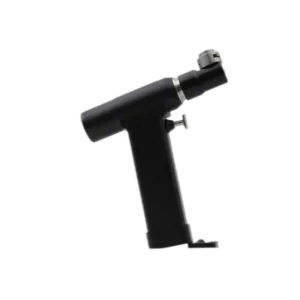




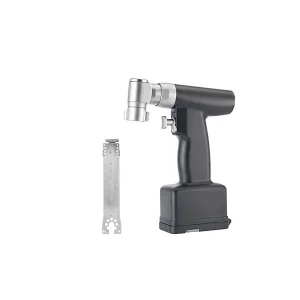
Strategic analysis of why health ministries, surgical centers, and industrial medical distributors demand CE-certified Bauer reciprocating saw solutions.
Global hospital networks and tender evaluation boards have moved beyond simple initial capital expenditure calculations. Today's procurement protocols measure cost per sterilization cycle, replacement modularity, and handpiece MTBF (Mean Time Between Failures).
Whether performing high-speed osteotomies, sternotomies, or joint arthroplasty revisions, medical reciprocating saws must deliver uncompromising cutting accuracy with zero axial deflection and minimal vibration transmission to the surgical operator.
Since the obsolescence of the MDD directive, obtaining CE certification under the EU Medical Device Regulation (EU) 2017/745 requires comprehensive clinical evaluation reports, post-market surveillance plans, and rigorous audit trails.
A rigorous examination of motor topology, gear train balance, thermal dissipation, and industrial-to-clinical crossover dynamics.
Unlike standard workshop reciprocating saws, medical-grade Bauer-type reciprocating power tools feature sensored brushless electromagnetic motors driven by advanced field-oriented control (FOC) microcontrollers.
This design generates maximum torque right from stall speed, ensuring that thick cortical bone or dense structural alloys do not induce blade binding or speed drops that could compromise operational safety.
The foremost failure point of surgical saws is fluid ingress during high-pressure sterilization. Our manufacturing line applies dual-stage fluororubber O-rings and laser-welded medical stainless steel enclosures.
Transmission mechanisms maintain an angular backlash error of less than 0.03 mm even after enduring 200 consecutive cycles at 134°C (273°F) and 2.2 bar pressure, validated under DIN 58953-1.
Prolonged surgeon or technician fatigue leads to critical procedural variance. By integrating an inverted counterweight cam within the reciprocating transmission block, secondary inertial harmonics are negated.
The resulting stroke delivers crisp, lineal blade momentum with negligible kickback, verified by laser vibrometry during simulated sternal and tibial osteotomies.
| Performance Specification | CE Medical-Grade Reciprocating System | Conventional Industrial Recip Saw | Legacy Carbon Motor Saw |
|---|---|---|---|
| Motor Architecture | Sensored BLDC (Zero Carbon Emission) | Standard Brushed / Heavy AC Motor | Commutator Carbon Brushes |
| Stroke Frequency Range | 0 – 15,000 SPM (Variable Micro-Trigger) | 0 – 3,000 SPM (Rough Industrial) | 0 – 10,000 SPM (Coarse Trigger) |
| Sterilization Reprocessing | Autoclave 134°C + EO + H2O2 Plasma | Wipe-down only (Zero Autoclave) | Limited EO / Autoclave degrades seals |
| Thermal Rise at Peak Load | ΔT < 2.0°C (Prevents Tissue Necrosis) | ΔT > 25.0°C (Excessive Heat) | ΔT > 12.0°C (Brush Friction) |
| Housing Material | Aviation Aluminum / Medical Ti-6Al-4V | Reinforced ABS / PA6 Plastic | Cast Aluminum / Hardened Plastic |
| Regulatory Standards | EU 2017/745 MDR, ISO 13485, MDSAP | CE Machinery Directive 2006/42/EC | Legacy MDD 93/42/EEC |
Cross-disciplinary applications requiring the precision, safety, and torque containment of certified reciprocating systems.
In joint revision surgeries—particularly hip stem removal and distal femoral osteotomies—traditional oscillating blades cannot provide the deep plunge clearance needed.
Our reciprocating blade geometry allows narrow access along prosthetic stems without disrupting healthy bone architecture or causing microfractures, saving precious surgical minutes in trauma emergencies.
Primary sternal splitting and re-do sternotomies demand instantaneous stop triggers and sternal guards that prevent accidental pericardial laceration.
Fitted with our CE-certified sternum saw attachments, the system delivers high stroke velocities that slice cleanly through calcified sternal tissue while the specialized footplate deflects underlying pleural membranes.
From canine Tibial Plateau Leveling Osteotomy (TPLO) to equine fracture fixations, veterinary clinics are adopting human-grade certified systems.
The interchangeable coupling interface allows one master battery handpiece to switch seamlessly from a heavy reciprocating blade for equine bone work to specialized radial TPLO adapters, optimizing clinic inventory.
The convergence of surgical robotics, sensor-driven tactile intelligence, and sustainable high-performance materials.
Integration of real-time bio-impedance sensors into reciprocating saw collets. The motor controller measures mechanical resistance at 1,000 Hz, instantly cutting power within 12 milliseconds upon breaching cortical bone to prevent soft tissue damage.
Expanded compatibility with optical and electromagnetic surgical navigation arrays. Integrating open-protocol tracking pins directly onto handpiece chassis, enabling real-time spatial positioning without bulky clamp-on brackets.
Embedded RFID micro-transponders logging lifetime autoclave cycles, operating temperature curves, and cumulative vibration stresses, feeding directly to Central Sterile Supply Department (CSSD) digital management platforms.
Transition from traditional aviation aluminum toward continuous carbon-fiber PEEK matrices and additive-manufactured titanium lattice structures, cutting handpiece mass by an additional 32% while enhancing resonance absorption.
How our ISO 13485 Shanghai manufacturing complex bridges global compliance with rapid regional fulfillment.
Manufactured within strict ISO 14644-1 Class 7 cleanrooms. Every single reciprocating saw undergoes 100% bench testing inside our in-house DIN 13972 testing laboratory before packaging.
We empower distributor brands with complete white-label customization. Our flexible automated manufacturing lines reduce standard OEM development cycles from 8 weeks down to 3 weeks.
Medical emergencies leave no room for delayed shipments. We maintain an active inventory of more than 200 ready-to-dispatch standby tool sets to safeguard partner hospitals against surgical downtime.
In-depth technical, regulatory, and logistical answers compiled for biomedical procurement engineers and medical device distributors.
Industrial saws prioritize raw motor speed and torque at high operating temperatures, lacking sealed hermetic enclosures or biological safety controls. Medical-grade CE reciprocating systems comply with strict bio-compatibility (ISO 10993), electrical safety (EN 60601-1), electromagnetic compatibility (EMC), and maintain superficial temperature increases under Δ2°C to prevent bone thermal necrosis, while surviving hundreds of high-pressure autoclave cycles.
Under CE-MDR, power surgical tools must maintain audited technical files containing clinical evidence, risk management assessments (ISO 14971), post-market surveillance (PMS), and registered Unique Device Identifiers (UDI) in EUDAMED. Sourcing from certified manufacturers guarantees that products will not be barred from European tenders or international registries that recognize the EU MDR framework.
Our reciprocating handpieces and blades are validated for high-temperature steam autoclaving (134°C / 273°F at 2.2 bar for 4 to 18 minutes), Ethylene Oxide (EO) gas sterilization, and low-temperature hydrogen peroxide gas plasma sterilization. Internal fluorosilicone seal rings and potting resins protect electronic controllers from condensation breakdown.
Carbon brushes generate physical friction, electrical sparking, high thermal dissipation, and carbon particulate shedding that can enter sterile airfields. Brushless motors utilize solid-state electronic commutation, which eliminates physical contact wear, delivers 35% higher battery energy efficiency, reduces vibration, and delivers constant torque throughout heavy cortical bone resection.
Thanks to our modular intelligent production lines, standard private label modifications (laser logo engraving, custom anodized battery bezels, custom sterile cases, and translated IFUs) are delivered in approximately 3 weeks. Custom electromechanical revisions (stroke adjustments, custom quick-release chucks) generally require 6 to 8 weeks including full laboratory validation.
All flagship power systems come with a standard 12 to 24-month manufacturer warranty. We supply full technical dossiers, schematics, and spare replacement modules (switches, gearboxes, motors, battery cells) with a guaranteed minimum 10-year parts availability commitment to support hospital biomedical engineering departments.
Explore our certified trauma bone drills, modular reamers, high-frequency oscillating saws, and dedicated reciprocating cutters.





