High-performance brushless cannulated drills, neurosurgical cranial mill attachments, ultra-lightweight bone drill systems, and rapid-docking oscillating interfaces optimized for multi-department surgical efficiency.
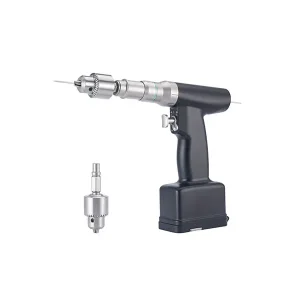






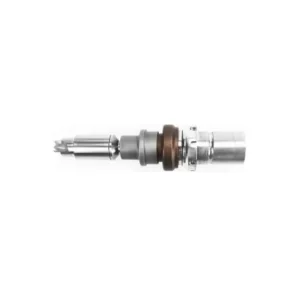
The clinical paradigm in operative orthopedics, traumatology, spine surgery, and reconstructive arthroplasty has definitively shifted from pneumatic and mechanical brush-commutated drives to intelligent Brushless Direct Current (BLDC) electrical architectures. As surgical interventions demand tighter tolerances, lower acoustic disruption, and stringent thermal dissipation thresholds to prevent intraoperative bone necrosis, the design engineering of the surgical handpiece serves as the critical interface between operative intent and clinical outcome.
Traditional carbon-brush motors suffer from rapid mechanical brush degradation, generating particulate micro-carbon dust and electrical arcing under high-torque drilling loads. SNK brushless architectures utilize Hall-sensor or sensorless micro-inverter field-oriented control (FOC). By eliminating mechanical brush friction, the handpiece avoids internal physical degradation, lowers electrical impedance losses, and completely prevents carbon carbonization inside the sterile enclosure.
Penetrating dense cortical bone transitions into porous cancellous architecture creates severe instantaneous load fluctuations. SNK’s proprietary closed-loop digital controllers sample load resistance at 20 kHz. When transitioning through bicortical layers, the drive automatically modulates pulse-width modulation (PWM) output to sustain steady RPM without motor stall or sudden plunge forward, safeguarding surrounding vascular structures.
Clinical studies demonstrate that osteocyte thermal necrosis occurs when localized bone temperatures exceed 47 °C for greater than one minute, compromising implant osseointegration. By integrating high-grade NdFeB (Neodymium-Iron-Boron) magnets with optimized flux containment and an aerospace titanium/carbon-composite outer sleeve, SNK handpieces restrict surface heat accumulation to under 41 °C throughout prolonged continuous reaming cycles.
China’s sophisticated advanced precision-machining cluster, integrated rare-earth material supply networks, and rigorous Class 7 cleanroom manufacturing environments empower SNK to deliver medical power systems of unyielding quality at competitive global procurement price points.
Unlike assembling assemblers who outsource critical components, SNK operates a fully self-contained manufacturing infrastructure in Shanghai. From 5-axis German CNC Swiss lathe turning of internal planetary gearsets (DIN 13972 accuracy level) to in-house surface passivations, rotor balance optimization, and micro-winding fabrication, every mechanical dimension is controlled within sub-micron tolerances (±0.002 mm).
Utilizing direct domestic access to premium sintered Neodymium-Iron-Boron (NdFeB) grade N52UH rare-earth formulations with high thermal demagnetization thresholds (exceeding 180 °C), our electromagnetic assemblies provide unmatched power density per cubic centimeter. The handpiece delivers superior torque density within a streamlined, balanced chassis weighing up to 25% less than legacy Western equivalents.
While legacy European or North American medical device conglomerates require 9 to 18 months for iterative engineering modifications, SNK executes comprehensive OEM/ODM custom development programs—spanning RPM modulation, bespoke coupling chuck adapters, battery interface housing, and proprietary color-anodization—in approximately 3 weeks.
Regulatory compliance in Class IIa and Class IIb surgical powered systems separates verified medical manufacturers from low-tier assembly vendors. SNK has completed full transition under the European Medical Device Regulation (EU MDR), providing unhindered market access.
| Compliance Dimension | SNK Medical Brushless System | Conventional Industry Baseline | Clinical / Procurement Significance |
|---|---|---|---|
| EU Regulatory Framework | Full CE-MDR (EU) 2017/745 Notified Body Certified | Phased-out legacy MDD 93/42/EEC or self-declared | Guaranteed tender compliance in European hospital procurement systems without audit risk. |
| Quality Management System | ISO 13485:2016 + MDSAP (US, CA, BR, JP, AU) | Basic ISO 9001 or unverified domestic ISO 13485 | Audited single-program clearance across 5 major global jurisdictions simultaneously. |
| Autoclave Cycle Endurance | 200+ Autoclave Cycles (134 °C @ 2.2 bar) validated | 80 – 100 cycles before mechanical seal breakdown | Cuts hospital Total Cost of Ownership (TCO) by greater than 50% through double service life. |
| Ingress Protection (IPX) | IPX8 Submersion + IPX9K High-Temp Jet Enclosure | IPX4 (Splash-resistant only) or uncertified | Permits rigorous washer-disinfector automated reprocessing protocols without internal fluid ingress. |
| EMC & Electrical Safety | IEC 60601-1:2012 / EN 60601-1-2:2015 4th Edition | Partial IEC 60601 compliance without RF isolation | Zero harmonic interference with electrosurgical generators, MRI systems, or intraoperative navigators. |
| Global Free Sale Clearances | Registered & Free Sale Certificates for 21 Countries | Limited domestic registration only | Expedited national registration dossiers for global medical distributors and local tender partners. |
The chief failure mode for powered surgical handpieces in CSSD (Central Sterile Services Department) is steam vapor infiltration during the high-vacuum dry phase of pre-vacuum autoclaving. When standard fluorosilicone O-rings cyclically expand and contract under 134 °C saturated steam, microscopic vapor breaches the motor stator casing, causing bearing pitting, winding short circuits, and rotor oxidation.
SNK engineers overcome this with a multi-tiered hermetic barrier combining fluoro-elastomeric double-lipped dynamic shaft seals with an isolated laser-welded stainless steel motor capsule. Bearings are pre-lubricated with fluorinated PFPE medical greases impervious to boiling steam degradation. Following 200 consecutive autoclave stress tests, our internal transmission eccentric runout maintains an error variance under 0.03 mm, guaranteeing clinical cutting precision across years of intensive operating theatre rotations.
Instead of procuring isolated, high-cost single-use power handpieces for separate departments, SNK provides hospital networks and ambulatory surgery centers (ASCs) with a unified, interchangeable modular platform.
High-speed cannulated drill handpiece configuration (0–1,600 RPM) accommodates guide pins and Kirschner wires up to 4.2 mm lumen diameter. Essential for closed reduction and internal fixation (CRIF) of femoral neck, tibial shaft, and distal radius fractures with ultra-smooth pass-through.
High-torque low-speed acetabular reaming drill adapters deliver up to 20 N·m of continuous torque at 300 RPM. Ensures chatter-free spherical bone reaming in total hip arthroplasty (THA) while high-frequency oscillating saws execute planar distal femoral resections without deflection.
Coupling the brushless main driver with SNK high-speed cranial mill and auto-releasing cranial drill adapters permits safe craniotomy flap generation. The automatic clutch decouples rotational drive precisely as the inner cranial table is perforated, preventing dural laceration.
High-frequency reciprocating and sternum saw adapters with integrated blade guards permit precise median sternotomies in primary cardiac surgeries and re-do cardiac access without retrosternal adhesion disruption.
Procurement committees evaluating orthopedic power tools evaluate far beyond basic rotational speed. Total Cost of Ownership (TCO), sterilization survival, cross-compatibility, and uninterrupted spare parts logistics form the core qualification criteria.
Tier-1 western branded power systems carry exorbitant initial purchase expenditures and punitive recurring maintenance contracts. SNK’s brushless multifunctional architecture slashes capitalization costs by 45–60% while matching or exceeding lifespan metrics, enabling hospital administrators to allocate budget reserves toward robotic and navigation upgrades.
Multiple vendor handpieces clutter central sterile supply departments, increasing tray turnaround error and reprocessing cycle times. SNK’s unified modular quick-connect drive handpiece allows a single base drive to power trauma drills, reamers, sagittal saws, and wire drivers, condensing hospital surgical trays by up to 40%.
OR downtime resulting from equipment breakdown costs medical centers thousands of dollars per hour. SNK maintains continuous stockpiles of 200+ standby finished tool assemblies and modular replacement parts. We guarantee emergency kit dispatch in under 24 hours, with regional European warehouse fulfillment in under 48 hours.
Direct engineering and regulatory guidance addressing operational parameters, sterilization protocols, motor thermodynamics, and OEM manufacturing contracts.
Brushless surgical handpieces replace mechanical friction brushes with electronic field-oriented commutation. This architecture achieves multiple critical advantages: it generates zero conductive carbon debris, runs 30% cooler (preventing osteocyte thermal necrosis), delivers flat torque delivery under load (+/-1.5% variance compared to +/-3.2% for carbon motors), and withstands over 200 high-temperature autoclave cycles without brush degradation. Carbon motors remain available as an economical alternative for low-volume surgical environments and veterinary clinics.
Our products hold verified CE-MDR (EU) 2017/745 certification covering Class I, IIa, and IIb devices with full EUDAMED traceability and Notified Body clinical evaluations. SNK manufacturing facilities operate under certified ISO 13485:2016 and the Medical Device Single Audit Program (MDSAP), satisfying statutory requirements in the United States, Canada, Brazil, Japan, and Australia. Free sale certificates are officially registered across 21 sovereign healthcare ministries.
SNK handpieces and adapters are validated under ISO 17665-1 for saturated steam sterilization (pre-vacuum autoclave) at 134 °C (273 °F) for 4 to 18 minutes, as well as Ethylene Oxide (EO) sterilization. The sealed motor housing retains hermetic integrity after 200 autoclave cycles, maintaining transmission gear eccentricity below 0.03 mm. Low-temperature hydrogen peroxide gas plasma sterilization (V-PRO / Sterrad) compatibility is also verified for sensitive quick-charge lithium battery modules.
SNK provides comprehensive contract manufacturing services. Global distributors can configure rotational speeds (500 to 15,000 RPM), customize torque envelopes, implement proprietary quick-coupling chucks, specify battery casing aesthetics, and request custom laser etching and multilingual surgical IFUs. Prototype manufacturing and pre-clinical verification are completed in approximately 3 weeks, accompanied by full Device Master Records (DMR) for national regulatory filings.
Yes. SNK designs universal hub mechanisms and standardized quick-release couplings compatible with major surgical tool interfaces, including Stryker, ConMed, Depuy Synthes, and Hall-style quick-connect mechanisms. Our saw blade hub geometries ensure rigid retention with zero slop, eliminating intraoperative micro-vibration and premature blade fatigue.
From high-output cannulated bone reaming systems capable of 20 N·m torque to ultra-compact micro drills for podiatry, maxillofacial, and dental procedures. Fully certified and ready for rapid worldwide logistics.
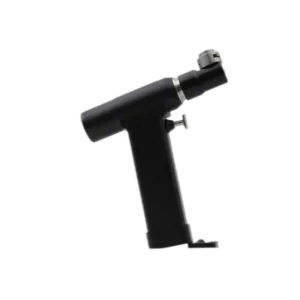

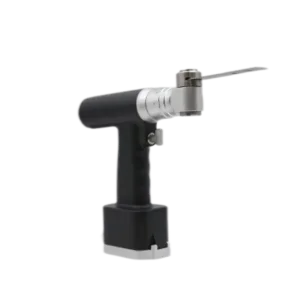




Partner directly with China's certified medical power tool manufacturing plant. Accelerate your brand's time-to-market with complete technical documentation, CE-MDR declarations of conformity, and high-precision evaluation samples dispatched within 24 hours.
