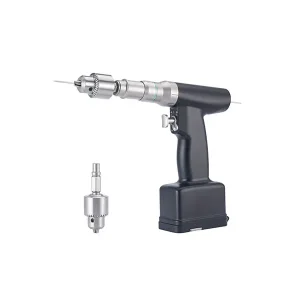
Direct supply from an ISO 13485:2016 verified cleanroom facility. Engineered for rapid osseous resection, sternal trauma interventions, and controlled hip arthroplasty procedures.





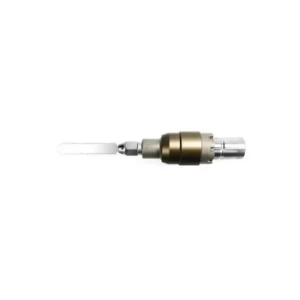


Addressing the shifting dynamics of hospital orthopedic procurement, surgical center efficiency, and multinational OEM supply chain stability.
Strict mechanical coupling tolerances ensure continuous blade stability, mitigating high-frequency parasitic vibrations and optimizing cutting line visual control during deep bone access.
Thermal management through frictionless digital brushless motor commutation keeps drive surfaces and reciprocating chuck interfaces below critical bone denaturation thresholds.
Validated autoclave endurance ensures high-grade sealing rings and drive assemblies retain ingress protection under repetitive 134°C steam and vacuum pressure protocols.
Addressing osteotomy friction, battery longevity, cross-contamination, and high-cadence operating theater dynamics.
Integrated digital speed regulation preserves linear reciprocating cadence from 0 to 12,500 rpm. Sensor-driven current loops compensate in real-time under high cortical bone loading.
Medical-grade high-discharge lithium battery cells with integrated thermal cutoffs and balanced cell charging, preventing sudden power drops during mid-osteotomy cutting.
Dual fluoropolymer seals prevent blood, saline, and bone debris from migrating into drive shafts, while protecting internal electronics from high-pressure autoclave steam ingress.
Standardized toolless blade locking mechanism supports diverse blade shank profiles with zero axial free-play, speeding up intraoperative blade changes under sterile drapes.
Continuous R&D aligned with robotic integration, surgical navigation tracking, and ultra-lightweight ergonomic designs.
Active closed-loop resistance profiling monitors tissue-type transitions. Drive cadence automatically drops the instant the reciprocating blade breaches tough cortical bone and enters softer trabecular matrix or peri-osseous soft tissue.
Native integration of optical arrays and electromagnetic tracking hubs directly into handpiece shells, removing external tracking clamp inaccuracy and enabling sub-millimeter navigation during complex osteotomies.
Replacing traditional cast components with titanium-magnesium aerospace alloys and carbon-fiber reinforced PEEK drives. Overall handpiece weight is reduced by 28%, significantly minimizing surgeon wrist fatigue during extended multi-trauma cases.
Full EUDAMED traceability, multi-jurisdiction market clearance, and structured distributor supply-chain guarantees.
Complete Class IIa/IIb clinical evaluation reports (CER), biological compatibility studies (ISO 10993), and EUDAMED Single Registration Number (SRN) filings ready for immediate distributor registration tenders.
Regional warehouse fulfillment supports dispatch in ≤ 48 hours for European distributors and ≤ 24 hours for Asia-Pacific territories, backed by dedicated emergency clinical backup inventory.
Configurable drive stroke lengths (2.5mm to 4.2mm), tailored speed boundaries, personalized private labeling, and custom sterilization tray configurations delivered within standard 3-week prototype cycles.
A rigorous breakdown of key metrics that influence surgical precision, cleaning throughput, and hospital operating costs.
Unlike standard rotating power tools equipped with mechanical adapter conversions, dedicated reciprocating systems feature counterbalanced internal shafts. This architecture eliminates unwanted lateral kickback during sensitive pelvic resections or midline sternotomy cuts.
Traditional carbon brushes generate internal micro-carbon dust during high-speed runs, which degrades internal bearings over repeated autoclave heat cycles. Brushless motors rely on magnetic fields, keeping internal parts cooler and doubling maintenance intervals.
Decibel levels are maintained below 65 dB during peak cortical bone cutting. Dampened vibration profiles protect surgical staff from repetitive strain disorders and prevent microscopic blade drifting during precision cuts.
Direct technical and operational answers to common inquiries from biomedical engineers, distributors, and OR procurement managers.
All SNK orthopedic power instruments and adapters are documented within comprehensive CE-MDR technical files audited by European Notified Bodies. Our systems maintain verified biocompatibility (ISO 10993), electrical safety and EMC compliance (IEC 60601-1 / IEC 60601-1-2), and structured clinical post-market follow-ups registered under EUDAMED.
Brushless motors use digital commutation rather than physical mechanical brushes. This eliminates brush wear and internal carbon debris, generates significantly less heat during sustained cutting, and provides stable torque across long procedures while enduring 200+ autoclave cycles without motor deterioration.
Our handpieces, saw blades, and adapters are validated for multi-cycle high-temperature steam autoclaving (134°C / 273°F at 2.2 bar) as well as Ethylene Oxide (EO) sterilization. The sealed casing design is also compatible with low-temperature hydrogen peroxide plasma processes.
Yes. SNK designs universal quick-coupling hubs and cross-compatible modular adapters that interface seamlessly with major industry-standard blade shank formats, allowing hospitals to use their existing sterile consumable inventories.
We provide comprehensive OEM/ODM solutions, from custom motor stroke tuning (2.5mm to 4.2mm) and trigger rate curves to custom anodized housing finishes and private-label packaging. Standard custom engineering cycles are completed within approximately 3 weeks from verified CAD approval.
SNK maintains an active global distributor support infrastructure. Regional warehouse depots stock standby handpieces and replacement assemblies for quick dispatch (≤ 24h Asia-Pacific, ≤ 48h Europe), backed by comprehensive distributor training and dedicated technical service documentation.
Complete surgical tool solutions validated across more than 420 premier clinical orthopedic and traumatology centers worldwide.