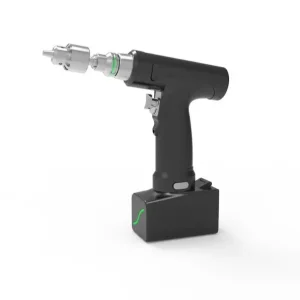
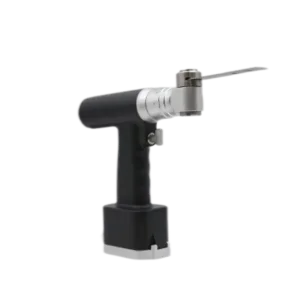
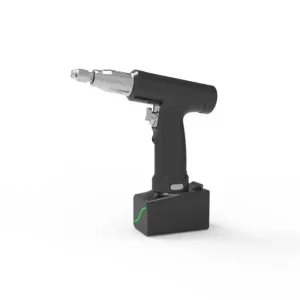
Direct from our certified production lines: explore our premier cohort of high-frequency bone cutters, slow-speed acetabular reamers, oscillating saws, and high-power cannulated surgical drill units qualified for rigorous hospital and industrial cleanroom deployment.
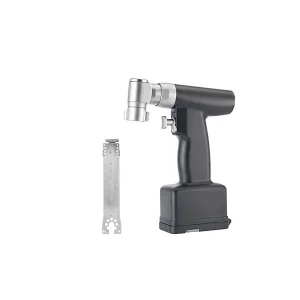


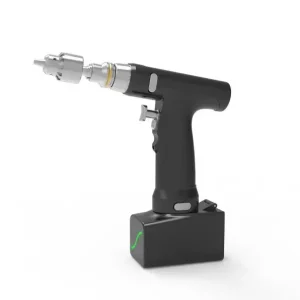



Across surgical suites, clinical operating theaters, orthopedic trauma units, and advanced biotechnical fabrication facilities, precision reciprocating saws represent the definitive instrument for linear, deep-cavity bone resection. Modern procurement mandates uncompromising conformity with CE-MDR (EU) 2017/745 and stringent harmonic vibration control.
Healthcare institutions and surgical instrument distributors face soaring replacement costs under legacy Western OEM pricing models. Modern tier-1 factories engineer backward-compatible reciprocating saw architectures and modular motor adapters that reduce capital expenditure by up to 52% while exceeding DIN EN ISO 13485 performance baselines.
High-frequency bone cutting (up to 12,500–14,000 oscillations per minute) generates localized friction and micro-vibrations. Advanced reciprocating saw factories employ finite element analysis (FEA) to isolate radial wobble below 0.02 mm, limiting intra-cortical bone temperatures to below 41°C to completely prevent cellular osteonecrosis.
Navigating the transition from the legacy MDD to EU MDR 2017/745 requires comprehensive biological safety audits (ISO 10993), electrical safety testing (IEC 60601-1), electromagnetic compatibility (IEC 60601-1-2), and EUDAMED single registration number (SRN) traceability across every reciprocating saw batch.
Modern Chinese medical power tool manufacturing has evolved far beyond basic assembly. Integrating 5-axis CNC machining, hermetic plasma welding, automated armature winding, and Class 7 cleanroom assembly, our production footprint offers unparalleled supply chain resilience and agile engineering lead times.
Raw medical alloys—including martensitic stainless steel 440C and medical-grade titanium alloy Ti-6Al-4V—are processed within adjacent industrial clusters. Ultra-hard tungsten carbide coating applied via Physical Vapor Deposition (PVD) yields blade edges that retain structural cutting integrity through 200 high-temperature sterilization cycles.
Every reciprocating transmission box, eccentric counter-weight cam, and ergonomic handgrip is machined using multi-axis Swiss-type lathes and German 5-axis DMG MORI machining centers. Machining tolerances are maintained within ±0.003 mm, ensuring zero backlash and whisper-quiet operation beneath 60 dBA under peak surgical loads.
Traditional European instrument houses typically require 16 to 24 weeks for bespoke OEM/ODM design freeze and physical prototyping. Our streamlined Shanghai and Suzhou engineering facilities configure motor windings, proprietary coupling chucks, custom casing finishes, and firmware throttle curves in as little as 21 calendar days.
Reciprocating saws provide unidirectional, push-pull linear cutting strokes that excel where oscillating sagittal saws cannot physically reach. From emergency trauma thoracotomy to advanced total joint arthroplasty, discover the localized biomechanical requirements across various medical and technical disciplines.
Critical for primary and revision total knee and hip replacements. In deep acetabular and femoral neck osteotomies, the reciprocating blade executes precise narrow-kerf resections without abrading adjacent collateral ligaments or nerve sheaths.
In urgent coronary bypass and valve interventions, our reciprocating sternum saw adapters with integrated blade guards traverse the sternum cleanly, preventing accidental lacerations of the pericardium and internal mammary arteries.
When addressing comminuted fractures or executing emergency amputations, variable-speed brushless reciprocating handpieces cut rapidly through cortical bone while minimizing bone dust formation and periosteal devascularization.
Engineered for endurance in high-throughput animal orthopedic clinics and biomechanical test labs, requiring high torque densities, rapid battery hot-swaps, and broad compatibility with cost-effective universal saw blades.
The convergence of smart electronics, advanced sensor arrays, and medical metallurgy is revolutionizing surgical powered handpieces. As hospitals demand digital integration and greater longevity, certified reciprocating saw factories are innovating across four critical technical pillars.
Moving away from carbon brushes eliminates friction dust and mechanical degradation. Sensorless BLDC motors achieve 89% energy efficiency, generating lower internal heat and enabling uninterrupted motor torque under variable cortical-cancellous bone resistance.
Repeated exposure to 134°C steam at 2.2 bar pressure damages inferior electrical insulation. Advanced silicone encapsulation, fluorocarbon O-rings, and laser-welded stainless steel cases yield true IPX8 immersion and high-temperature autoclave endurance for over 200 cycles.
Next-generation microcontrollers monitor back-EMF current fluctuations at 1,000 Hz. When the reciprocating saw blade breaks through the cortical wall into soft medullary tissue, the firmware automatically modulates stroke velocity to safeguard against accidental neurovascular damage.
Moving past legacy NiMH batteries, surgical packs utilize sterilized LiFePO4 cells with smart BMS controllers. These provide flat discharge curves, zero memory effect, and rapid 20-minute aseptic charging protocols for round-the-clock hospital trauma rotations.
Hospital supply chain directors, medical distributor purchasing officers, and private label brand managers require transparent, auditable engineering parameters before entering contractual agreements. The technical matrix below compares standard aftermarket tools against certified OEM medical-grade reciprocating platforms.
| Evaluation Parameter | Certified Medical Reciprocating Saw Factory | Conventional Industrial Saw Assembly | Clinical / Commercial Consequence |
|---|---|---|---|
| Regulatory Attestation | CE-MDR (EU) 2017/745 Class IIa/IIb, ISO 13485:2016, MDSAP | CE Low Voltage Directive (LVD) / Machinery Directive only | Legal eligibility for hospital clinical trials and tender bids. |
| Sterilization Integrity | 134°C Autoclave (steam), Ethylene Oxide (EO), H2O2 Plasma | Non-submersible; wipe-down clean only | Zero risk of electrical shorting or seal degradation in autoclave. |
| Motor Architecture | Ultra-compact high-torque Brushless DC (BLDC) Coreless Motor | Standard brushed carbon motor with commutator brushes | No brush wear debris; longer lifespan; quieter sound pressure (<60 dBA). |
| Dynamic Resection Frequency | Continuously variable 0 – 14,000 oscillations/min (OPM) | Single-speed or coarse 2-step setting (0 – 3,000 SPM) | Superior cutting efficiency; eliminates osseous micro-fracturing. |
| Radial Run-out & Oscillation | < 0.02 mm under calibrated DIN EN ISO 6475 loading | > 0.15 mm under lateral deflection load | Ultra-clean cutting kerf; reduced collateral soft-tissue abrasion. |
| Biocompatible Metallurgy | Medical Stainless Steel 440C / Custom Ti-6Al-4V Alloys | Standard commercial carbon steel or zinc alloys | Prevents metal particle leeching and intra-operative corrosion. |
Get authoritative answers regarding regulatory certification, custom OEM engineering lead times, sterilization durability, and private label distributor agreements.
Complete your clinical instrumentation arrays with our specialized cannulated drills, acetabular reamers, neurosurgical micro saws, and ultra-high-speed reciprocating saw adapters engineered for long service life across all major orthopedic subspecialties.