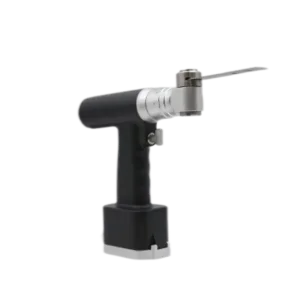
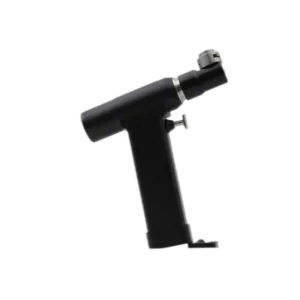
Engineered for trauma, spine, reconstruction, and neurosurgical intervention with direct CE compliance and factory-backed warranties.
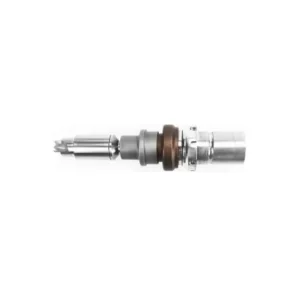





Analyzing high-reliability surgical motor architectures, supply chain risk mitigation, and international clinical adoption trends.
The contemporary surgical operating theatre requires powered instrumentation capable of sustaining extreme torsional thresholds without thermal transference to surrounding viable bone tissue. In trauma reconstructive surgery, neurosurgical craniotomies, and high-volume arthroplasty, the Flex Fx2271 drive architecture has emerged as a high-efficiency brushless standard. Designed to resolve legacy challenges associated with carbon-brush wear particles and armature thermal saturation, this platform merges compact electromagnetic stator design with advanced electronic commutation.
Global procurement networks in Germany, the United Kingdom, Japan, and the United States have accelerated audits of secondary-source manufacturing facilities that operate under ISO 13485:2016 and MDR (EU) 2017/745 protocols. As hospital consortiums shift from capital expenditure lease lock-ins toward modular, open-architecture handpieces, a verified Flex Fx2271 supplier delivers critical cost-per-procedure reductions while sustaining surgical precision verified under DIN 13972 and ISO 6475.
The transition from the Medical Device Directive (MDD 93/42/EEC) to the Medical Device Regulation (MDR EU 2017/745) fundamentally altered international supply lines. Submitting Class IIa and Class IIb dossiers now necessitates comprehensive clinical evaluation reports (CER), traceable risk management per ISO 14971:2019, and rigorous post-market clinical follow-up (PMCF).
As an authorized manufacturing hub, Snaikang Technology Development provides medical distributors with complete technical documentation, Declaration of Conformity (DoC), biocompatibility data (ISO 10993), and electrical safety dossiers (IEC 60601-1 / IEC 60601-1-2 4th Edition).
Quantitative physical performance parameters verified under DIN 13972 and ISO 6475 mechanical testing standards.
| Evaluation Parameter | Flex Fx2271 High-Torque System | Standard Brushless Systems | Legacy Carbon-Brush Handpieces |
|---|---|---|---|
| Commutation Architecture | Sensorless / Hall-Sensor Hybrid Electronic | Standard 3-Phase Hall Commutation | Mechanical Copper Commutator & Carbon Brushes |
| Maximum Rotational Velocity | 15,000 RPM (Infinitely Variable) | 10,000 – 12,000 RPM | 8,000 – 10,000 RPM |
| Peak Output Torque | Up to 20 N·m (Cannulated High-Torque Mode) | 12 – 14 N·m | 9 – 11 N·m |
| Torque Deviation Stability | < ±1.5% (ISO 6475 Calibrated) | ±3.2% | ±5.5% to ±8.0% (brush friction degradation) |
| Operating Surface Temp Rise | < 2.0°C after 15 min continuous resection | 4.5°C – 6.0°C | 8.0°C – 12.0°C (requires intermittent pause) |
| Reprocessing Autoclave Threshold | > 200 Cycles (134°C Steam Autoclave) | 100 Cycles | 30 – 50 Cycles (brush breakdown) |
| Navigation Integration Latency | Sub-millisecond Feedback (12 Open Protocols) | Proprietary closed-loop protocol | Non-compatible (analog only) |
Note: Laboratory measurements conducted inside class 10,000 cleanroom environments at 22°C ambient room temperature, measured under full dynamic load testing on synthetic cortical bone analogues.
Decoupling supply chain bottlenecks through intelligent flexible manufacturing, regulatory co-ownership, and localized OEM adaptation.
Accelerate your time-to-market. While conventional industrial cycles require 8 to 12 weeks for tooling adjustments, our agile production cells configure custom housing ergonomics, output RPM profiles (500 to 15,000 RPM), and bespoke gearbox reductions in less than 21 days.
Gain unhindered hospital tender qualification across the European Union, Latin America, Southeast Asia, and the Middle East. We provide full technical construction files (TCF), biocompatibility test protocols, software validation documentation, and free sales certificates covering 21 nations.
Hospitals cannot endure surgical downtime. We maintain an active standby inventory of over 200 fully assembled power units and modular attachments in strategic logistic hubs, guaranteeing Europe-wide dispatch within 48 hours and Asia-Pacific emergency routing within 24 hours.
Modular versatility engineered into every handpiece coupling, satisfying stringent operative demands across 5 key subspecialties.
Cannulated bone drills with a continuous hollow-core diameter allow seamless insertion over Kirschner wires and guidewires. High-torque reaming thresholds (up to 20 N·m at 300 RPM) prevent motor stalling during femoral and tibial intramedullary reaming, dramatically lowering operational duration and intraoperative embolization risks.
Navigating restricted surgical corridors in transforaminal lumbar interbody fusion (MIS-TLIF) demands low-vibration handpieces. Our 7 mm ultra-thin micro-oscillating saws and cranial drill attachments provide microscopic bone resection without mechanical deflection, keeping delicate dura mater structures secure.
Knee and hip replacement procedures require clean, flat osteotomy cuts to guarantee implant-bone interface bonding. With reciprocating and oscillating saws achieving 12,500 oscillations per minute, thermal necrosis is circumvented, facilitating swift post-operative bone ingrowth and long-term prosthesis fixation.
Emergency decompressive craniectomy requires rapid, safe bone flap creation. The high-speed cranial drill adapter incorporates an automatic disengagement clutch mechanism, halting bone bit rotation the millisecond resistance drops, protecting cerebral cortical parenchyma from inadvertent laceration.
Small animal surgical centers require specialized instrumentation for canine cranial cruciate ligament repairs. The brushless SNK TPLO saw adapter ensures high rotational speeds and steady radial cutting paths, minimizing radial cut chatter and promoting rapid tibial plateau consolidation.
Every handpiece undergoes automated vacuum seal verification and helium leak detection prior to cleanroom packaging. Validated for standard 134°C steam autoclaves, ethylene oxide (EtO), and low-temperature hydrogen peroxide gas plasma sterilization without housing degradation.
Charting the generational shift toward sensorized surgical tools, closed-loop feedback, and autonomous surgical integration.
Integrating embedded micro-strain gauges and current load sensors into the Flex Fx2271 rotor core. The system evaluates cortical versus cancellous bone density in microseconds, instantly modifying cutting frequency to eliminate overshoot when exiting the distal cortex.
Constructing hardware communication protocols fully compatible with ROS-based surgical robotic end-effectors. Featuring dynamic tracking markers directly integrated into the titanium casing, preventing optical occlusion and ensuring sub-millimeter surgical accuracy.
Authoritative clarity on regulatory files, motor durability, autoclave workflows, and private label lead cycles.
Our complete orthopedic power tool system is certified under EU-MDR 2017/745 covering Class I, Class IIa, and Class IIb device classifications. We hold complete technical documentation files audited under ISO 13485:2016 and MDSAP, with all registered handpieces mapped with Single Registration Numbers (SRN) inside EUDAMED.
Brushless motors use electronic switching rather than mechanical carbon brushes. This eliminates carbon particulate shedding inside sterile operating fields, reduces mechanical heat build-up by over 45%, provides a constant torque curve under load, and extends motor life from under 100 operating hours to over 3,000 hours.
Handpieces and quick-connect adapters are strictly validated for standard steam autoclaves (134°C at 2.1 bar for 18 minutes), EtO gas, and low-temperature hydrogen peroxide gas plasma. Under accelerated testing, transmission gear backlash error remains below 0.03 mm after 200 consecutive autoclave cycles.
Yes. As a direct factory and ODM developer, our motor firmware and planetary gear ratios can be customized. Rotational speeds can be calibrated between 300 RPM (for high-torque intramedullary reaming) and 15,000 RPM (for micro-resection and neurosurgical milling) with custom torque stops.
For existing distributors seeking private label branding (laser etching, custom anodized housing coloration, and localized Instructions for Use), our flexible manufacturing lines complete delivery within 3 weeks. Custom mechanical tooling cycles typically require 6 to 8 weeks including pilot validation.
Yes. Our quick-coupling mechanisms support standard Synthes, Stryker, and Hall style shank configurations, ensuring hospitals can utilize their existing inventory of sterile burs, reamer heads, and sagittal saw blades without requiring total system replacement.
Complete surgical suites featuring high-frequency oscillating platforms, reciprocating bone cutters, and ergonomic power handpieces.