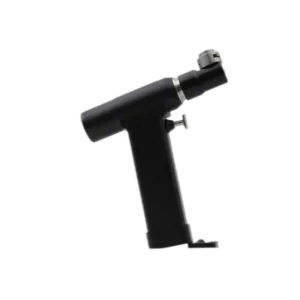
Engineered with brushless DC drive technology, low-runout cannulated chucks, and dynamic torque management for trauma, neuro, and reconstructive surgery.







A macroeconomic analysis of regulatory stringency, market capitalization, and the transition toward modular surgical platforms.
The global orthopedic power tools market—encompassing surgical hand drills, cannulated bone reamers, sagittal saws, and microsurgical handpieces—has crossed an estimated valuation of USD 2.45 billion, with projections indicating a compound annual growth rate (CAGR) exceeding 6.2% through 2032. This sustained expansion is fueled by demographic shifts toward an aging global population, increased incidence of high-energy polytrauma accidents, and exponential growth in primary and revision joint arthroplasty procedures.
Historically dominated by high-cost Western multinational conglomerates, the industrial landscape for surgical hand drills is experiencing a tectonic realignment. Hospital procurement boards, tier-one medical distributors, and Ambulatory Surgical Centers (ASCs) face acute budget compression coupled with stricter clinical efficacy mandates. As a consequence, procurement directors are aggressively seeking verified, qualified manufacturers capable of delivering Class IIa and Class IIb CE-certified orthopedic drills that conform to EU Medical Device Regulation MDR (EU) 2017/745 standards without inflating capital expenditures.
Under the European Union's updated regulatory architecture, medical device buyers can no longer rely on unverified self-declarations. Sourcing from a reliable CE-certified supplier requires exhaustive Technical Documentation Files (TDF), accredited Notified Body surveillance (such as TÜV SÜD, BSI, or DEKRA), verified Basic UDI-DI allocation, and complete registration within the European Database on Medical Devices (EUDAMED).
Modern surgical power drill production has transformed from manual machine assembly into automated cleanroom manufacturing. Leading factories leverage 5-axis CNC machining centers, automated dynamic balancing cells, and laser-welded hermetic sealing to ensure zero moisture penetration during repetitive 134°C autoclaving cycles. For international medical distributors, qualifying a high-tier Asian supply partner is no longer just a cost-reduction tactic—it is a vital competitive strategy to secure sustainable margins in regional public and private hospital tenders.
A technical white paper inspection of thermal threshold mitigation, cannulated runout tolerances, and hermetic motor protection.
Bone tissue exposed to temperatures above 47°C for longer than 60 seconds undergoes irreversible thermal osteonecrosis, resulting in delayed osteointegration or screw loosening. Our hand drills utilize patented brushless motor coils with internal temperature cut-off algorithms and optimized torque-to-speed gear reduction ratios, ensuring sustained bone cutting below 41°C under continuous ASTM F2180 testing protocols.
For accurate Kirschner-wire (K-wire) and guide-pin navigation in intramedullary nailing, cannulated core runout must not exceed mechanical thresholds. Utilizing German-ground hollow output shafts and precision Swiss bearings, SNK cannulated drills achieve axial runout under 0.05 mm, eliminating wobble and unintended cortical penetration during acute trauma reduction.
Sterilization is the primary point of failure for orthopedic power handpieces. Alkaline enzymatic detergents and repeated high-pressure steam at 134°C (273°F) deteriorate ordinary Viton seals. Our tools incorporate custom fluorocarbon and PTFE double-lip rotary dynamic seals rated to IPX8, guaranteeing fluid isolation across more than 200 validated autoclave cycles without loss of lubricant viscosity.
| Performance Characteristic | Legacy MDD / Carbon Motor Standard | SNK CE-MDR Brushless Surgical System | Clinical & Commercial Significance |
|---|---|---|---|
| Motor Commutation | Mechanical Carbon Brushes (Wearable) | Electronic Brushless Commutation (BLDC) | Zero carbon particle shedding; 400% extended operational lifespan. |
| Torque Stability | Fluctuation ±3.5% to ±5.0% | Stabilized Deviation < ±1.5% (ISO 6475) | Prevents drill stalling in dense cortical bone, preserving bone graft margins. |
| Autoclave Longevity | Degradation observed at ~80–100 cycles | Validated >200 Steam Cycles (134°C / 2.2 bar) | Reduces annual repair costs for hospitals by over 60%. |
| Sterilization Modality | Restricted primarily to ETO / Low Heat | Steam Autoclave, EO Gas, & H2O2 Plasma | Seamless compatibility with all hospital Central Sterile Supply Departments (CSSD). |
| Regulatory Traceability | Legacy National Registration | CE-MDR Class IIa/IIb with EUDAMED Basic UDI | Guaranteed market clearance and tender acceptance across European Member States. |
From polytrauma emergency wards to robotic joint reconstruction, modular power handpieces adapt to diverse surgical disciplines.
In femur, tibia, and humerus fractures, surgeons require high rotational velocity for pilot holes and high-torque low-speed driving for cannulated screws. The SNK variable-speed trigger system (0–1,250 rpm) enables smooth tactile transitions, while the 4.5 mm cannulation supports all universal guide wires for closed reduction intramedullary nailing (IMN).
Acetabular reaming demands sustained, non-stalling low-speed torque under substantial axial loads. SNK high-torque adapters deliver up to 20 N·m of continuous torque at 300 rpm, reaming uniform hemispherical sockets without jerking the surgeon's wrist or causing mechanical chatter in primary and revision total hip arthroplasty (THA).
Minimally invasive transforaminal lumbar interbody fusion (MIS-TLIF) demands low vibration handpieces with ultra-thin profiles. Featuring ultra-slim saw blades and high-speed burr attachments operating up to 40,000 rpm with runout under 0.02 mm, surgeons perform delicate osteotomies, laminectomies, and pedicle screw preparation without thermal injury to the dura mater.
Craniotomy procedures necessitate instantaneous, fail-safe disengagement once the inner cortical skull table is breached. Our CE-certified cranial perforator adapters incorporate an automatic internal clutch mechanism that halts cutter rotation within 0.05 seconds of pressure relief, protecting underlying brain parenchyma and delicate dural tissues.
Median sternotomy requires rapid, clean division of the sternal bone while safeguarding retrosternal mediastinal vascular structures. SNK sternum saw adapters feature fixed blade guards, an oscillation rate of 12,500 rpm, and a high-efficiency brushless motor that completes full sternal resection in under 12 seconds with negligible lateral vibration.
Tibial Plateau Leveling Osteotomy (TPLO) in canine veterinary surgery demands high rotational precision and specialized radial saw blade hubs. The SNK TPLO attachment provides steady radial oscillation and thermal dispersion, preventing bone necrosis along the curved cut line and accelerating bone union in animal clinical care.
Advancing from standalone mechanical handpieces to smart, sensor-integrated, and robotically-interfaced surgical devices.
The next frontier for CE-certified orthopedic hand drills lies in embedded micro-electromechanical systems (MEMS) and real-time load cell monitoring. By continuously sampling motor current draw and rotational resistance at 1,000 Hz, intelligent handpieces can automatically detect the distinct density drop between hard cortical bone and softer cancellous bone or soft tissue. This auto-stop safety feature prevents drill plunge beyond the far cortex, mitigating arterial laceration and nerve damage during bicortical trauma plating.
Current lithium-ion battery packs present transport restrictions and eventual thermal degradation over multiple sterilization cycles. Our ongoing R&D roadmap targets the integration of solid-state electrolyte cells, offering a 45% increase in energy density and thermal resilience up to 150°C. Furthermore, developing hermetically sealed handpieces with built-in inductive wireless charging coils will eliminate exposed metal battery contacts, eradicating corrosion from chemical wash cycles.
As robotic-assisted total knee arthroplasty (TKA) and spine navigation gain universal traction, surgical hand drills must interface directly with optical navigation cameras. Future SNK power systems will integrate factory-calibrated kinematic tracking arrays and open API communication protocols (such as DICOM and standard surgical navigation interfaces). This capability allows surgical handpieces to synchronize speed, depth, and spatial orientation directly with active robotic arms.
Streamlined regulatory onboarding, OEM/ODM co-development, and resilient global logistics frameworks.
For established orthopedics brands looking to expand without high R&D expenditures, SNK provides complete white-label manufacturing. We customize gear ratios (500 to 15,000 rpm), motor torque curves, CNC handpiece anodization colors, laser markings, and localized Instructions for Use (IFU) in over 18 languages within an agile 3-week delivery timeframe.
Navigating MDR compliance demands exhaustive clinical evaluation reports (CER), biocompatibility validations (ISO 10993), electrical medical device safety verification (IEC 60601-1 / IEC 60601-1-2 EMC), and usability engineering (IEC 62366). We provide distributors with complete regulatory dossiers, accelerating national MOH registration approvals.
Unexpected operating theater downtime compromises surgical schedules. To support global distributor networks, SNK maintains over 200 ready-to-dispatch clinical power systems in dedicated warehouse facilities, offering emergency consignment fulfillment within 24 hours for Asia-Pacific and 48 hours for European logistics hubs.
Detailed, verifiable answers for medical equipment procurement officers, hospital engineers, and regulatory specialists.
Complete your surgical suite with modular torque control adapters, high-frequency sternum saws, and micro-oscillating resection tools.