Explore our flagship medical bone drill units, multi-functional hollow drill adapters, and high-frequency saws designed for orthopedic trauma, spinal fusion, and reconstructive joint surgeries.



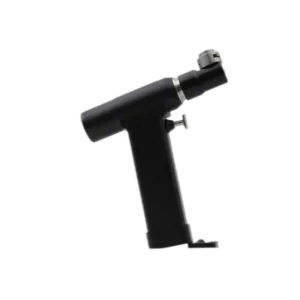



A technical treatise on metallurgical hardness, internal lumen concentricity, rotational torque damping, and surgical thermal management under the European Medical Device Regulation (CE-MDR 2017/745).
In contemporary surgical interventions—ranging from trauma intramedullary osteosynthesis and percutaneous pinning to rigid cranial stabilization—the mechanical demand placed upon rotary cut instruments has evolved dramatically. Modern orthopedic power tooling requires an intricate balance between structural fatigue limits, lumen concentricity, and thermal mitigation. A hollow core bit (cannulated drill bit or rotary hammer reamer) is not merely a conventional cutting accessory with a hole drilled through its longitudinal axis. Rather, it represents an intricately designed hydrodynamic and mechanical system where high radial torque, high axial thrust, and rapid debris evacuation must coalesce without inducing micro-fractures in structural bone or metallurgical fatigue in the instrument itself.
At Snaikang Technology Development Co., Ltd. (SNK), our dedicated research and manufacturing facilities in Baoshan, Shanghai, have solved the primary mechanical challenges associated with cannulated drilling: concentricity drift, thermal necrosis from high friction, and lumen clogging during marrow penetration. By utilizing multi-axis CNC Swiss-machining centers alongside specialized electrochemical polishing, SNK achieves internal lumen straightness tolerances within ±0.01 mm over extended drill bit lengths, ensuring that Kirschner wires (K-wires) and flexible reamer shafts pass through without binding, vibration, or kinetic energy divergence.
Scientific literature confirms that thermal osteonecrosis occurs when cortical bone temperature surpasses 47 °C for longer than 60 seconds. SNK's proprietary multi-fluted hollow bit geometry utilizes variable-pitch helical evacuation channels that draw debris upward through the exterior flutes while simultaneously allowing sterile saline suction or passive marrow egress through the central hollow core. This Dual-Path Debris Clearance maintains operating temperatures below 41 °C even under continuous bone drilling cycles at 1,200 to 1,600 RPM.
How surgical automation, minimally invasive surgical access (MIS), and strict biocompatibility mandates are reshaping international procurement requirements.
Traditional carbon-brush motors suffer from friction drag, sparking, and thermal decay. The sector has decisively transitioned to electronically commutated brushless motors that deliver stable low-end torque (up to 20 N·m) without overheating, essential for dense cortical drilling and acetabular reaming.
Modern operating suites require hollow drill bit assemblies and cannulated handpieces to be dynamically indexed to optical tracking spheres and electromagnetic navigation platforms. SNK designs tools with open protocol geometries, cross-compatible with 12 global surgical navigation frameworks.
Hospital Central Sterile Supply Departments (CSSD) demand extreme longevity. Where standard commercial drill bits degrade after 50 to 80 autoclaving cycles, SNK’s specialized aerospace-grade stainless steel (DIN 1.4112 / Custom 465) guarantees transmission deflection below 0.03 mm even after 200 steam/EO cycles.
Direct quantifiable parameters enabling biomedical procurement managers to compare SNK manufacturing standards against global industry averages.
| Evaluation Parameter | SNK Medical Factory Standard | Legacy Industry Benchmark | Clinical Benefit / Verification Standard |
|---|---|---|---|
| Torque Deviation Limit | ± 1.5% under dynamic load | ± 3.2% to ± 5.0% | Prevents micro-chatter & cortical splintering (ISO 6475) |
| Sterilization Reprocessing Limit | 200 High-temp steam & EO cycles | 80 - 100 cycles average | Maintains transmission error < 0.03 mm (DIN 13972) |
| Thermal Rise at Bone Interface | ΔT ≤ 2.0 °C above ambient | ΔT ≥ 6.5 °C above ambient | Eliminates danger of bone osteonecrosis (ASTM F2180) |
| Lumen Concentricity Tolerance | ± 0.015 mm runout tolerance | ± 0.050 mm runout | Smooth K-wire insertion without axial binding or wedging |
| Regulatory Approval Portfolio | CE-MDR 2017/745 (Class I, IIa, IIb) + MDSAP | Legacy MDD 93/42/EEC (Phasing out) | Full EUDAMED registration & global tender legality |
| OEM Customization Turnaround | Approx. 3 weeks from approved CAD | 8 to 12 weeks conventional | Accelerated market entry for private-label distributors |
Scalable, cross-compatible hardware architectures addressing distinct anatomical constraints and operative conditions.
Hollow core cannulated drills optimized for interlocking nail guidance. The 16 N·m high-torque handpiece powers through dense diaphyseal bone while maintaining exact wire tracking.
7 mm ultra-thin oscillating saws and micro-cannulated drills engineered for transforaminal lumbar interbody fusion (MIS-TLIF), avoiding soft-tissue impingement in deep corridors.
Acetabular reaming drives operating at steady low RPM under high resistance. Proprietary clutch mechanism eliminates sudden rotational kickback when engaging sclerotic bone.
Quick-release cranial drill adapters and cranial milling bits with automatic dural-release disengagement, matched with high-frequency sternum saws for emergency chest entry.
Ensuring distributor compliance, zero-friction customs clearance, and seamless post-market hospital surveillance.
Our regulatory affairs division supplies comprehensive Technical Documentation Files (Annex II & III) conforming directly with EU MDR 2017/745. With valid Free Sale Certificates filed across 21 countries, distributor tender submissions avoid the typical regulatory stall cycles.
We maintain an active buffer inventory of over 200 ready-to-deploy orthopedic power sets and thousands of modular drill/saw adapters. Regional emergency orders feature dispatch times ≤ 24 hours in Asia-Pacific and ≤ 48 hours for European logistics hubs.
We supply full video sterilization protocols, multi-language Instructions for Use (IFUs), torque verification guidelines, and onsite or remote engineering training for hospital biomedical maintenance personnel to extend instrument life.
A multi-year engineering commitment to AI-assisted bone density sensing, biocompatible ceramic coatings, and robotic connectivity.
Integration of real-time micro-piezoelectric load cells inside the cannulated handpiece to identify the cortical-cancellous boundary and halt drill progression automatically before plunging.
Applying Diamond-Like Carbon (DLC) and Titanium Aluminum Nitride (TiAlN) vacuum deposition coatings onto hollow fluted bits, cutting frictional coefficient by 42% and doubling sharpness life.
Standardizing direct quick-coupling interfaces for collaborative orthopedic robotic arms (Cobots), enabling micron-level rotational alignment and haptic force feedback telemetry.
Developing micro-channel hollow cores capable of delivering pressurized supercritical CO2 or chilled physiological saline directly to the cutting tip, maintaining zero bone temperature rise.
In-depth technical answers addressing regulatory verification, mechanical parameters, motor longevity, and private-label customization.
Brushless DC (BLDC) motors eliminate mechanical friction brushes entirely, utilizing electronic commutation managed by hall sensors. In surgical environments, this yields three profound advantages: first, it completely eradicates conductive carbon particulate shedding inside the sealed motor casing during intense vibration; second, thermal efficiency is vastly higher, allowing the handpiece to operate continuously under high rotational resistance without heating the surgeon's grip or approaching the bone necrotizing threshold; third, BLDC systems sustain stable torque even at low speeds (such as 300 RPM for acetabular reaming), whereas carbon motors experience dramatic torque drop-offs at reduced RPM.
Hollow bit runout can cause violent K-wire whipping or cortical bone shattering. SNK utilizes multi-axis CNC gun-drilling and continuous deep-hole Swiss boring machines operating under controlled coolant temperatures. Following primary drilling, bits undergo internal electrochemical flow polishing to produce a mirror-smooth lumen finish (Ra < 0.2 µm). Every manufacturing batch is verified in our in-house DIN 13972 testing laboratory using optical laser micrometers to ensure total radial runout remains within ±0.015 mm across the entire drill bit length.
Our complete orthopedic power platform and related accessories are fully certified under EU CE-MDR (EU) 2017/745 for Class I, IIa, and IIb devices, with comprehensive technical files traceable in the EUDAMED database. SNK operates an active quality management system audited and certified under ISO 13485:2016 and the Medical Device Single Audit Program (MDSAP). Furthermore, materials comply with ASTM F899 standards for surgical stainless steels and ISO 10993 for biological evaluation of medical devices.
SNK handpieces, saw blades, and cannulated drill adapters are validated for both high-temperature moist heat steam autoclaving (134 °C at 2.1 bar for a minimum of 5 minutes) and Ethylene Oxide (EO) gas sterilization cycles. Utilizing high-performance perfluoroelastomer seals and specialized ceramic motor bearings, SNK devices demonstrate transmission mechanical tolerance shift under 0.03 mm after 200 consecutive autoclave cycles, outlasting standard market benchmarks by over 100%.
Standard OEM private-label configurations (including laser marking of logos, custom anodized color-coding, modified drive speeds from 500 to 15,000 RPM, and custom connector chucks) feature an industry-leading turnaround time of approximately 3 weeks following design file validation. Because we operate 16 fully automated production lines with an annual capacity of 38,000 sets, we accommodate both specialized batch trials for boutique medical device brands and large-volume container runs for ministerial tenders.
Bone chips generated during high-speed cortical penetration frequently get compacted inside traditional closed drill flutes, turning friction into heat. SNK's hollow fluted bits combine exterior parabolic spiral chip flutes with a continuous inner suction lumen. As the drill advances along the guide wire, centrifugal forces expel dense cortical bone morsels through the outer flutes while fluid and bone marrow are continuously vented through the hollow inner core. Verified under ASTM F2180 testing protocols, this design suppresses cortical bone temperature elevation to ≤ 2.0 °C.
Explore our wide-range bone drill adapters, neurosurgical cranial attachments, micro K-wire drivers, and lightweight surgical drills designed for continuous operative stability.

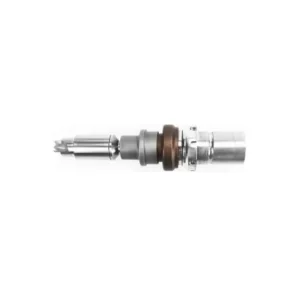



Request full engineering CAD dossiers, sterilization validation reports (DIN 13972 / ASTM F2180), or CE-MDR Declaration of Conformity files for your regional hospital supply qualification.
