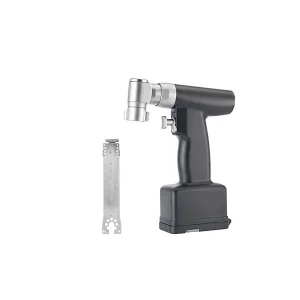
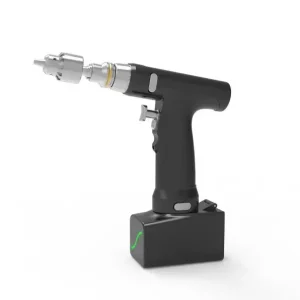
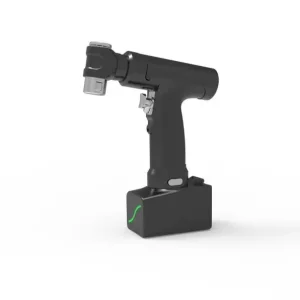
Explore our validated high-performance surgical and professional reciprocating power tool assemblies, manufactured to micron-grade tolerances and certified for demanding institutional workflows.
A technical white paper on motor thermodynamics, harmonic counterbalance mechanisms, and international regulatory alignment for high-duty surgical and industrial reciprocating cutting systems.
In the contemporary landscape of electromechanical hand tools and specialized surgical resection devices, the reciprocating saw mechanism represents an intricate synthesis of high-frequency kinematic transfer, thermal dissipation control, and mechanical longevity. Whether deployed in demanding trauma arthroplasty, osteotomy procedures, or industrial-grade precision fabrication, the reciprocating cutting system must deliver unyielding torque across diverse material densities without inducing thermal necrosis or operator fatigue. Manufacturers producing CE-certified reciprocating saw systems—including compatible high-frequency reciprocating saw adapters and handpieces modeled after industry-leading performance benchmarks like Hychika and SNK standards—must maintain uncompromising compliance with the European Machinery Directive 2006/42/EC, Low Voltage Directive 2014/35/EU, Electromagnetic Compatibility (EMC) Directive 2014/30/EU, and, where applicable for bone resection, the rigorous EU Medical Device Regulation CE-MDR (EU) 2017/745.
Engineering Core Principle: Precision reciprocating mechanisms convert brushless rotational velocities ranging from 10,000 to 15,000 RPM into controlled linear stroke amplitudes (typically 2.5 mm to 28 mm depending on surgical or heavy-duty industrial framing) with dynamic counterbalance counter-weights, reducing user-transmitted vibration to below 2.5 m/s² in accordance with ISO 5349-1.
The transition from traditional carbon-commutator brush motors to digitally regulated Brushless DC (BLDC) motors marks a decisive technological leap in reciprocating saw manufacturing. In high-frequency bone resection adapters and heavy reciprocating tools, carbon brushes generate internal friction, graphite particulate shedding, and severe Joule heating under sustained torsional resistance. Conversely, BLDC power systems utilize electronic phase commutation driven by Hall-effect sensors or back-EMF feedback circuits, achieving operational efficiencies greater than 88%. This motor topology dramatically stabilizes output torque, eliminating brush friction and allowing the tool housing to remain thermally safe (<41 °C external sheath temperature across prolonged cutting runs, satisfying ASTM F2180 guidelines).
Furthermore, the transmission gearing within high-performance reciprocating adapters relies on high-grade vacuum-carburized alloy steels (such as 20CrMnTi or surgical 17-4PH stainless steels), machined on five-axis CNC centers with gear pitch deviations constrained within ±0.005 mm. This mechanical precision prevents kinetic chatter, curtails unintended micro-lateral stroke deflection, and preserves axial thrust consistency through dense cortical structures or reinforced industrial substrates.
Two-stage epicyclic reduction gear modules deliver immense stall-resistant torque, ensuring rapid material evacuation without binding or drive-motor deceleration under heavy operational load.
Direct radial-finned heat conduction pathways and anodized aero-grade aluminum handpieces route motor core heat away from the operator handle and sensitive biological interfaces.
Keyless, auto-locking stainless steel collets enable instant blade orientation and secure retention without axial slop, preserving precise cutting paths during multi-angle osteotomies.
How institutional hospital networks, regional distributors, and brand owners evaluate technical dossiers, supply chain stability, and lifecycle cost models.
B2B procurement teams evaluating reciprocating saw manufacturers must navigate a rigorous multi-tier audit matrix. Sourcing decisions are no longer dictated solely by initial acquisition pricing; enterprise buyers evaluate the Total Cost of Ownership (TCO), which includes Mean Time Between Failures (MTBF), autoclave endurance longevity, adapter cross-compatibility, and the immediate availability of comprehensive validation documentation (including bio-compatibility test reports, EMC radiation profiles, and notified body certificates).
The global demand for reciprocating saws spans two principal segments: Industrial/Contractor-grade commercial platforms (requiring ruggedized ergonomics, universal lithium-ion platform standardization, and dust/water ingress protection) and Medical-grade orthopedic reciprocating resection handpieces (demanding ISO 13485:2016 audited facilities, hermetic sealing against steam sterilization, low vibration profiles to prevent osteonecrosis, and high-frequency stroke stability). Manufacturers capable of bridging these mechanical disciplines with flexible OEM/ODM contract lines deliver profound strategic value to distributors seeking custom shell design, private-label branding, customized stroke kinematics, and tailor-made battery management architectures.
Enterprise health systems and authorized international wholesalers mandate transparent verification across three distinct operational layers before placing master container orders:
SNK and partner manufacturing facilities offer rapid engineering iteration cycles, allowing foreign brand owners to localize and launch bespoke surgical or professional reciprocating saw systems:
Our Shanghai intelligent manufacturing center integrates 16 automated production lines, Class 7 cleanrooms, and automated testing rigs to secure zero-defect clinical reliability.
Medical-grade reciprocating saw adapters and handpieces are assembled and ultrasonically degreased in controlled positive-pressure clean environments to prevent particulate contamination.
Every motorized handpiece undergoes 100% duty-cycle load profiling on computerized dynamometers, verifying torque consistency, current draw limits, and thermal stabilization curves.
Critical eccentric shafts, push-rods, and blade-locking jaws are verified using Zeiss optical coordinate measuring machines (CMM) to guarantee concentricity and eliminate premature gear fatigue.
Our manufacturing philosophy addresses the chronic weaknesses historically associated with budget reciprocating cutters: premature gear stripping, loss of chuck retention under resonance, and ingress of blood, saline, or abrasive dust into the drivetrain. By employing dual fluoroelastomer seals coupled with labyrinth mechanical barriers, our handpieces withstand aggressive chemical decontamination and pressurized autoclave steam without moisture intrusion into the motor stator. These structural enhancements explain why more than 420 orthopedic medical centers and premier international distributors rely on our manufacturing network for mission-critical cutting systems.
A unified regulatory and warehousing matrix guaranteeing frictionless customs clearance, post-market traceability, and rapid emergency part replacement.
Our regulatory affairs department maintains direct audit approvals and continuous conformity assessments across major global markets:
We decouple global logistics bottlenecks through strategic bonded inventory and rapid-dispatch regional service hubs:
Pioneering intelligent load sensing, surgical robotics integration, and sustainable closed-loop lifecycle engineering.
Deployment of ultra-compact, high-torque brushless drive units with integrated microcontroller thermal cut-offs and ergonomic vibration-dampening shells.
Introduction of dynamic current monitoring algorithms that instantly adjust stroke cadence based on cortical versus cancellous bone resistance.
Standardized low-latency CAN-bus and optical tracking flag attachments for automated orthopedic robotic cutting arms and surgical stereotaxy.
Transition to zero-emission carbon-neutral production, utilizing recyclable bio-inert PEEK matrices capable of surviving 500+ autoclave sterilization cycles.
In-depth technical and regulatory guidance compiled for clinical engineers, biomedical directors, and overseas procurement officers.
Complete your surgical suite and distribution portfolio with our high-torque cannulated drills, oscillating bone cutters, and cardiothoracic sternum resection systems.