Engineered for delicate maxillofacial, micro-orthopedic, and joint reconstruction procedures requiring thermal necrosis control and micron-level mechanical stability.

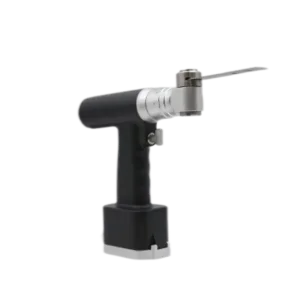






A data-backed evaluation of the global shift toward small-bone powered surgical cutting systems, brushless micro-drives, and regulatory-hardened procurement.
The worldwide orthopedic power tools industry is experiencing an unprecedented technical evolution. Driven by the rapid expansion of minimally invasive surgery (MIS), craniomaxillofacial (CMF) reconstruction, and extremity traumatology, hospital surgical suites demand handpieces that combine ultra-compact form factors with unyielding linear cutting power.
Unlike heavy sagittal or oscillating saws utilized in total knee arthroplasty (TKA), micro reciprocating saws execute axial linear strokes varying between 1.5 mm and 3.5 mm. This exact stroke envelope minimizes soft tissue shredding in tight anatomical corridors such as intercarpal joints, orbital rims, and osteotomy tunnels.
The transition from the legacy Medical Device Directive (MDD 93/42/EEC) to the stringent Medical Device Regulation (EU MDR 2017/745) has reshuffled OEM supply chains globally. Micro reciprocating saws and their accompanying sterile and non-sterile attachments are classified under Class IIa or Class IIb active surgical devices.
Notified Bodies mandate rigorous Clinical Evaluation Reports (CER), verified post-market clinical follow-up (PMCF) registries, and comprehensive validation of electronic commutation systems under EN 60601-1 and EN 60601-1-2 standards. Factories lacking closed-loop sterile barrier production and EUDAMED traceability are exiting the market.
Legacy carbon-brush micro-motors generate particulate dust during mechanical brush friction, causing high failure rates during hospital autoclave cycles (134°C steam at 2.2 bar). The modern global supply standard has pivoted completely to slotless, sensorless brushless motors (BLDC).
Modern manufacturing centers employ high-grade samarium-cobalt (SmCo) magnets capable of withstanding more than 1,000 thermal sterilization cycles without demagnetization, ensuring steady torque output of up to 15,000 strokes per minute (SPM) under dense cortical bone loading.
A transparent deconstruction of the technical files, bench testing protocols, and biological evaluations required to maintain CE mark compliance for micro surgical saws.
To qualify as a tier-one manufacturing partner, SNK constructs every technical file in strict alignment with Annex II and Annex III of Regulation (EU) 2017/745. For micro reciprocating bone saws, the device classification is determined by Rule 9 (active surgical devices intended for cutting or drilling bone).
Our manufacturing infrastructure adheres to a certified EN ISO 13485:2016 quality management system audited by EU Notified Bodies, ensuring seamless transition into tender dossiers across all European Union member states and mutual recognition markets.
| Compliance Pillar | Standard Protocol | Verified Technical Parameter |
|---|---|---|
| Electrical Safety | IEC 60601-1 (Ed. 3.2) | Class II, Type BF Applied Part Isolation |
| Electromagnetic EMC | IEC 60601-1-2 (4th Ed.) | Immunity > 10 V/m, CISPR 11 Class B Radiation |
| Biocompatibility | ISO 10993-1 / 5 / 10 | Cytotoxicity & Intracutaneous Reactivity Nil |
| Reprocessing / Steam | ISO 17665-1 | 134°C Fractional Pre-Vacuum (SAL 10⁻⁶) |
| Ingress Protection | IEC 60529 | IPX6 / IPX8 Dynamic Hermetic Sealing |
A primary clinical hazard during micro reciprocating bone cuts is osteocyte death caused by friction heat. Clinical literature confirms that exposing bone tissue to temperatures exceeding 47°C for longer than one minute induces irreversible osteonecrosis and delayed consolidation.
Our engineering division integrates finite element thermal dissipation modelling into every micro reciprocating saw handpiece:
How hospital surgical departments utilize our micro reciprocating surgical systems to optimize patient outcomes across specialized surgical disciplines.
In orthognathic surgery (Le Fort I osteotomies, bilateral sagittal split osteotomies (BSSO), and genioplasties), surgeon hand access is severely restricted by buccal soft tissues. Standard reciprocating saws are too bulky, risking laceration of descending palatine arteries or facial nerve branches.
SNK's micro reciprocating handpieces provide a low-profile 9.5 mm shank diameter paired with a balanced 2.2 mm stroke length. This configuration allows millimeter-precise horizontal maxillary advancement cuts while dampening axial recoil, protecting thin cortical plates from splintering.
In complex hand, wrist, foot, and ankle interventions—such as Scaphoid non-union excisions, first metatarsal osteotomies (Akin and Chevron procedures for hallux valgus), and pediatric tendon transfers—preserving healthy bone stock is critical.
Our micro reciprocating saws utilize ultra-thin saw blades (kerf thickness down to 0.35 mm) with diamond-ground tooth geometry. The ultra-narrow kerf minimizes intraoperative bone loss, promoting rapid bony bridging and rigid compression screw fixation.
During cervical laminoplasty and thoracic canal decompression, avoiding dural tears and thermal cord injury is the paramount surgical metric. The micro reciprocating saw's straight linear action offers significant stability over rotational burrs, which tend to 'kick' or skip off spinal laminae.
Equipped with custom dural protection guards and micro-reciprocating tip geometries, our handpieces perform smooth gutter osteotomies through outer and inner cortices without snagging underlying ligamentum flavum.
How our Shanghai manufacturing facility delivers scalable, high-yield surgical instrument production for multi-national medical brands and distributors.
All micro reciprocating saw transmission housings, eccentric drive cams, and blade quick-lock chucks are manufactured on German and Japanese 5-axis simultaneous CNC machining centers. Positional repeatability is calibrated to ±0.003 mm.
Components undergo comprehensive coordinate measuring machine (CMM) verification to eliminate concentricity deviations that could otherwise manifest as micro-vibrations in the operating theatre.
To safeguard electrical sub-assemblies and hermetic seal interfaces against bioburden and particulate contamination, assembly takes place in ISO 14644-1 Class 7 clean environments. Automated ultrasonic multi-stage cleaning lines ensure residual hydrocarbon contamination is below verifiable detection limits before final laser hermetic welding.
We provide complete industrial flexibility for private label brand partners:
Integration of embedded load-sensing microcontrollers inside the handpiece. The drive system dynamically modulates linear stroke frequencies upon transitioning from cortical to cancellous bone, virtually eliminating overshoot into surrounding neurovascular structures.
Integration of active surgical robotics trackers and high-speed data telemetry directly into the saw handpiece. Enables automated 'no-fly zone' safety shutdowns via wireless communication with surgical navigation systems within <5 milliseconds.
Convergence of ultra-high-frequency ultrasonic micro-vibrations with mechanical linear strokes in a single handpiece architecture, providing simultaneous mineralized tissue ablation and selective soft tissue preservation at sub-millimeter scales.
Browse our complete modular lineup of cannulated trauma drills, high-speed cranial instruments, and interchangeable surgical attachments manufactured under ISO 13485 standards.

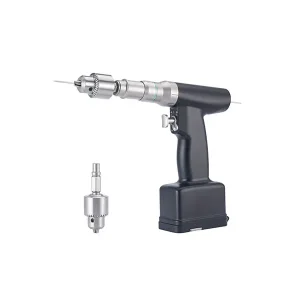




Technical, regulatory, and quality control clarifications regarding CE-marked micro reciprocating surgical saws and orthopedic production pipelines.
Whether you require CE-certified standard handpieces from ready inventory or full custom development of an OEM micro reciprocating saw system, our engineers provide complete CAD, regulatory, and production support.
Schedule Technical Consultation