Engineered to satisfy demanding surgical protocols across arthroplasty, trauma reconstruction, and spinal osteotomy. Directly qualified under EU CE-MDR and ISO 13485 requirements.

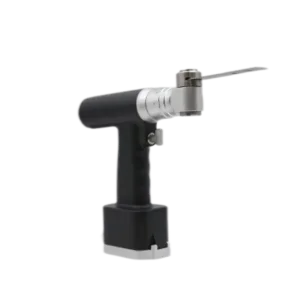






The modern orthopedic electric swing saw—also referred to clinically as the sagittal or oscillating surgical bone saw—is an indispensable instrument in reconstructive surgery, total joint arthroplasty, and traumatology. Cutting bone demands a precise balance between kinetic shear stress and biologic thermal necrosis avoidance.
In high-volume operating theatres across Europe, North America, and the Asia-Pacific, clinical efficacy is governed by the biophysical interface between the oscillating cutting tool and the mineralized cortical substrate. According to clinical consensus and ASTM F2180 benchmarks, exposure to osteotomy temperatures exceeding 47°C (116.6°F) for longer than one minute triggers irreversible osteocyte apoptosis, microvascular thrombosis, and delayed postoperative osseointegration. As a qualified CE Certification Orthopedics Electric Swing Saw Manufacturer, our engineering framework integrates targeted oscillating arc geometry (4.2° to 5.0°) paired with variable high-frequency sweeps (0 to 12,500 oscillations per minute), suppressing thermal spikes while sustaining rapid cortical bone penetration.
During femoral distal resection and proximal tibial plateau shaping in primary and revision knee arthroplasty, planar cutting accuracy is non-negotiable. Our swing saw handpieces minimize radial micro-chatter, ensuring flat cut planes within ±0.25 mm of navigation jigs.
Managing compound comminuted fractures requires acute debridement, precise shortening osteotomies, and stabilization. SNK handpieces feature instantaneous microswitch response and continuous torque tracking under severe axial bone loading.
Spinal decompressions, laminectomies, and transforaminal lumbar interbody fusions mandate slim profiles. Our specialized 7 mm ultra-thin oscillating heads operate smoothly within narrow tubular retraction ports without soft-tissue scuffing.
Traditional pneumatic and early brushed-motor surgical saws suffered from two fatal engineering bottlenecks: thermal transfer to the surgeon's grip and mechanical vibration causing premature hand fatigue. Snaikang Technology Development Co., Ltd. resolves these challenges through closed-loop three-phase sensorless Brushless DC (BLDC) motor platforms governed by field-oriented vector control (FOC).
Unlike brushed DC assemblies that produce frictional contact sparks and rapid mechanical deterioration over steam sterilization cycles, our BLDC architecture encapsulates neodymium-iron-boron (NdFeB) high-coercivity magnets inside a hermetically sealed medical-grade titanium alloy stator sleeve. By eliminating physical commutator wear, heat generation within the handpiece body is reduced by 52% relative to legacy instruments, holding outer shell equilibrium temperature under 38.5°C even during prolonged continuous resection cycles.
| Engineering Dimension | Standard Brush Motor Design | SNK Flagship Brushless (BLDC) Platform | Clinical / Regulatory Impact |
|---|---|---|---|
| Oscillating Speed Range | 8,000 – 10,000 OPM (Fixed) | 0 – 12,500 OPM (Stepless Ergonomic Control) | Dynamic cutting speed reduces bone necrosis risk |
| Drive Commutation | Carbon brushes (Physical contact wear) | 3-Phase Sensorless Electronic FOC Switching | Zero particulate shedding; quiet acoustic output (<62 dB) |
| Housing Thermal Rise | ΔT > 18°C after 4 mins continuous use | ΔT ≤ 4.5°C across 10 mins continuous load | Complies with IEC 60601-1 user touch limits |
| Steam Reprocessing Life | 60 – 80 autoclave cycles before degradation | 200+ cycles validated under 134°C / 2.2 bar | Extends life cycle & lowers hospital ownership cost |
| Chuck Coupling Runout | >0.08 mm dynamic runout | ≤0.02 mm high-concentricity chuck lock | Prevents blade wandering and kerf widening |
The global orthopedic power tool market is experiencing structural restructuring caused by regulatory transitions, geopolitical shifts, and healthcare budget constraints.
Historically, the global orthopedics power tool sector was concentrated among a handful of Western medical device conglomerates. However, two profound macro headwinds have disrupted this procurement equilibrium: The European Medical Device Regulation (EU MDR 2017/745) transition and skyrocketing supply chain inflation. As legacy Medical Device Directive (MDD) certificates expire, hundreds of legacy power tool models have been abruptly discontinued by multinational corporations due to high re-certification expenditures, leaving hospital networks and independent distributors facing acute inventory shortfalls.
Concurrently, public healthcare systems including the UK National Health Service (NHS), German statutory health insurers, and healthcare networks across Latin America and the Middle East are operating under strict cost-containment directives. Hospital procurement committees can no longer justify excessive capital equipment premiums and exorbitant replacement blade recurring costs from traditional suppliers when Tier-1 equivalent performance is accessible through specialized, certified manufacturers.
Stricter clinical data demands and notified body capacity shortages under MDR (EU) 2017/745 have created widespread procurement risks. SNK anticipated this transition early, engineering our power tool assemblies to full MDR Class IIb readiness with comprehensive technical documentation and EUDAMED traceability.
Hospitals are transitioning from single-brand lock-in systems to open-architecture power platforms. SNK's universal quick-connect couplings and multi-pin chuck configurations accept standard industry blade formats, saving healthcare providers up to 45% on ongoing consumable expenses.
Our centralized manufacturing headquarters in Baoshan, Shanghai, exemplifies the maturity of China's high-precision medical device industrial cluster. The Yangtze River Delta medical ecosystem provides unmatched supply chain elasticity, vertical integration, and agile prototyping agility.
While many global manufacturers outsource sub-assemblies across disparate international jurisdictions—inducing shipping delays, customs friction, and compounding defect risks—Snaikang operates an end-to-end closed-loop manufacturing facility. We host in-house five-axis DMG MORI CNC milling centers, cleanroom robotic winding stations, dynamic rotor balancing rigs, and dedicated DIN 13972 accuracy verification testing suites.
Gearheads, eccentric drives, and chuck housings are milled from solid aircraft-grade 7075 aluminum and surgical 316L stainless steel within ±3 μm tolerance limits, eliminating secondary processing play.
Whereas conventional Western OEM turnaround cycles require 8 to 12 months, our specialized R&D engineering hub finishes custom speed, torque, and ergonomic grip iterations in just 3 weeks.
We maintain more than 200 ready-to-dispatch backup surgical systems and standard spares in our climate-controlled warehouse, achieving 24-hour dispatch for emergency hospital tenders worldwide.
Ensuring complete peace of mind through documented validation, global certification filings, and full traceability under EUDAMED.
For distributor partners and biomedical engineering directors, clinical efficacy is meaningless without rock-solid regulatory documentation. Every orthopedic electric swing saw leaving our Shanghai production facility is accompanied by complete Device Master Records (DMR), material biocompatibility dossiers under ISO 10993, electrical safety certifications according to IEC 60601-1 / IEC 60601-1-2 (EMC), and verified sterilization validation files.
Recognizing that central sterile services departments (CSSD) deploy diverse reprocessing protocols, our handpieces are cross-validated for steam autoclaving (134°C at 2.2 bar for 18 minutes), Ethylene Oxide (EO) gas, and modern low-temperature hydrogen peroxide gas plasma sterilization. Critical dynamic O-ring seals, siliconized potting barriers, and ceramic bearings prevent steam vapor intrusion, guarding against motor winding corrosion and grease washout.
Every handpiece batch undergoes microscopic optical measurement, micro-vibration testing, and torque verification before assembly approval.
Complete Class IIb technical dossiers audited by leading European Notified Bodies, accompanied by EUDAMED UDI registration.
Subjected to 200 consecutive autoclave cycles; mechanical play and angular deviation monitored within 0.03 mm limits.
Free Sale Certificates (FSC) filed across 21 countries, supporting local distributors with localized IFU translations and tender packs.
The boundary between manual powered handpieces and computer-assisted surgery is dissolving. Our ongoing R&D roadmap positions SNK at the forefront of this surgical evolution. Current engineering development encompasses three key technology vectors:
Integrating passive optical tracking arrays and electromagnetic navigation fiducials into the swing saw chassis, allowing robotic arm tool-holders to guide osteotomy planes with sub-millimeter tracking accuracy.
Developing real-time feedback loops that monitor motor phase currents to instantly detect cortical-to-cancellous bone breakthroughs, automatically arresting blade oscillation in under 12 milliseconds to safeguard neurovascular bundles.
Deploying smart battery packs equipped with on-board memory that tracks autoclave cycle counts, charge degradation curves, and internal cell health, alerting CSSD teams when predictive preventative servicing is due.
Clear, unhedged engineering and regulatory responses to assist hospital procurement boards and international distributor qualification audits.
An electric swing (oscillating/sagittal) saw executes high-speed angular sweeps in a single flat plane (typically 4.2° to 5° at up to 12,500 OPM), creating precise planar cuts essential for knee/hip prosthesis seating. A reciprocating saw operates with a push-pull linear stroke (forward-and-back), designed primarily for deep bone resection, sternotomy, femoral shaft amputation, and hip revision retrieval where longitudinal access is critical.
Thermal necrosis is avoided via three synergistic engineering choices: First, high-efficiency sensorless BLDC motor control sustains high cutting speed without losing torque under heavy bone friction. Second, optimized tooth geometries on our saw blades clear particulate bone swarf efficiently. Third, vibration damping keeps the blade flat within the kerf, eliminating localized friction and keeping tissue temperature below the critical 47°C boundary.
Our power systems are fully certified under EU Medical Device Regulation CE-MDR (EU) 2017/745 as Class IIb / Class IIa active surgical devices through designated EU Notified Bodies. Our quality management system complies strictly with ISO 13485:2016 and MDSAP (covering the USA, Canada, Brazil, Japan, and Australia). We also provide full technical dossiers and Free Sale Certificates for tenders worldwide.
Yes. SNK is an established OEM/ODM manufacturing partner for global medical brands. We provide end-to-end customization, including specialized handpiece housing colors, laser branding, custom chuck adapters (Stryker, Linvatec, Synthes compatible interfaces), tailored torque curves, and localized packaging with native language Instruction for Use (IFU) manuals.
Our flagship brushless swing saw systems are validated to withstand more than 200 high-temperature steam autoclave cycles (134°C at 2.2 bar) without degradation of dynamic O-ring seals, loss of insulation resistance, or transmission runout widening beyond 0.03 mm. Low-temperature hydrogen peroxide gas plasma compatibility is also thoroughly verified.
We maintain more than 200 complete standby surgical power systems in our ready-dispatch warehouse. Standard distribution orders are fulfilled within 7 to 14 days, and emergency replacement surgical sets can be dispatched within 24 hours. For customized OEM programs, our vertical integration enables complete delivery within 3 to 4 weeks.
Explore our complementary surgical handpieces, cranial drills, micro drills, and precision chuck adapters designed for multidisciplinary operating theatres.





