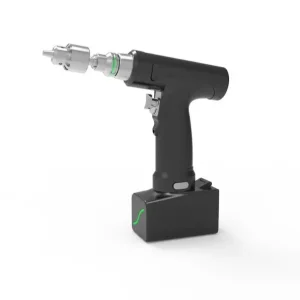
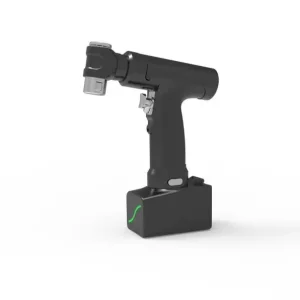
Certified medical grade bone resection handpieces, interchangeable reciprocating systems, and high-frequency surgical saws for clinical applications.




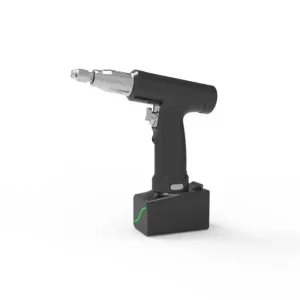


In contemporary surgical interventions—spanning complex orthopedic reconstruction, acute polytrauma management, cardiothoracic sternotomy, and minimally invasive spinal decompression—the performance of surgical cutting instruments defines operative efficacy and patient outcomes. The term "Receptacle Saw Cordless" encompasses high-torque, modular reciprocating and oscillating surgical saw architectures engineered with self-contained, high-density lithium-ion power packs.
The global shift away from pneumatic umbilical hoses and tethered AC line consoles is driven by the mandate for operating theater ergonomics, uninhibited range of motion, and reduced cross-contamination vectors. However, transition to cordless surgical sawing tools requires overcoming three major biomedical engineering hurdles: strict adherence to CE-MDR (EU) 2017/745 conformity, containment of thermal bone necrosis beneath the critical 47°C threshold, and endurance under repetitive steam autoclave cycles at 134°C.
Certified orthopedic power tools must satisfy strict harmonized requirements for international hospital qualification:
The shift from the Medical Device Directive (MDD 93/42/EEC) to the Medical Device Regulation imposes stringent clinical evaluation, technical file documentation, and supply-chain traceability.
Under MDR Annex VIII, surgical power systems are classified as Class IIa or Class IIb active devices intended for surgically invasive cutting, drilling, and reaming. Cordless receptacle and reciprocating saws require Notified Body review covering electrical safety (IEC 60601-1), electromagnetic compatibility (IEC 60601-1-2), and device performance.
Every handpiece, battery casing, aseptic transfer funnel, and saw blade is assigned a Unique Device Identification (UDI-DI / UDI-PI). Complete device histories are registered within the EUDAMED database, providing institutional buyers with supply chain transparency from raw bar-stock machining to post-market clinical follow-up (PMCF).
Autoclavable cordless power systems undergo moist heat validation under EN ISO 17665-1. Testing validates that microbial challenge reductions (SAL 10⁻⁶) are achieved throughout internal transmission couplings and bearing assemblies without degrading motor windings or dry-running mechanical seals.
| Evaluation Parameter | Legacy MDD 93/42/EEC Standard | Current CE-MDR (EU) 2017/745 Benchmark | SNK Medical Factory Standard |
|---|---|---|---|
| Clinical Evaluation | Literature equivalence allowed with loose predicate criteria. | Stringent clinical data from equivalent devices; proactive PMCF. | Clinical validation in 420+ surgical centers with PMCF registry. |
| Reprocessing Cycles | Often manufacturer self-declared up to 50 autoclave cycles. | Rigorous validation of life-cycle degradation and transmission wear. | ISO 17665 certified <0.03 mm runout after 200 autoclave cycles. |
| Thermal Rise Threshold | General safety parameters without continuous tissue load testing. | ASTM F2180 verification: contact surface bone heating <47°C. | Peak temperature rise restricted to <2°C under full continuous duty. |
| Risk Management | ISO 14971:2007 baseline risk management matrix. | ISO 14971:2019 comprehensive risk-benefit over product lifecycle. | Closed-loop CAPA monitoring with adverse event rate <0.03 PPM. |
How Shanghai-centered precision micro-machining and advanced automation have established China as the benchmark for cost-to-performance surgical power systems.
Handpiece housings, oscillating eccentric shafts, and chuck mechanisms are machined on 5-axis Swiss-type turning centers. Micro-tolerance gearboxes achieve an angular play under 0.05°, eliminating surgeon hand fatigue and ensuring that vibrational energy transfers into cutting rather than the grip.
Leveraging regional rare-earth magnet supply chains and automated coil-winding clusters, Chinese facilities fabricate medical-grade slotless BLDC motors that generate high power density, run cooler than brush-commutated alternatives, and yield higher battery efficiency per charge.
Finished assemblies are aligned in ISO 14644-1 Class 7 clean environments. Each unit undergoes dynamometer load profiling, acoustic emissions spectrum testing (held below 65 dBA), and laser vibration analysis prior to pouch packaging and gamma or EO sterilization.
Optimized handpiece ergonomics, reciprocal blade throw geometries, and speed controls for specific surgical sub-disciplines.
In primary and revision hip and knee arthroplasty (THA/TKA), cordless sagittal and receptacle saws deliver planed bone cuts for implant seating. Stable 12,500 RPM micro-strokes prevent blade deviation and skiving against titanium osteotomy jigs.
Equipped with variable-speed triggers and narrow reciprocating blades, handpieces assist in resecting irregular diaphyseal fractures, shortening osteotomies, and clearing fibrous non-unions without causing microvascular thermal damage to the periosteum.
Dedicated high-frequency sternum saw configurations incorporate guided blade guards. These prevent retrosternal pericardial lacerations during median primary openings and high-risk repeat cardiothoracic re-entries.
Ultra-thin (7 mm) oscillating and reciprocal micro-saws allow transforaminal access during MIS-TLIF and cervical corpectomies, removing ossified posterior longitudinal ligaments with direct tactile feedback.
Emerging technologies shaping modern surgical theaters: intelligent battery systems, low-vibration drivetrains, and computer-assisted surgery integration.
Contemporary operating protocols utilize two distinct battery paradigms: Aseptic Battery Transfer (where non-sterile high-capacity lithium packs are funneled into sterile handpiece housings) and Autoclavable Battery Packs constructed with specialized PEEK (polyether ether ketone) casings and hermetic nickel-plated contacts. Advanced internal battery management systems (BMS) monitor cell impedance, prevent deep discharge during extended storage, and balance charge across multi-cell arrays to prevent thermal runaway.
Modern micro-oscillating and reciprocating saws employ digital signal processor (DSP) algorithms that track rotor back-electromotive force (Back-EMF). This enables millisecond-level torque compensation: when the saw blade encounters dense cortical bone from softer cancellous marrow, the handpiece maintains commanded stroke rates without binding, stalling, or requiring increased surgeon push-force.
Excessive tool vibration causes surgeon fatigue and micro-fractures along resected bone planes. Modern handpiece architectures employ multi-axis internal elastomer dampers and counterbalance eccentric cams that shift resonant frequencies outside the human hand's neuromuscular tremor range (8–12 Hz), enhancing control in delicate osteotomies.
The emergence of robotic-assisted orthopedic platforms requires saw systems to accommodate optical tracker arrays and boundary-constrained cutting protocols. Modern handpieces feature precision indexing surfaces, standardized tracker mounts, and remote telemetry links to interface directly with active haptic and boundary-enforced robotic arms.
Essential technical, financial, and logistical criteria for evaluating OEM and ODM orthopedic power tool suppliers.
| Evaluation Pillar | Critical Verification Checklist | Risk Mitigation & Impact Analysis |
|---|---|---|
| Quality Management System (QMS) | ISO 13485:2016 scope, MDSAP compliance (covering US, Canada, Australia, Japan, Brazil), unannounced audit records. | Prevents supply chain interruption and customs impoundment resulting from non-conforming manufacturing processes. |
| Direct Drive Interoperability | Universal quick-connect coupling compatibility across bone drills, sagittal, reciprocating, and sternum attachments. | Reduces hospital capital expenditure (CapEx) by letting an institution share handpiece platforms across surgical teams. |
| Reprocessing Durability | Validated autoclave life testing data (>150 cycles), chemical disinfectant resistance, steam barrier seal integrity. | Lowers long-term Total Cost of Ownership (TCO) by reducing motor rebuild frequency and handpiece breakdown rates. |
| Supply Chain & Buffer Stock | Factory warehouse response times (<48h Europe / <24h APAC), guaranteed spare parts availability for 7+ years. | Maintains scheduled surgical theater availability without cancellations caused by instrument maintenance delays. |
Answers to complex queries posed by hospital biomedical teams, distributor compliance officers, and OEM procurement managers.
Cannulated drills, K-wire attachments, micro-oscillating saws, and cranial adapters for integrated surgical theater platforms.