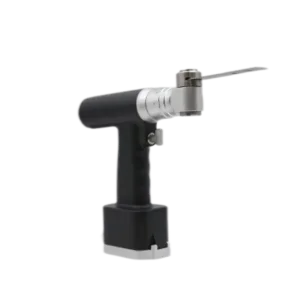
Engineered to meet stringent international standards including CE-MDR and ISO 13485:2016, our handpieces, oscillating and reciprocating saws deliver sub-millimeter surgical accuracy and maximum motor longevity.
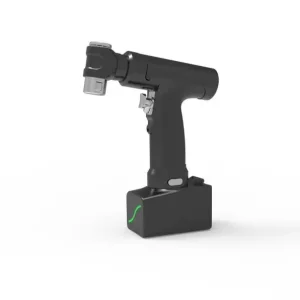




The global market for powered reciprocating saws spans high-output industrial construction hand tools—such as those popularized by brands like Ingco—to ultra-stringent medical osteotomy bone saws. Unveiling the technical certification pathways, electromagnetic compatibility (EMC), and mechanical safety protocols is essential for global B2B procurement leaders.
For commercial and hardware-grade reciprocating saws (exemplified by high-torque cordless systems like Ingco), compliance with 2006/42/EC is mandatory. Harmonized standards such as EN 62841-1 and EN 62841-2-11 dictate rigorous mechanical safety checks, including blade retention under sudden jam conditions, dual-switch interlocks to prevent accidental startup, and operator handle vibration isolation to minimize Hand-Arm Vibration Syndrome (HAVS).
Modern brushless reciprocating saws depend on smart microcontroller-driven electronic commutation. Under EN 55014-1/2, European CE testing guarantees that high-frequency motor switching does not induce line noise or RF interference with hospital instrumentation or industrial automation controllers, while the Low Voltage Directive and EN 60335 govern thermal isolation and high-capacity Lithium-ion battery packs.
When reciprocating saw mechanics are adapted to medical osteotomy, arthroplasty, or sternotomy, regulatory thresholds increase exponentially. Moving beyond simple self-declaration, CE-MDR Class IIa/IIb certification mandates validated biocompatibility (ISO 10993), steam autoclave survival (>200 cycles at 134°C per DIN 13972), bone necrosis thermal thresholds (<41°C per ASTM F2180), and full EUDAMED post-market traceability.
China represents over 78% of the world’s power tool assembly and precision surgical handpiece capacity. Exploring direct factory integration reveals distinct supply chain resilience, advanced automation, and cost efficiencies.
Chinese industrial power tool clusters in Jiangsu, Zhejiang, and Shanghai achieve unmatched synergy. Key raw materials—such as NdFeB permanent magnets for brushless motors, 440C martensitic stainless steel for high-wear reciprocating saw blades, and aerospace aluminum handpiece alloys—are produced within a 100-kilometer radius. This geographic proximity compresses supply lead times from 12 weeks to under 15 business days.
Whether producing heavy-duty commercial reciprocating saws competing with Ingco or high-end surgical power handpieces under ISO 13485:2016, modern Chinese factories utilize cleanroom production (ISO 14644-1 Class 7). Automated testing rigs conduct 100% duty-cycle burn-in, vibration signature analysis, and hermetic seal pressure decay checks before packaging.
Procurement directors and B2B hardware importers often ask why precision medical reciprocating saws demand distinct manufacturing lines compared to commercial power tools like Ingco. The matrix below contrasts core mechanical characteristics.
| Performance Dimension | Commercial Reciprocating Saw (e.g., Ingco Industrial) | High-Precision Medical Bone Reciprocating Saw | Engineering Significance |
|---|---|---|---|
| Motor Architecture | 18V–20V Brushless or Carbon-Brush DC Motor | Brushless Sinusoidal Motor with Hall Sensors | Medical units avoid spark generation and maintain constant torque at low frequencies. |
| Oscillation / Stroke Rate | 0 – 3,000 SPM (Strokes Per Minute) | Up to 12,500 – 15,000 SPM / RPM Equivalent | Higher stroke frequency yields smooth osteotomy cuts without splintering cortical bone. |
| Stroke Length | 20 mm – 28 mm (Long stroke for rapid wood/metal demolition) | 3 mm – 8 mm (Micro-stroke for controlled bone resection) | Minimizes accidental soft-tissue snagging and neurovascular bundle injury. |
| Regulatory Directives | CE Machinery (2006/42/EC), EMC (2014/30/EU), RoHS | CE-MDR (EU 2017/745), ISO 13485, MDSAP | Demands clinical evaluation reports (CER), EUDAMED registration, and biocompatibility. |
| Thermal & Sterilization Resistance | Air-cooled, operating temp <65°C; non-submersible | Hermetically sealed; survives 134°C steam autoclaving >200 cycles | Surgical tools require custom high-temperature O-rings and fluoropolymer potting. |
| Vibration & Runout Tolerance | HAVS acceleration <2.5 m/s²; chuck play <0.5 mm | Axial runout <0.03 mm; strict handpiece balance | Enables microsurgical millimeter accuracy across multi-hour joint reconstruction. |
Leading distributors across Europe, North America, the Middle East, and Latin America require more than just low unit costs. Sourcing strategies focus on mitigating regulatory liability and securing responsive local assistance.
Factories provide pre-assembled CE Technical Construction Files (TCF), EU Declarations of Conformity, RoHS testing certificates, and Material Safety Data Sheets (MSDS) for UN38.3 battery transport. This eliminates customs delays and accelerates national Ministry of Health or trade authority import licenses.
To safeguard hospital supply chains and industrial contractor fulfillment, partner programs maintain forward stocking reserves. Standard warehouse response time is under 48 hours for European distributors and under 24 hours for Asia-Pacific territories, backed by over 200 standby tool sets held ready for rapid dispatch.
Distributors expanding their own proprietary equipment portfolios leverage turnkey private label programs. Factory capabilities include customized tool body Pantone color schemes, customized battery casings, high-precision laser serialisation, and localized multi-language Instructions for Use (IFU) compliant with local labeling laws.
From robotic orthopedic end-effectors to IoT-enabled battery packs, technological convergence is elevating safety, thermal dissipation, and cutting efficiency.
Microprocessors dynamically modulate brushless motor current based on tissue density or cutting resistance, preventing blade bogging and eliminating motor stall current surges.
Advanced titanium-nitride (TiN) blade coatings and micro-fluted tooth geometries optimize chip clearance and friction dissipation, safeguarding bone and delicate surfaces.
High-discharge cylindrical 21700 cells and solid-state battery testing provide 35% higher energy density with sub-30 minute intelligent recharge cycles.
Single drive handpieces compatible with interchangeable quick-coupling adapters for cannulated drills, reciprocating saws, oscillating blades, and cranial burrs.
Whether operating in heavy structural demolition or sterile medical operating theatres, reciprocating saw mechanisms are engineered to deliver precise linear cutting action.
In heavy-duty municipal utilities, pipe fitting, and framing installations, commercial reciprocating saws (such as Ingco brushless tools) chew through galvanized conduits, structural steel beams, and composite framing with high-stroke reciprocating blades.
In surgical suites, precision reciprocating saws are deployed for femoral neck osteotomy, proximal tibial resections, and acetabular access. Micro-stroke linear reciprocation allows surgeons to make controlled cuts without damaging adjacent neurovascular structures.
During emergency cardiovascular revascularization and median sternotomy, specially adapted reciprocating sternum saw handpieces equipped with protective footplates cleanly divide the sternum, shielding the pericardium and internal mammary arteries.
Direct answers to the most common inquiries received from procurement managers, biomedical engineers, and commercial tool importers.
Complete your institutional inventory or distribution portfolio with our high-torque cannulated drills, neurosurgical cranial adapters, and ultra-durable carbon and brushless handpieces.