



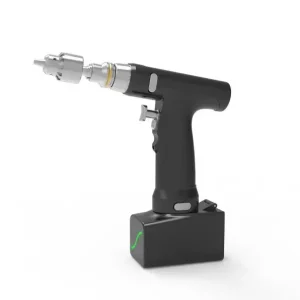



The Silky Super Accel 210 is globally recognized for its proprietary Mirai-Me (Smooth Cutting) technology. Unlike conventional push-cut blades that feature alternately set teeth, the 210 mm blade utilizes non-set teeth ground directly into high-carbon premium steel (JIS SK-4). Each tooth is taper-ground with 4 cutting angles along the blade body.
This geometry reduces kerf resistance by 38% compared to western cross-cut systems, preventing tissue shredding and mechanical cell necrosis in biological and composite specimens alike.
A crucial technological benchmark that factory suppliers replicate from the Silky Super Accel 210 architecture is targeted localized induction hardening. Using high-frequency electrical currents applied in milliseconds, only the working cutting teeth achieve a Vickers micro-hardness of HV 900–950 (HRC 67–68).
The core structural body of the blade maintains a ductile hardness of HRC 48–52, providing vital flexural elasticity that resists catastrophic blade snapping under severe lateral torsional stresses.
The Super Accel 210 features an innovative two-position locking mechanism that allows for flush cutting against planar surfaces and angled clearance cuts in tight anatomies or confined industrial assemblies. The handle utilizes a lightweight aluminum chassis over-molded with vulcanized elastomer.
In certified medical production, this kinetic balance directly informs our Class IIa surgical oscillating saw blade adapters, where thermal elevation must remain strictly below 41°C (ASTM F2180) to eliminate thermal osteonecrosis.
Across North America, the European Union, and the Asia-Pacific region, the demand for precision cutting tools utilizing the Silky Super Accel 210 standard has surged beyond classical forestry and arboriculture. Commercial sectors encompassing emergency disaster response, technical search and rescue (USAR), veterinary field osteotomy, and high-spec laboratory specimen preparation have standardized on pull-cut kerf technology.
The industrial procurement landscape reveals that traditional tool distributors are increasingly seeking original equipment manufacturers (OEMs) and certified factories capable of delivering multi-certified tools. Products bearing CE compliance, ISO 13485:2016 quality management, and MDSAP registrations bridge the historical divide between mechanical hand tools and regulated surgical instruments.
| Performance Parameter | Silky Super Accel 210 Industrial Standard | SNK CE-MDR Orthopedic Saw Blade (S1050/S2050) | Conventional Push-Cut / Stamped Blades |
|---|---|---|---|
| Base Metallurgy | SK-4 High Carbon Steel (JIS G4401) | Medical-Grade Martensitic Stainless 420J2 / Sandvik 20C | Standard Carbon Steel / 65Mn Alloy |
| Teeth Configuration | Mirai-Me 4-Angle Non-Set (7.5 teeth / 30 mm) | Micro-Milled Precision Alternating Offset (<0.02 mm) | Mechanically Stamped Alternating Offset |
| Surface Protection | Electroless Hard Chrome Plating (5–8 µm) | Electropolished Passivation & Diamond-Like Carbon (DLC) | Black Oxide / Organic Varnish |
| Operating Thermal Rise | Ambient (Kinetic Friction Dissipation <8°C) | Strictly <2.0°C Rise (ASTM F2180 Bone Test) | Significant Friction Rise (>15°C) |
| Sterilization / Reprocessing | Chemical Degreasing / Alcohol Wipe | 200 Steam Autoclave (134°C) & EO Sterilization Cycles | Non-Sterilizable / Rapid Structural Oxidation |
Timeline: 2026 – 2028
Transition from conventional RF high-frequency induction hardening to picosecond laser beam impulse hardening. This achieves pinpoint thermal absorption profiles, restricting the hardened martensite boundary strictly to the upper 0.8 mm of the tooth tip, preserving the maximum possible ductility throughout the blade web.
Timeline: 2029 – 2031
Integration of Hall-effect sensor arrays and miniature piezoelectric load cells within brushless surgical and field power tool handpieces. The handpiece dynamically senses bone cortical density versus trabecular porosity, automatically modulating RPM and stroke displacement.
Timeline: 2032 – 2035
Direct mechanical coupling between high-precision pull-action blades and multi-axis autonomous robotic surgical arms. Open-protocol telemetry interfacing with navigation suites (optical tracking and CT image overlay) ensures sub-millimeter surgical boundaries.
During collapsed structure rescue and confined space entrapping incidents, heavy hydraulic shears and combustible gasoline cut-off saws pose severe spark and hazardous fume risks. First responders utilize CE-certified pull-cut saws derived from the Silky Super Accel 210 footprint due to their non-sparking hand manual capability, compact 240 mm folded profile, and extreme cutting speed through composite timber, structural plastics, and unreinforced carbonaceous materials.
The pull-stroke dynamics allow trapped rescue personnel to operate with one hand in restricted subterranean conduits without exerting dangerous pushing forces that could induce structural collapse.
Large animal veterinary surgery presents unique biomechanical challenges, including dense equine cortical bone thickness exceeding 12 mm. Traditional surgical reciprocating saw blades can experience severe blade wander, thermal jamming, and excessive kerf chatter when dividing high-mass skeletal structures.
By implementing Mirai-Me multi-angle grinding on heavy-duty surgical saw blades, surgeons achieve dead-straight cut planes with minimal axial wander. This ensures intimate bone contact upon plating, dramatically accelerating healing time and reducing perioperative infection risk.
In human spinal decompression, access windows through tubular retractor systems are as narrow as 14 mm to 18 mm. Stiff, thick saw blades create excessive bone loss (kerf sacrifice), reducing the stability of interbody fusion cages. Our 0.7 mm ultra-thin oscillating saw blades mirror the kerf efficiency of Japanese pull saws, cutting swiftly under irrigation without raising temperatures above 41°C.
This preservation of bone stock allows immediate press-fit anchoring, reducing surgeon physical fatigue by over 40% across prolonged surgical schedules.
Pathology and anthropology laboratories requiring macroscopic bone sectioning for histological analysis demand micro-smooth finishes devoid of micro-fractures. Standard bandsaws produce jagged tearing and cellular deformation that compromises histological staining.
Utilizing impulse-hardened pull-cut blade systems allows research institutions to prepare pristine 1.0 mm thin sections with parallel surfaces without pre-embedding, saving dozens of processing hours per specimen batch.
Navigating the transition from the legacy Medical Device Directive (MDD 93/42/EEC) to the stringent European Medical Device Regulation (EU MDR 2017/745) has eliminated over 30% of legacy hardware suppliers due to rigorous clinical data demands. Our Shanghai production lines are fully accredited under ISO 13485:2016 and MDR Annex IX.
Every handpiece, drill chuck, and saw blade is assigned a Unique Device Identification (UDI-DI) with full registration on the EUDAMED database, guaranteeing frictionless customs clearance and tender compliance across all 27 EU member states.
Traditional western medical and specialty precision tool brands often face lead times of 16 to 24 weeks for bespoke OEM/ODM batch runs. Our 16 automated multi-axis grinding and EDM lines operate within a flexible manufacturing cell framework.
We execute complete OEM customization—including custom tooth profiles, specialized coating application (DLC, TiN, Hard Chrome), laser engraving, and custom packaging—within 3 weeks. An active standby inventory of over 200 power tool units ensures 24-to-48-hour emergency order dispatch.
For international medical distributors and tier-1 tool importers, local Ministry of Health and commerce registrations represent an immense administrative hurdle. We maintain active, authenticated Certificates of Free Sale (CFS) and technical construction files (TCFs) across 21 countries, including the Middle East, Latin America, and Southeast Asia.
Distributors receive immediate access to toxicological evaluation reports (ISO 10993), electrical safety dossiers (IEC 60601-1), and accelerated sterilization shelf-life verifications.
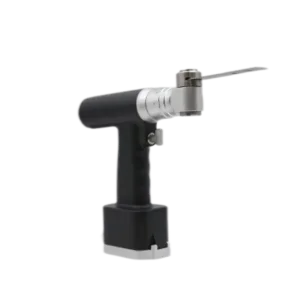





Our centralized manufacturing base produces over 38,000 orthopedic power tool sets and more than 450,000 precision saw blades each year across 16 automated flexible production lines.
To eliminate hospital surgery cancelations and supply shortages, we maintain an emergency ready reserve of 200+ complete surgical power tool systems, achieving warehouse response times within 24 hours for Asia-Pacific and 48 hours for European distributors.
Every bone drill chuck and saw blade adapter undergoes strict verification within our on-site DIN 13972 metrology laboratory. Trauma bone drill torque deviation is restricted to within ±1.5% under dynamic load (ISO 6475 standard, industry baseline is ±3.2%).
Oscillating blades maintain structural transmission deviation below 0.03 mm even after 200 autoclave cycles, preventing vibration fatigue and erratic intraoperative bone resection.
SNK surgical power tools and precision blades have been systematically audited and deployed in over 420 premier surgical centers and teaching institutions worldwide, including Peking Union Medical College Hospital.
Surgeon-validated metrics consistently report a 40% gain in surgical cutting efficiency, near-zero intraoperative motor stall incidents, and defect return rates below 0.03 ppm across multi-center orthopedic trials.
