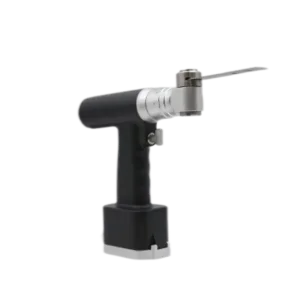
Benchmarked against industrial cordless drive standards like the Bauer 20v reciprocating saw platform, these high-reliability cutting handpieces and modular adapters deliver micron-level oscillation, surgical-grade biocidal isolation, and consistent battery-assisted torque.








The cordless tool transformation has elevated 20V battery reciprocating saws from general demolition instruments to ultra-precise cutting mechanisms across industrial fabrication, mechanical retrofitting, and high-spec specialized operations.
The global equipment market is decisively centered on the 20V (18V nominal) battery standard, popularized by brands such as Bauer, DeWalt, and Milwaukee. Commercial buyers demand interchangeable modular pack designs, thermal regulation circuits, and brushless motor integration that sustain duty cycles without thermal clipping.
Traditional reciprocating saws caused severe operator fatigue through unbalanced inertial mass reciprocation. Modern OEM factories implement dynamic counter-weight balancer shafts and isolated crank assemblies, reducing hand-arm vibration levels to well beneath ≤ 2.5 m/s² for long-shift operations.
Precision engineering learned from orthopedic bone saws—such as SNK's 12,500 RPM oscillation systems and ISO 13485 cleanroom machining—now directly influences high-end cordless reciprocating tools, introducing hermetically sealed planetary transmissions and aerospace gear metallurgy into consumer-facing tool brands.
Specialized Chinese manufacturers have evolved beyond simple assembly hubs into vertically integrated advanced engineering clusters capable of delivering extreme dimensional accuracy, rapid tooling, and certified quality controls.
With die-casting, motor winding, surface nitriding, and injection molding located within a 50 km logistics radius in regions like Shanghai and Zhejiang, component turnaround time is slashed from weeks to hours, allowing rapid design iterations.
Factory setups utilize automated 5-axis CNC multi-station machining centers, DIN 13972 dynamic accuracy balancing testbenches, and automated surface-mount technology (SMT) for brushless motor control units, guaranteeing defect rates below 0.03 ppm.
Where Western counterpart facilities require up to 16 weeks to validate stroke mechanism molds, Chinese Tier-1 plants fabricate hardened tooling, run CAE stress simulation, and deliver verified pilot runs in under 21 business days.
Top facilities maintain dual track certifications—including CE-MDR (EU) 2017/745, ISO 13485:2016 for medical cutting devices, alongside UL/CSA, RoHS, and MDSAP registrations—ensuring instant customs compliance across Europe, the Americas, and APAC.
| Performance Specification | Standard Retail 20V Saw (Bauer Class) | Industrial Tier-1 Heavy Duty | Medical/Orthopedic Reciprocating Class |
|---|---|---|---|
| Motor Architecture | Brushed or Entry Brushless | Brushless Sinusoidal FOC Motor | Ultra-High-Speed Enclosed Brushless |
| Oscillation / Stroke Velocity | 0 – 3,000 SPM | 0 – 3,300 SPM (Variable Dial) | Up to 12,500 RPM / Oscillation Equivalent |
| Torque Stability & Deviation | ± 8.5% | ± 3.2% | < ± 1.5% (ISO 6475 Validated) |
| Reprocessing / Sterilization | Wipe Clean Only | IP54 / IP56 Splash Resistant | Autoclave Steam & EO Validated (200+ Cycles) |
| Gearbox Transmission Backlash | 0.25 – 0.40 mm | 0.10 – 0.18 mm | ≤ 0.03 mm Extreme Precision |
Reciprocating saws engineered with 20V battery power are utilized globally in diverse field conditions requiring distinct ergonomic balancing, environmental sealing, and duty cycles.
Plumbers and electrical contractors require compact, one-handed 20V reciprocating saws capable of sliding between 16-inch on-center studs. Key requirements include tool-free blade clamps, orbital stroke switching, and LED worklight integration for dark subflooring cuts.
Fire services and disaster relief teams demand heavy-duty reciprocating units operating at 3,000+ strokes per minute with hardened carbide-tipped blades to slice through boron-alloy ultra-high-strength steel automotive pillars without hydraulic hose encumbrance.
In surgical theaters, reciprocating bone saws like the SNK S1050/2050 series perform precise femoral osteotomies and sternotomies. Thermal buildup is held strictly beneath 41 °C to prevent osteonecrosis, requiring brushless precision and zero lubricative leakage.
Strategic sourcing teams evaluating OEM/ODM manufacturing partners for 20V cordless reciprocating saws and precision cutting systems focus on four foundational pillars.
B2B buyers require battery packs built with high-discharge 18650 or 21700 lithium cells capable of 35A continuous draw. Integrated Battery Management Systems (BMS) must offer low-voltage cutoffs, thermal runaway protection, and multi-brand physical socket compatibility.
Cordless tools are abandoning mechanical brush commutators. Brushless designs yield 40% greater torque per amp, eliminate sparking, reduce housing heat signatures, and extend motor lifespan past 2,000 continuous hours without maintenance.
Importers require OEM factories offering flexible colorway molding, pad-printed custom branding, localized blister/blow-mold packaging, and international cord plug certification to pass local retailer standards seamlessly.
Enterprises prefer factory suppliers that also manufacture higher-standard systems (such as medical bone saws and aerospace gearboxes) because their internal QA protocols, metallurgical testing, and tolerance thresholds far exceed average commercial workshops.
Authoritative answers to critical operational, engineering, and manufacturing questions posed by procurement officers and technical evaluators.
The Bauer 20v reciprocating saw platform is engineered primarily for general residential demolition, light framing, and plumbing, operating typically between 0–3,000 strokes per minute with standard carbon or compact brushless drives. In contrast, high-spec industrial and surgical reciprocating systems (like the SNK series) utilize hermetically sealed brushless motors operating up to 12,500 RPM equivalents with transmission runout below 0.03 mm. Medical versions feature biocompatible surgical-grade stainless alloys capable of withstanding 200+ high-pressure autoclave steam sterilization cycles, whereas standard 20V tools focus on high cost-efficiency and rugged polymer casing.
For consumer and commercial cordless tools, UL 62841-1, CSA C22.2, CE-EMC, and FCC compliance are mandatory. For advanced dual-use or surgical cutting instruments, manufacturers must demonstrate ISO 13485:2016 Medical Quality Management certification, EU CE-MDR (EU) 2017/745 Class IIa/IIb approval, MDSAP audit verification, and full EUDAMED traceability. Tier-1 China factories operate under cleanroom conditions meeting ISO 14644-1 Class 7 standards.
Brushless motors utilize electronic hall sensors or sensorless field-oriented control (FOC) instead of friction-inducing physical carbon brushes. This architecture results in zero carbon brush wear, reduces mechanical heat by up to 35%, expands battery run-time per 20V charge by 25–40%, and allows dynamic torque compensation when reciprocating blades hit dense knots, bone cortex, or structural steel flanges.
Standard OEM production cycles for specialized tools run in approximately 3 to 4 weeks once tooling is established, compared to 8 to 12 weeks in Western plants. Minimum order quantities (MOQ) for custom branding, specialized motor tuning (500 to 15,000 RPM ranges), and custom packaging range from 100 to 500 units, while ready-to-ship standard configurations can be dispatched from factory warehouses within 24 to 48 hours.
Discover our full spectrum of surgical reciprocating bone cutters, carbon-brush utility drills, and brushless multi-function power systems engineered to meet exacting worldwide distribution specifications.