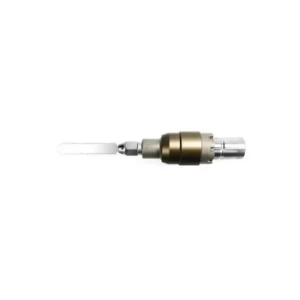
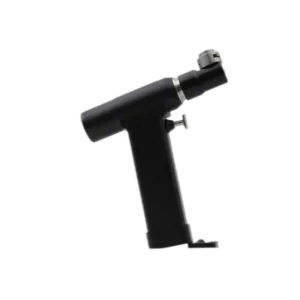
Explore high-torque cannulated drills, neurosurgical cranial adapters, and reciprocating resection systems engineered for critical clinical workflows.
Analyzing the macro-economic forces, surgical device supply chain transitions, and high-frequency powered cutting instrument requirements across 80+ regional markets.
Reciprocating saws, specifically high-speed orthopedic variants and the Day Plus industrial/medical cross-platform iterations, serve indispensable roles in acute bone resection, sternotomy, joint arthroplasty revisions, and deep pelvic osteotomies.
Unlike oscillating saws that move within small sagittal arc angles (typically 4° to 5°), a reciprocating saw operates with a push-pull linear stroke between 2.5 mm and 4.0 mm, delivering elevated stroke velocity up to 12,500 to 15,000 cycles per minute. Hospital surgical suites and trauma trauma centers require continuous-duty performance without thermal necrosis of cortical tissue.
Global hospital conglomerates, private clinic groups, and contract medical distributors are re-evaluating legacy European and North American tier-1 power tool brands due to excessive markups, costly maintenance subscriptions, and proprietary component lockdowns.
Modernized original equipment manufacturing (OEM) facilities in specialized Chinese industrial corridors now provide ISO 13485:2016-certified Class II surgical handpieces with parity motor tolerances, modular adapters, and competitive total cost of ownership (TCO), yielding savings upwards of 45% per operating theater set.
The transition from Europe's Medical Device Directive (MDD) to Medical Device Regulation (EU) 2017/745 (CE-MDR) disqualified nearly 30% of legacy suppliers who failed to demonstrate long-term clinical evaluation and EUDAMED traceability.
Qualified Day Plus reciprocating saw and surgical power tool suppliers maintain full Class I, IIa, and IIb certifications with verified clinical data, biocompatibility test files (ISO 10993), and MDSAP coverage across the USA, Canada, Japan, and Australia.
A rigorous comparative analysis of brushless DC (BLDC) commutation, motor thermal dissipation, eccentric cam dynamics, and high-pressure steam autoclave resilience.
| Performance Vector | Brushless DC System (Ultra/Medical) | High-Torque Carbon Brushed Drive | Clinical / Industrial Significance |
|---|---|---|---|
| Oscillation / Stroke Rate | 0 – 12,500+ strokes/min variable | 0 – 9,500 strokes/min | Higher stroke rate reduces cutting chatter and bone splintering. |
| Thermal Rise Threshold | < 2.0 °C continuous at handpiece casing | < 5.5 °C under load | Prevents hand discomfort and thermal cell injury in tissue beds. |
| Sealing & Autoclave Cycling | IPX8/IPX9 hermetic sealing, 200+ cycles | Standard IPX4 – IPX6, 50 – 80 cycles | Withstands pressurized steam (134 °C) and EO reprocessing. |
| Torque Stability under Load | ±1.5% deviation across dense cortical bone | ±4.2% deviation, potential stall | Continuous motor velocity prevents blade jamming and wedging. |
| Maintenance Cycle Interval | 3,000 operational hours (zero brush wear) | 400 operational hours (brush swaps) | Dramatically reduces hospital biomedical maintenance schedules. |
Reciprocating saws convert rotary brushless motor motion into linear reciprocation via double-bearing counterbalanced eccentric drive shafts. At speeds topping 12,000 RPM, vibration transmission to the surgeon's hand must remain below 2.5 m/s² (ISO 5349-1 standards).
SNK and Day Plus manufacturing protocols deploy dynamic laser balancing on CNC-machined titanium-alloy transmission yokes, maintaining needle deflection within <0.03 mm throughout extended operative procedures.
A common failure vector in generic power saws is blade slip or chuck degradation during heavy bone cross-section cuts. Day Plus and SNK systems integrate a multi-point toolless twist-lock or collet-clamping chuck engineered with 17-4PH martensitic precipitation-hardened stainless steel.
This mechanism resists axial detachment forces exceeding 450 N, preventing accidental blade release while facilitating sterile intra-operative replacement in under 5 seconds.
Surgical battery packs must survive non-sterile autoclaving shields or utilize sealed sterilization cases. Day Plus intelligent high-rate lithium-ion cell packs (21700 / 18650 chemistry) incorporate redundant microcontrollers preventing thermal runaway.
Real-time digital handshake between handpiece and power pack prevents voltage drops during peak bone penetration, ensuring zero RPM stall when encountering hyper-dense femoral cortical bone.
Turnkey supply capabilities for hospital group tenders, multinational orthopedic instrument distributors, and specialized medical device brands.
Traditional medical device supply lines require 8 to 14 weeks to spin up customized gear ratios, handpiece ergonomics, and customized chuck configurations.
Operating theater downtime costs healthcare institutions upwards of $100 per minute. SNK and Day Plus distribution networks maintain a permanent reserve pool:
B2B medical distributors receive exhaustive registration dossiers ready for immediate filing before local Ministries of Health (MOH):
How Day Plus and SNK are advancing surgical reciprocating mechanics toward robot-assisted navigation integration and AI-guided real-time tissue detection.
Autonomous and haptic robot-assisted orthopedics (such as Mako, ROSA, and NAVIO platforms) demand end-effector reciprocating saws that communicate directly with robotic spatial tracking controllers.
SNK is developing standardized CAN-bus and RS-485 telemetry modules providing 1,000 Hz feedback on saw blade RPM, motor current draw, and cutting resistance, enabling automated robotic feed control that shuts off instantly upon traversing bone cortical margins.
By sampling the ultra-high frequency acoustic resonance generated at the blade-bone interface, integrated edge-AI algorithms classify tissue density in sub-millisecond intervals.
The handpiece detects the difference between cancellous bone, cortical bone, marrow cavity, and adjacent periosteum/ligamentous tissue, applying micro-pulsing braking to minimize accidental soft tissue injury during deep pelvis or blind sternotomy cuts.
Next-generation reciprocating blades utilize selective laser melting (SLM) 3D titanium printing with microfluidic internal channels. Saline coolant is pumped directly through the body of the blade to the cutting edge, suppressing osteocyte denaturation below 41 °C without cumbersome external irrigation lines.
Ensuring frictionless market access, rigorous distributor defense, and verified MDR compliance in key regional theaters.
With the complete invalidation of MDD Annex II certificates, European distributors require unassailable MDR credentials. SNK and Day Plus tools feature full Class I, IIa, and IIb certifications under Regulation (EU) 2017/745, registered under EUDAMED with complete Post-Market Clinical Follow-up (PMCF) reports.
For supply chains in the United States, Canada, and Latin America, manufacturing complies strictly with Medical Device Single Audit Program (MDSAP) audits. ASTM F2503 magnetic resonance imaging safety evaluations and ISO 6475 orthopedic drill accuracy tests are available for seamless 510(k) cross-referencing.
Local healthcare tenders in Saudi Arabia (SFDA), UAE (MOHAP), Singapore (HSA), and Southeast Asia require swift Free Sale Certificates, localized Arabic/English labeling, and factory cleanroom audit access. Our Shanghai facilities host regular third-party inspections and deliver verified embassy-attested dossiers.
In-depth answers addressing reciprocating blade strokes, autoclave limits, motor durability, and OEM customization requirements.
An oscillating saw rotates its blade through a narrow angular arc (typically 4° to 5°) on a single plane, ideal for delicate transverse bone resection such as tibial plateau or distal femoral cuts in total knee arthroplasty (TKA). Conversely, a reciprocating saw moves linearly back and forth along its longitudinal axis with a 2.5 mm to 4.0 mm stroke. This provides rapid linear penetration through thick bones, sternotomy dividing, hip revision extraction, and pelvic osteotomy where sagittal arc clearance is obstructed.
Conventional medical motors utilize carbon brushes that generate particulate debris and degrade when exposed to moisture and pressure. Our brushless handpieces feature rotor assemblies wound with polyimide-enameled Class H copper wiring, encapsulated in vacuum-potted epoxy resins. Dual Viton and fluoropolymer dynamic seals protect the NdFeB permanent magnets against 134 °C saturated steam cycles (compliant with EN 285 / ISO 17665), validating transmission tolerances below 0.03 mm error across over 200 consecutive autoclave sterilizations.
Yes. Through our flexible CNC machining centers, we produce proprietary chuck adapters compatible with Stryker, DePuy Synthes, Zimmer Biomet, ConMed, and standard universal multi-shank blade geometries. For OEM device brands, we routinely manufacture branded quick-release couplers, custom chuck lock collars, and specific stroke-length eccentric pins within a standard 3-week customization turnaround.
Standard stocked systems and adapters ship within 24 to 48 hours from our Shanghai central distribution hub or regional consignment nodes. OEM orders typically require 3 to 4 weeks depending on customized surface branding and IFU packaging. All handpieces carry an unconditional 12 to 24-month factory warranty covering motor electronics and transmission mechanics, supported by standby replacement units to eliminate institutional downtime.
Yes. Unlike suppliers operating under expiring MDD transition exemptions, our entire product family is certified under the strict European Medical Device Regulation CE-MDR (EU) 2017/745 through accredited Notified Bodies. Complete Technical Files, Clinical Evaluation Reports (CER), and UDI-DI registrations are uploaded to the EUDAMED database for real-time tender verification across all 27 EU member states.
Complete your surgical suite requirements with cannulated trauma systems, micro bone drills, carbon-motor workhorses, and quick-docking K-wire adapters.
Request technical blueprints, 3D CAD step files, clinical evaluation summaries, and private-label OEM quotation dossiers for Day Plus reciprocating saws and SNK precision orthopedic platforms.