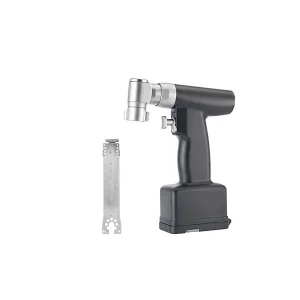
Industrial swing blade and precision resection units engineered for superior recovery rates, reduced kerf losses, and ultra-high dynamic torque.
A rigorous examination of 90-degree pivoting dynamic kinematics, high-torque permanent magnet synchronous drives, and structural harmonic mitigation.
Unlike conventional bandsaws or multi-blade gang sawmills, the Electric Swing Blade Sawmill utilizes a single circular sawblade that mechanically or electronically indexes through a continuous 90-degree axis. By executing horizontal cutting on the advance stroke and vertical cutting on the return stroke, structural timbers, dimensional lumber, and custom beams are machined from a stationary log without rolling or secondary handling.
This eliminate log handling strain, guarantees perpendicular accuracy across full board profiles within ±0.35 mm tolerances, and drastically lowers setup cycles on oversized logs up to 1.8 meters in diameter.
Modern commercial milling necessitates high instant stall torque and sustained thermal dissipation. Incorporating high-frequency brushless permanent magnet synchronous motors (PMSM) driven by closed-loop field-oriented control (FOC) vector drives ensures consistent angular velocity during density fluctuations such as knot complexes, hard silica veins, or frozen sapwoods.
Operational efficiency increases beyond 93%, directly lowering energy expenditure per cubic meter of sawn lumber by 28% in comparison to historical induction topologies.
Traditional circular sawmills compromise resource recovery with kerf widths exceeding 6.5 mm. Our optimized swing-blade geometries introduce ultra-thin kerf tungsten carbide-tipped (TCT) or satellite-tipped teeth with structural stress slots.
The resulting operational kerf of 3.8 mm to 4.2 mm increases log recovery coefficients by up to 18%, converting raw fiber directly into salable grade-lumber rather than industrial sawdust residue.
Adapting electrified portable and stationary milling infrastructure to distinct forestry matrices, urban wood recovery, and high-value species harvesting.
Across the Asia-Pacific region, Central Africa, and Latin America, accessing rare hardwoods (such as Rosewood, Teak, and Ipe) presents severe infrastructural constraints. Heavy logging trucks cannot penetrate deep rainforest terrains without substantial capital and ecological disruption.
Portable modular electric swing blade sawmills can be air-dropped, hand-carried, or mounted onto light tracked vehicles, processing fallen or selective-harvest timbers in situ with zero internal combustion exhaust.
North American and European municipal councils are transforming urban tree removals—historically mulched or directed to landfills—into high-character architectural timber. The low acoustic emission (<72 dB(A) at idle) and zero tailpipe footprint of electric swing sawmills allow immediate operation in zero-emission metropolitan zones and residential neighborhoods without violating local sound ordinances or clean air directives.
Micro-timber processors and artisanal structural framers require customized timber profiles, such as oversized post-and-beam construction timbers, that standard high-speed gang saw lines cannot produce without costly recalibration. The swing blade system handles non-standard cant dimensions on demand, converting odd-geometry logs into premium architectural elements with single-operator controls.
How vertically integrated tier-one supply networks, advanced metallurgy, and modular design deliver an uncompromising balance of performance and commercial agility.
From the induction-hardened linear ground tracks to the dynamic balancing of multi-axis CNC-machined gear casings, our production network eliminates intermediary assembly markups. Utilizing aircraft-grade 6061-T6 aluminum extrusions paired with high-tensile manganese alloy frames, our structural designs maintain deflection-free operation under heavy lateral timber pressures.
Recognizing the global disparity in voltage and industrial electrical distribution, our factory designs dual-wound, wide-voltage brushless motors compatible with 380V, 400V, 460V, and 480V 3-phase grids, alongside inverter-fed 220V split-phase variants. Every sub-assembly passes dynamic laser interferometer runout testing and comprehensive thermal imaging evaluations under locked-rotor conditions.
Leveraging continuous inventory holding of critical mechanical gearboxes, digital drive boards, and precision linear guides, standard platform customization cycles are executed in under 21 business days. Distributors maintain high service continuity backed by guaranteed 48-hour parts dispatch across major transit corridors.
The progression toward automated log scanning, predictive yield algorithms, and localized sensor networks.
Integrating compact gantry-mounted LiDAR scanning nodes that map true bark-to-bark log topology in 3D. Real-time algorithms compute optimum cutting patterns to maximize dimensional lumber yield around core juvenile wood and heart rot, automatically setting mechanical indexing fences.
Embedded strain gauges and current transducers monitor instantaneous torque loading on the circular blade. When internal knots or wet pockets increase resistance, the electronic carriage automatically slows linear traverse speeds to avoid blade dish or wandering, ensuring surface roughness values below 12.5 Ra.
Development of direct DC-coupled battery energy storage systems (BESS) designed for mobile operations. The electric swing blade can run entirely on modular transportable solar skids or field hydrogen fuel cell units, unlocking true off-grid capabilities without fuel logistics.
Comprehensive alignment with international safety directives, occupational standards, and local deployment protocols.
Our complete machinery portfolio strictly conforms to the EU Machinery Directive 2006/42/EC, Low Voltage Directive 2014/35/EU, and electromagnetic compatibility standard EN 61000-6-2/4. For North American deployment, optional UL 1004 and CSA C22.2 compliant electrical control consoles ensure trouble-free permitting and safety inspector approval.
Milling safety requires redundant defensive systems. Every unit features mechanical dual-interlocking pivot guards, ultra-fast electronic braking systems capable of arresting full blade rotation in <1.8 seconds, line-of-sight laser cut indicators, and remote pendant emergency stop protocols to ensure the operator remains outside the tangential kickback zone.
Supplied with complete localized Operation and Maintenance Manuals (OMM), exploded 3D CAD schematic indices, finite element analysis structural certificates, and comprehensive wear-part matrices to facilitate field rebuilds with basic industrial tools.
Scalable, modular motor platforms and versatile interchangeable head systems engineered for multi-disciplinary surgical precision and heavy industrial endurance.
Authoritative technical, logistical, and warranty inquiries answered for forestry engineers, procurement officers, and international distributors.
Portable bandsaw mills suffer from wave cuts when encountering dense hardwoods or knots due to blade band flex. An electric swing blade sawmill employs a rigid circular saw blade that eliminates blade drift completely. Additionally, the swing blade cuts in both vertical and horizontal planes without rotating the log, drastically reducing physical handling and setup time. Sharpening is executed directly on the mill frame using an integrated diamond wheel without unmounting the blade.
Our standard brushless industrial power units operate on 380V to 480V 3-phase power at 50/60 Hz, demanding a continuous power supply rated between 15 kW and 30 kW depending on blade diameter (typically 500 mm to 1000 mm). For locations with variable grid voltage, optional integrated variable frequency drives (VFD) provide low inrush starting currents (soft-start) within 1.2x nominal operating current, preventing line drops.
Because the swing blade system cuts from the outside inward, operators step down the exterior of the log to capture high-grade outer sapwood and clear timber boards first. Unlike a traditional whole-log saw which forces parallel sawing through the defect-laden center core, recovery increases by 15% to 22% in grade yield value.
Yes. Due to the high efficiency of vector-controlled brushless motors, units can be reliably paired with diesel generators sized at 1.5x of the continuous motor kilowatt rating. When integrated with advanced lithium-ion battery storage units (BESS), the system supports zero-emission field operations charged by temporary solar installations or rural microgrids.
Track alignment verification is recommended every 120 operating hours. The sealed brushless motor requires zero carbon brush replacement or commutator maintenance. Precision industrial bearings within the swinging pivot housing are sealed-for-life or require high-temp lithium grease replenishment at 500-hour intervals. Blade tooth retipping or face grinding takes 5–8 minutes using the included diamond grinding attachment.