

CE Certification High-Torque Carbon Canulate Drill ND-2011
View Specifications
Explore our certified orthopedic portfolio engineered to meet severe high-frequency resection standards, featuring autoclavable drive housings and ergonomic clinical balances.




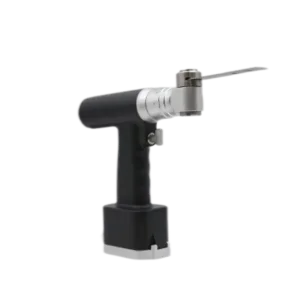


A comprehensive examination of why medical institutions, tier-1 trauma units, and commercial distributors are upgrading toward gas and pneumatic oscillating cutting lines.
In oxygen-enriched surgical theatres, gas reciprocating saws driven by medical nitrogen or purified compressed dry gas eliminate electrostatic ignition risks entirely. Modern pneumatic valves maintain high linear torque without electrical resistance heat.
Traditional electric surgical saws often face motor seal fatigue under repeated moist heat reprocessing. Gas reciprocating drive components are precision CNC machined from 316L medical stainless steel and titanium alloys.
Without an integrated heavy stator core or lithium battery pack, gas reciprocating tools provide an unmatched weight distribution. Surgeons maintain precise osteotomy resection planes with minimum tactile vibration fatigue.
Snaikang Technology Development Co., Ltd. couples computerized multi-axis CNC tolerance testing with clinical ergonomic testing in ISO Class 7 cleanrooms.
Proprietary coaxial exhaust pipelines channel expanded gas away from the sterile surgical cavity while double-labyrinth acoustic baffles attenuate exhaust noise down below 68 dBA.
High-speed linear reciprocating stroke mechanics maintain continuous cutting depth control during sternotomy, arthroplasty revisions, and femoral bone canal preparations.
Future engineering models integrate micro-channel saline cooling conduits straight to the blade edge, eliminating thermal osteonecrosis risks by keeping cut margins below 42°C.
A rigorous engineering comparison outlining power transmission, clinical maintenance costs, and lifecycle operational realities.
| Evaluation Parameter | Pneumatic / Gas Reciprocating System | Brushless Electric Battery System | Carbon Brush Legacy System |
|---|---|---|---|
| Operating Energy Source | Central Medical N₂ / Filtered Medical Air (5-7 Bar) | Lithium-Ion Autoclavable Battery Pack | Rechargeable NiMH or Direct Corded |
| Ignition & Thermal Hazard | Zero Spark Risk (Intrinsically Safe in O₂ Theatres) | Micro-electronic protection required | Brush contact sparking hazard |
| Handpiece Net Weight | Ultra-light (approx. 650g - 780g) | Medium to Heavy (950g - 1450g with cell) | Heavy (1200g+) |
| Autoclave Cycle Tolerance | > 200 validated cycles without cell decay | Requires battery removal / limited cycle casing | Seal degrades under 80 cycles |
| Torque Stability under Load | Immediate dynamic pressure compensation | Microcontroller current boost compensation | Linear speed loss under dense cortical bone |
| 5-Year Cost of Ownership | Extremely Low (No battery obsolescence) | Moderate (Battery replacement every 18-24 mos) | High (Motor rebuilds & brushes replacements) |
SNK maintains strict compliance with EU-MDR, ISO 13485:2016, and MDSAP to enable seamless importation and registration for regional medical device distributors.
All product technical files adhere strictly to European Medical Device Regulation (EU) 2017/745 for Class IIa/IIb surgical power tools, backed by verified clinical evaluation reports (CER) and EUDAMED database registrations.
Our Quality Management System satisfies the Medical Device Single Audit Program (MDSAP), allowing unified regulatory filings across the United States, Canada, Brazil, Japan, and Australia without redundant plant audits.
From custom pressure operating margins, private label laser etching, localized IFU translation to tailored ergonomic grip coatings, our in-house engineering delivers rapid OEM product lines in approximately 21 business days.
Complete surgical room readiness featuring quick-snap trauma adapters, high-resection reciprocating units, and cannulated instrumentation.
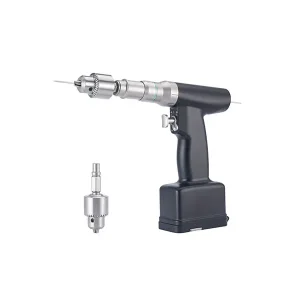





Crucial clinical, technical, and regulatory clarifications regarding the deployment, sterilization, and procurement of gas reciprocating saws.
SNK gas reciprocating saws are calibrated for medical-grade compressed dry nitrogen (N₂) or purified hospital medical air operating at regulated dynamic supply pressures between 5.5 bar and 7.0 bar (80-100 PSI). Quick-connect fittings can be customized for Schrader, Chemetron, DIN, or BOC standard operating wall plugs.
Our handpieces incorporate a coaxial double-lumen hose system. The inner core provides clean, high-pressure drive gas while the outer jacket directs the expanded exhaust air 3 meters away from the operating table to prevent aerosol dispersion or disturbance of the laminar airflow over the open surgical incision.
Yes. Constructed from passivated medical-grade stainless steel and aeronautical titanium, the entire motor body can undergo repeated pre-vacuum high-temperature moist steam autoclaving (134°C for 18 minutes), Ethylene Oxide (EO), and low-temperature hydrogen peroxide gas plasma sterilization without drive corrosion.
For standard models, SNK maintains over 200 standby systems in inventory, facilitating emergency surgical kit delivery within 24 hours. Full OEM programs—including custom stroke frequencies, customized torque governors, bespoke brand anodizing, and multi-language IFU packaging—are typically fulfilled in approximately 3 weeks.