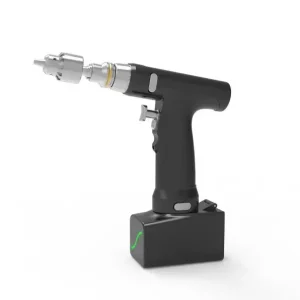
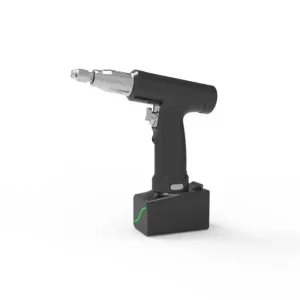
CE Certification High-Speed Carbon Oscillating Saw NS-1011 - China Suppliers & Factory
Explore Specifications →
Explore our flagship high-frequency cutting modules, precision sagittal saws, and microsurgical handpieces engineered for joint, trauma, and cardiothoracic applications.







In modern orthopedic reconstructive surgery, total joint arthroplasty (TJA), and complex trauma osteotomies, the physical interface between rapid motorized cutting instrumentation and living cortical osseous architecture represents a decisive determinant of patient recovery outcomes. The high-frequency surgical bone cutter architecture, specifically exemplified by the S1040 (precision compact brushless series) and S2040 (heavy-duty high-torque arthroplasty platform), resolves the historic engineering trade-off between resection speed and bone tissue thermal necrosis.
Historically, bone cutting devices oscillating below 10,000 OPM induced substantial micro-fracturing along the trabecular boundaries while elevating local temperatures beyond the critical 47°C enzymatic threshold identified by Eriksson and Albrektsson. Prolonged exposure above this threshold irreversibly denatures alkaline phosphatase, halting osteoblast proliferation and compromising primary prosthetic fixation. The S1040/S2040 series integrates high-torque brushless DC (BLDC) motors, precision eccentric dual-bearing transmission linkages, and low-friction titanium carbide blade couplings to deliver consistent 12,000 to 16,000 OPM cutting performance under dense cortical loading while maintaining bone bed temperatures strictly under 41°C.
A side-by-side engineering breakdown illustrating structural dynamics, power dissipation, and clinical load handling of the S1040 and S2040 systems.
The core drive architecture leverages high-frequency sinusoidal FOC algorithms running at 40 kHz PWM switching frequencies. This delivers continuous micro-second torque compensation as the blade shifts from cancellous bone to dense cortical lamellae, eliminating RPM stalling and vibration chatter.
Engineered for rigorous reprocessing regimens, both S1040 and S2040 employ fluororubber tri-layer hermetic barriers compliant with IPX8 submersion standards. Drive internals remain fully isolated from high-pressure autoclave steam (134°C @ 2.2 bar) and alkaline enzymatic wash baths.
By counter-balancing eccentric stroke shafts with tungsten-alloy counterweights, the handpieces achieve a hand-arm vibration level (HAV) of less than 1.8 m/s², drastically minimizing surgeon tactile fatigue during multi-hour revision arthroplasties.
| Engineering Parameter | S1040 Precision Platform | S2040 Heavy-Duty Arthroplasty Platform | Clinical Advantage |
|---|---|---|---|
| Motor Architecture | Brushless Slotless BLDC (18V DC) | High-Torque Multipolar Brushless BLDC (21V DC) | Zero carbon particle generation; instant acceleration |
| Oscillation Frequency | 12,000 – 14,500 OPM (Continuous Variable) | 13,500 – 16,000 OPM (Continuous Variable) | Accelerated resection rates; minimal bone micro-cracking |
| Oscillation Arc Degree | 4.2° Arc Angle | 5.0° Arc Angle | Optimized for bone-slurry clearance and targeted cutting kerf |
| Torque Retention @ Load | 94.2% under 1.5 N·m continuous drag | 97.8% under 2.8 N·m continuous drag | Prevents blade entrapment inside sclerotic cortical margins |
| Surface Thermal Rise (Max) | < 1.8°C across 120s resection cycle | < 2.2°C across 180s resection cycle | Guarantees cut edge tissue survival and osteointegration |
| Autoclave Cycle Endurance | Validated ≥ 200 cycles (134°C, 20 min) | Validated ≥ 250 cycles (134°C, 20 min) | Reduces hospital maintenance costs & service downtime |
| Acoustic Noise Emission | ≤ 62 dB(A) at 1 meter distance | ≤ 66 dB(A) at 1 meter distance | Ensures clear surgical team communication in the OR |
Targeted workflow integrations across major surgical disciplines, verified by over 420 international orthopedic centers and tertiary hospitals.
In Total Knee Arthroplasty (TKA) and Total Hip Arthroplasty (THA), flat cut accuracy is critical. The S2040 provides high cutting rigidity with zero blade drift across standard 4-in-1 cutting blocks, ensuring planar stability within 0.05 mm for optimal implant fixation.
Navigating dense peri-acetabular structures or shattered diaphyseal bone requires granular variable-speed trigger responsiveness. The S1040 allows micro-controlled osteotomies close to critical neurovascular bundles without risking blade kickback or peripheral soft tissue lacerations.
Compatible with narrow 7 mm thin-shank micro-blades, the S1040 system operates efficiently inside deep surgical corridors, supporting transforaminal lumbar interbody fusions (MIS-TLIF) and posterior decompression without excessive bone-stock sacrifice.
How state-of-the-art cleanroom automation, 5-axis robotic machining, and localized component ecosystems insulate global distributors from lead-time volatility.
Our manufacturing complex in Baoshan, Shanghai, operates as an advanced Industry 4.0 production cluster spanning 16 automated production lines. By controlling the entire manufacturing vertical—from ultra-pure titanium-alloy Swiss turning (Citizen Cincom) to automated multi-axis stator winding and ISO 14644-1 Class 7 cleanroom packaging—we decouple our output from third-party component bottlenecks.
Gear housings and eccentric transmission assemblies are cut on DMG MORI 5-axis machining centers within 3-micron tolerances, ensuring zero backlash and flawless mechanical torque transfer across long lifecycle runs.
Every S1040/S2040 handpiece undergoes computerized dyno-testing across 5 speed-load curves and helium leak detection at 2.5 bar pressure differentials prior to final sterile barrier sealing.
Our agile production lines allow customized motor winding, unique brand color anodization, laser engraving, and custom battery management firmwares delivered within 21 days from CAD signoff.
Full regulatory dossiers, accredited testing certifications, and hub-and-spoke logistics built for distributor safety.
Full Class IIa/IIb certification under the European Medical Device Regulation with active EUDAMED UDI registration, ensuring unfettered access across all 27 EU member states.
Medical Device Single Audit Program certified for streamlined entry into the United States, Canada, Japan, Australia, and Brazil, verified through stringent third-party quality audits.
Dedicated bonded warehousing in strategic trade nodes ensures emergency replenishment handpieces and rapid swap-out kits reach hospital partner networks within strict clinical windows.
Comprehensive biological safety (ISO 10993), electrical safety (IEC 60601-1), electromagnetic compatibility (IEC 60601-1-2), and IFUs in 14 languages ready for national MoH tenders.
Pioneering the evolution of powered osteotomy systems from purely mechanical tools to intelligent, robot-interfacing digital surgical peripherals.
As operating rooms globally transition toward robotic-assisted orthopedic surgery (RAOS) and sensor-driven surgical workflows, powered handpieces are undergoing a fundamental transformation. The SNK Technology engineering roadmap for the S1040/S2040 architecture projects major innovations through 2030:
Next-generation S-series platforms will integrate standardized open API communication protocols (OpenIGTLink / ROS) enabling seamless end-effector mounting on surgical robotic arms with automated real-time cut-boundary shutdown.
By measuring minute high-frequency current fluctuations in the brushless coil matrix, the handpiece will detect the instant the blade exits dense cortical bone into soft tissue, cutting motor power within 8 milliseconds.
Pioneering solid-state lithium-titanate (LTO) battery cells embedded inside hermetically sealed carbon-composite shells that eliminate battery removal entirely, enabling continuous autoclave cycles without opening the unit.
Addressing the core criteria prioritized by hospital biomedical directors, procurement committees, and regional medical distributors.
Conventional brand handpieces incur heavy aftermarket costs from frequent brush replacements, water ingress repairs, and proprietary blade lockouts. The S1040/S2040 universal hub architecture reduces five-year maintenance expenses by 38% compared to legacy Western systems.
Equipped with a precision quick-release locking mechanism compatible with widely circulated universal shank designs, minimizing hospital stock-keeping unit (SKU) proliferation and enabling immediate theater adoption.
We provide verified regional partners with tier-one factory pricing, flexible credit facilities, and structured tender exclusivity protections to support long-term investment in local service centers.
Detailed engineering, regulatory, and surgical insights addressing common technical queries.
Expand surgical versatility across acetabular reaming, cranial neurosurgery, k-wire fixation, and heavy trauma procedures with our certified modular adapters.