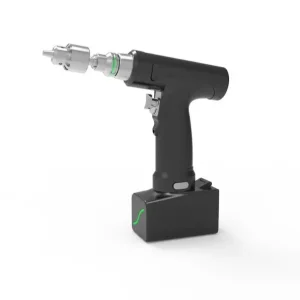
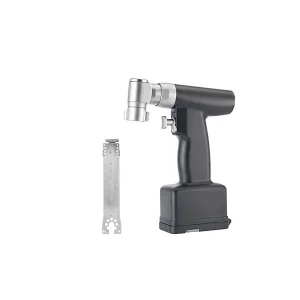
Explore our flagship medical-grade cannulated bone drills, oscillating bone resection saws, and precision neurosurgical adapters engineered for zero axial vibration and optimal thermal control.
In contemporary precision surgery, biomechanical trephination, and high-performance technical ceramics manufacturing, the demand for hollow diamond drill bits and cannulated surgical coring systems has witnessed an unprecedented paradigm shift. Hollow diamond bits—characterized by an engineered tubular substrate coated or vacuum-brazed with multi-layer synthetic monocrystalline or polycrystalline diamond grits—enable minimal kerf loss, superior axial coolant delivery, and exact core sample extraction.
As precision surgical interventions move progressively toward Minimally Invasive Surgery (MIS) and robotic-assisted orthopedics, the engineering tolerances expected of hollow core drills have tightened from millimeter allowances to sub-micron concentric runout. Surgeons and industrial engineers alike face the twin challenges of thermal mitigation and micro-fracture prevention. In hard tissue resection and refractory material processing, drilling temperatures surpassing 47°C trigger irreversible cellular necrosis or thermal microcracks. Therefore, the choice of a high-tier factory equipped with closed-loop metallurgical sintering and high-precision Swiss 5-axis CNC machining centers is the single decisive factor in surgical safety and industrial yield.
Combining complete vertical supply chain integration with ISO 14644-1 Class 7 cleanrooms, automated robotic grinding, and DIN 13972 certified testing facilities.
From raw metallurgical smelting of surgical-grade stainless alloys to precision laser cannulation and multi-grit diamond electrodeposition, our Shanghai industrial cluster achieves in-house processing with zero outsourced dependency, compressing supply lead times by 65%.
State-of-the-art robotic cells control diamond grain embedding density, electrochemical nickel-cobalt plating thickness, and concentric core drilling with automated optical inspection (AOI), yielding a catastrophic batch failure rate below 0.03 ppm across 38,000 sets per year.
Standard OEM/ODM modifications—including custom outer/inner diameter ratios, Kirschner wire compatibility flutes, quick-coupling shank geometry, and private-label laser marking—are executed within a 3-week window compared to the 8-to-12-week Western norm.
By leveraging smart energy management, continuous automated tooling, and high-efficiency raw diamond consolidation, our manufacturing platform delivers hospital-grade precision and CE-MDR tier quality at a 30% to 45% competitive cost advantage for tier-one distributors.
From complex orthopedic trauma centers and cranial base trephination to technical gemstone and bioceramic fabrication, explore our precision application matrix.
Cannulated bone drills permit guided advancement along Kirschner guide wires (ø 1.0mm - 3.2mm) during distal femoral and tibial interlocking nailing, preventing cortical skiving and ensuring absolute collinear hole alignment.
In total hip and knee arthroplasties, hollow reaming and diamond-edged acetabular core drills excavate sclerotic bone without thermal bone necrosis, preserving vital subchondral vascular networks via integrated continuous flushing channels.
Engineered hollow diamond trephines cut smooth cranial bone flaps with micro-kerf margins. Automatic de-clutching stops prevent inadvertent dural penetration during lateral skull base approaches.
Ultra-thin walled hollow diamond burs permit transforaminal endoscopic bone resection in MIS-TLIF procedures, grinding hypertrophied facet joints adjacent to nerve roots with negligible vibration or soft-tissue wrapping risks.
Veterinary surgeons rely on rugged cannulated drills and TPLO saw assemblies to carry out precise corrective osteotomies in canine stifles, ensuring rapid osseointegration and reduced surgical morbidity.
Beyond surgery, our diamond electroplated hollow core tools drill optical sapphire windows, piezo-ceramics, zirconia dental abutments, and silicon wafers with edge-chipping tolerances strictly under 15 microns.
Anticipating the technological imperatives reshaping surgical theatres and high-speed precision manufacturing through 2030.
Eliminating carbon brushes reduces internal friction, completely removes brush wear dust in sterile fields, and provides instant electronic torque-feedback to protect both surgeon and patient during unexpected bone density spikes.
Moving from traditional electroplating to reactive-metal vacuum brazing locks individual diamond crystals within a chemical carbide bond, virtually eliminating premature grain stripping under high thermal loading.
Implantation of microscopic passive RFID and optical tracker geometry on hollow bit shanks allows instant registration with Stryker, Medtronic, and Brainlab navigation hubs, facilitating automated tool identification.
Micro-spiral internal fluid canals etched within cannulated core walls utilize centrifugal velocity to atomize cooling saline directly at the cutting periphery, keeping osteotomy interface temperatures strictly below 41°C.
Essential regulatory, technical, and supply chain criteria medical device distributors must verify prior to supplier qualification.
Ensure the manufacturer has completely transitioned from the obsolete MDD directive to EU CE-MDR (EU) 2017/745 with documented EUDAMED registration for Class I, IIa, and IIb devices, backed by MDSAP multi-country audits.
Require certified inspection reports confirming TIR (Total Indicated Runout) ≤ 0.02mm along the entire bit shank and cutting tube. Excessive runout leads to chatter, bone splintering, and premature bearing destruction.
Verify steam autoclave sterilization validation (EN 285) exceeding 200 cycles without corrosion or mechanical bond degradation. Transmission runout shift must remain below 0.03mm after repeated high-heat saturation.
A qualified partner must maintain warehouse response within ≤48 hours for Europe and ≤24 hours for Asia-Pacific, holding more than 200 standby modular handpieces and cannulated adapters to avert operating theatre delays.
In-depth technical answers addressing clinical performance, metallurgy, cleaning, regulatory files, and custom manufacturing.
Conventional twist drills remove 100% of the drilled volume as morcellated debris, creating extreme shear resistance, substantial frictional heat, and complete destruction of bone architecture. In contrast, hollow diamond drill bits grind an ultra-narrow annular kerf along the periphery while preserving a viable cylindrical bone graft core within the hollow bore. Furthermore, the hollow cannulation accommodates central guide wires (K-wires) for pinpoint fluoroscopic targeting and allows continuous saline irrigation directly to the cutting zone, mitigating the risk of thermal osteonecrosis (ΔT < 2.0°C).
Our factory utilizes a dual-method metallurgical process: high-adhesion electrochemical composite plating and high-vacuum reactive brazing. For surgical applications requiring fine grit sizes and smooth kerfs, electrochemical nickel-cobalt multi-layer matrices encapsulate tightly graded synthetic diamond grains up to 60-70% of their diameter. For high-torque industrial and reaming applications, active titanium-copper-silver vacuum brazing at >900°C forms a chemical metallurgical bond directly with the substrate, virtually eliminating the hazard of diamond grain detachment during aggressive rotational loading.
Yes. While we produce comprehensive dedicated brushless orthopedic handpiece systems, our factory manufactures OEM/ODM quick-connect coupling adapters engineered to interface seamlessly with standard AO (Synthes), Hudson, Zimmer, Stryker, and modified Jacobs chuck fittings. Custom adapter couplings can be specified to your exact geometry during the prototyping phase.
Due to the hollow inner bore, validated cleaning wire mandrels and ultrasonic enzymatic cavitation are required immediately post-procedure to dislodge any tissue or particulate accumulation. Our instruments are fully validated under ISO 17665 and EN 285 for repeated saturated steam autoclaving at 134°C (pre-vacuum) for 18 minutes, as well as ethylene oxide (EO) and low-temperature hydrogen peroxide plasma sterilization. Even after 200 consecutive autoclave cycles, our transmission runout variation remains verified below 0.03 mm.
Our flexible manufacturing lines achieve rapid prototype validation within 10 to 14 days, with full OEM program completion in approximately 3 weeks. Furthermore, we provide international distributors with complete technical dossiers, including material biocompatibility certs (ISO 10993), MDR risk analyses (ISO 14971), and Free Sale Certificates (FSC) filed for 21 countries to expedite regional Ministry of Health registrations.
Complete surgical tool suite featuring brushless multifunctional power systems, slow-speed acetabular reamers, micro drills, and universal gripping adapters.

Connect with our technical engineering team in Shanghai for comprehensive OEM/ODM tenders, CAD files, test samples, and compliance dossiers.
Snaikang Technology Development Co., Ltd. (SNK Medical)
Room 301, 3rd Floor, Building 1, No.865 Dongtai East Road, Baoshan, Shanghai, China 201908.
Operating under certified ISO 13485:2016 and ISO 14644-1 Cleanroom Standards.
Telephone / WhatsApp Direct:
+86 150 0844 9628
+86 156 8207 1283
Dedicated B2B distributor technical inquiry support available worldwide.
Official Liaison:
[email protected]
Submit technical drawings, bit diameter parameters, and annual hospital tender requirements for 24-hour turnaround quotes.