Engineered for high-duty trauma, joint reconstruction, and thoracic midline access with micrometric osteotomy precision.







A comprehensive examination of clinical procurement trends, transitioning from legacy pneumatic units to intelligent brushless reciprocating and oscillating sternum saws.
The global cardiothoracic power tools domain is experiencing an irreversible paradigm shift away from pneumatic systems and traditional brushed DC motors. Legacy systems, such as vintage pneumatic Microaire sternum saws, required cumbersome compressed air lines that restricted surgical theater mobility and created turbulent air drafts that posed micro-aerosol contamination risks in laminar flow operating rooms.
Modern surgical centers demand high-torque brushless DC (BLDC) motors paired with intelligent microcontrollers. These systems maintain uniform cutting torque irrespective of osteoporotic sternum variations or dense cortical mineralization, avoiding motor stalling and uncontrolled lateral vibration.
Tier-1 surgical device conglomerates have historically maintained prohibitive capital equipment pricing paired with aggressive proprietary razor-blade consumable models. Hospital procurement committees, private surgical groups, and regional healthcare distributors now actively seek Tier-1 equivalent, CE-MDR certified alternative manufacturing sources.
OEM factories offering cross-system compatibility with established brands like Microaire, Stryker, and DePuy Synthes provide immediate budgetary relief while meeting identical mechanical tolerance, material biocompatibility, and post-market tracking standards.
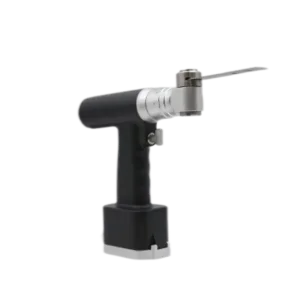
Cardiothoracic surgeons perform median sternotomies under intense time constraints where control, tactile tactile haptic feedback, and anti-kickback geometries directly influence patient outcomes. Current generation powered sternum saw handpieces incorporate aerospace-grade titanium-aluminum alloy enclosures with hermetically welded stator housings.
This construction eliminates biological fluid penetration during high-pressure thermal reprocessing, ensuring non-pyrogenic intraoperative performance across hundreds of autoclave cycles.
In-depth engineering parameters comparing Microaire-compatible sternum saw mechanisms, brushless handpiece drives, and blade tooth geometries.
A precision sternum saw must navigate contrasting surgical challenges: delivering enough kinetic energy to bisect a calcified adult sternum within seconds, while completely eliminating excessive lateral deflection that could rupture the retrosternal retrosternal vascular structures, cardiac pericardium, or internal thoracic arteries. Our Shanghai production facility implements proprietary CNC machining and wire-EDM profiling to manufacture surgical saw heads and quick-release hubs designed for direct compatibility with industry-standard sternotomy blade hubs.
| Performance Specification | SNK Brushless Cardiothoracic Platform | Traditional Microaire Pneumatic / Brushed | Clinical / Engineering Advantage |
|---|---|---|---|
| Motor Architecture | Hermetic Sensorless Brushless (BLDC) | Pneumatic Vane or Brushed DC Motor | Zero brush carbon degradation; eliminates OR pneumatic line hazards; 45% greater torque density. |
| Oscillation / Stroke Rate | 0 – 15,000 CPM continuously variable | 12,000 – 14,000 CPM fixed curve | Proportional Hall-effect trigger gives surgeons granular tactile modulation across dense bone segments. |
| Retrosternal Guard Design | Integrated Anatomical Shoe with Deflector | Detachable External Wire Shoe | Prevents pericardial puncture during re-entry; directs bone sawdust away from thoracic cavity. |
| Autoclave Cycle Endurance | > 200 validated cycles at 134 °C | 60 – 100 cycles before bearing rebuild | Triple fluorosilicone dynamic O-ring seals prevent steam ingress to motor windings and bearings. |
| Operating Noise Profile | ≤ 62 dBA under load | 74 – 82 dBA under load | Preserves surgical team communication; minimizes acoustic fatigue in lengthy cardiac procedures. |
| Cross-Hub Interchangeability | Universal Microaire / Synthes Quick-Lock Hub | Proprietary closed connection | Enables hospitals to utilize existing consumable saw blade inventories without costly adapters. |
Precision-tailored handpieces designed to meet the demands of diverse procedural indications and anatomies.
In standard elective cardiac interventions including coronary artery bypass grafting (CABG) and aortic valve repair, median access requires absolute linear symmetry down the sternal midline. Uneven sternotomies lead to postoperative instability, non-union, and chronic sternalgia.
Reoperative cardiac surgeries present immense mortality risk due to retrosternal adhesions, where the right ventricle, ascending aorta, or previous venous bypass grafts adhere directly to the posterior sternal wall.
Minimally invasive cardiac surgery (MICS) avoids complete sternal split, utilizing J-shape, L-shape, or inverted T-shape partial sternotomy cuts to expedite postoperative recovery and reduce scar tissue.
Combining world-class multi-axis CNC fabrication, cleanroom electronic micro-assembly, and verifiable quality control.
Our intelligent factory houses high-precision Swiss-type turning centers and German 5-axis DMG MORI CNC milling suites. Every sternum saw drive gear, eccentric bearing cam, and blade adapter chuck is machined to micron-level tolerances (±0.003 mm), eliminating mechanical chatter, reducing intraoperative wear, and guaranteeing universal blade retention.
Unlike regional assemblers reliant on fractured external vendors, our facility integrates raw aerospace titanium/stainless steel bars, medical-grade PEEK polymer molding, surface anodization, brushless stator winding, and PCB potting within a consolidated 100 km industrial cluster in the Yangtze River Delta. This eliminates supply chain chokepoints and secures short delivery lead times.
Every manufactured batch undergoes rigorous laboratory stress testing: dynamic dynamometer load profiling, temperature rise logging via thermal imaging cameras under continuous 15-minute resistance runs, vibration amplitude spectrum analysis, and repeated high-pressure autoclave chamber validations. Product batches meet an adverse event defect rate below 0.03 ppm.
Anticipating next-generation surgical automation, surgical robotics telemetry, and closed-loop sensory feedback.
Future iterations of our brushless sternum handpieces integrate real-time current sensor feedback loops and micro-acoustic wave analysis. The controller dynamically detects the distinct drop in mechanical resistance as the saw blade exits the posterior cortical sternal plate, instantly modulating motor rpm or initiating automated soft-tissue braking before the blade encounters mediastinal tissue.
As cardiac surgeries incorporate robotic assistance, our R&D pipeline includes optical tracker mounts and CAN-bus/Bluetooth LE telemetry modules directly embedded within the handpiece casing. This allows surgical navigation systems to project exact blade cut trajectories onto preoperative CT reconstructions in real time, preventing devascularization of the internal mammary arterial conduits.
Addressing hospital sterilization wear on traditional lithium battery packs, our engineering roadmap explores solid-state power cells and contactless inductive sterilization transfer housings. These provide extended thermal stability, faster recharge cycles under 20 minutes, and complete avoidance of heavy metal disposal concerns.
De-risking medical device imports with complete technical documentation, EUDAMED registration, and regional logistics hubs.
Our entire manufacturing infrastructure operates under stringent ISO 13485:2016 and MDSAP certified Quality Management Systems. Full Class IIa/IIb CE-MDR technical documentation, clinical evaluation reports (CER), and UDI traceability data are verified and registered in EUDAMED, enabling seamless hospital tender qualification across the European Union.
We maintain comprehensive spare parts hubs and emergency device pools. Our operational response guarantees dispatch of replacement surgical sets within 24 hours in Asia-Pacific and within 48 hours in Europe and the Americas. Over 200 fully assembled standby surgical power tools remain in stock at all times.
For medical brand owners seeking private label configurations, we provide comprehensive OEM customization spanning motor torque curve calibration, handpiece surface coloring, bespoke blade chuck adapters, laser engraving, and custom sterilizing containment trays. Typical OEM design-to-production programs conclude in approximately 3 weeks.
Essential technical, regulatory, and purchasing answers for biomedical hospital engineers and distributors.
Complete surgical handpiece range covering veterinary orthopedics, neurosurgery, trauma, and cardiothoracic care.






Acquire comprehensive CAD technical drawings, product specifications, compatibility charts, and custom OEM/ODM distributor tender dossiers today.
