High-precision handpieces, cannulated drives, and specialty resection adapters optimized for clinical drill bit couplings and repetitive steam/plasma sterilization cycles.



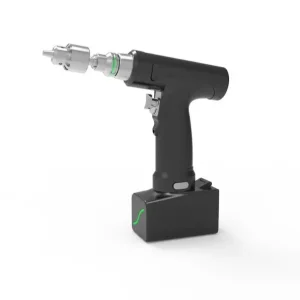
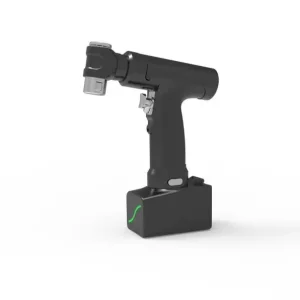

A clinical white paper analysis on dimensional standardization, supply chain localization, and metallurgical advances across Class IIa surgical cutting tools.
The international demand for orthopedic drill bits has shifted definitively toward micron-level dimensional repeatability. Modern trauma surgery mandates exact pilot-hole diameter congruence to the inner core of cortical and cancellous bone screws.
Deviations as small as 0.05 mm can degrade bone-screw pullout strength by up to 34%, drastically compromising internal fracture fixation stability. Our factory operates automated multi-axis Swiss CNC machining centers that maintain flute diameter, lip clearance, and chisel edge concentricity strictly compliant with DIN 13972 and ISO 5832-1 specifications.
Under the stringent European Union Medical Device Regulation (EU MDR 2017/745), surgical drills and rotary cutting attachments require documented biological safety evaluations, ISO 10993 cytotoxicity testing, and exhaustive clinical performance evidence.
SNK ensures absolute audit traceability from the incoming vacuum-arc remelted (VAR) medical stainless steel ingot through electrochemical passivated packaging. Complete Class IIa technical documentation, Notified Body certified dossiers, and Free Sale Certificates (FSC) facilitate seamless distributor import compliance globally.
Thermal osteonecrosis occurs when cortical bone temperature surpasses 47°C for more than 60 seconds during drilling operations, resulting in alkaline phosphatase denaturation, microvascular collapse, and delayed bone healing.
Our drill bit flute architecture features optimized helix angles (24°–28°) combined with dual relief facets and polished chip flutes that dramatically reduce radial friction, accelerating cortical debris evacuation and mitigating peri-drilling hyperthermia under both saline-irrigated and dry emergency scenarios.
The complete surgical reference matrix matching outer flute diameter, cannulation bore, corresponding screw thread standards, and specific anatomical applications.
| Nominal Diameter (mm) | Working Flute Length (mm) | Cannulation Core (ID) | Shank / Coupling Type | Corresponding Screw System | Anatomical & Clinical Application |
|---|---|---|---|---|---|
| 1.1 mm / 1.5 mm | 25 mm – 45 mm | Solid (Non-cannulated) | AO Mini Quick / Dental Latch | 1.5 mm / 2.0 mm Mini Cortex Screws | Craniofacial, Hand & Wrist, Phalanx, Pediatric Osteotomy |
| 2.0 mm | 50 mm – 85 mm | Optional 0.8 mm Cannula | AO Quick Coupling / Round Shank | 2.7 mm Small Cortex Screws | Distal Radius, Metatarsal Fixation, Fibula Avulsion Fractures |
| 2.5 mm / 2.7 mm | 70 mm – 110 mm | 1.0 mm Guide Wire Bore | AO Small Coupling / Hexagonal | 3.5 mm Small Fragment Cortical Screws | Forearm Ulna/Radius, Clavicle, Tibial Shaft, Calcaneal Plating |
| 3.2 mm | 110 mm – 145 mm | 1.25 mm K-Wire Cannulated | AO Standard Coupling | 4.0 mm / 4.5 mm Cancellous & Cortex | Pelvic Ring Reconstruction, Distal Femur, Lateral Malleolus |
| 4.5 mm / 5.0 mm | 130 mm – 180 mm | 1.6 mm / 2.0 mm Guide Wire | Hudson / Zimmer / Jacobs Chuck | 6.5 mm / 7.0 mm Large Cannulated Screws | Femoral Neck Fractures, Intertrochanteric Fixation, Arthrodesis |
| 6.0 mm – 8.5 mm | 150 mm – 220 mm | 2.5 mm / 3.0 mm Guide Pin | Large AO / Hex Drive | Intramedullary Reaming / Dynamic Hip Screws | Proximal Femoral Nailing, Tibial Intramedullary Canal Entry |
Seamless tool lockup between handpiece collets and drill shafts prevents axial slip under extreme drilling loads. Our factory precision-mills three globally standardized connection interfaces:
Cannulated drill bits require extreme concentric alignment between the outer cutting envelope and the internal longitudinal lumen through which Kirschner guide wires (K-wires) pass.
Utilizing deep-hole gun-drilling followed by electropolishing, SNK guarantees internal core run-out under 0.02 mm across lengths up to 250 mm. This guarantees smooth K-wire sliding without binding or risk of guide pin bending during percutaneous trauma procedures.
Preventing second-cortex over-penetration is critical to protecting adjacent neurovascular bundles, popliteal arteries, and soft tissue structures.
All SNK drill bits feature permanent, non-reflective laser depth markings spaced in 2 mm increments. Etched using non-ablative fiber lasers under nitrogen shielding, markings withstand rigorous alkaline enzymatic detergents and hundreds of autoclave cycles without degradation or pitting corrosion.
High-yield surgical alloys treated for optimum surface hardness, extreme torsion resilience, and biocompatibility in physiological environments.
Orthopedic drills undergo extreme bending moments and axial shear stress during oblique bone entry. We formulate our drill lines using three primary certified alloy standards:
Standard industrial drill profiles fail catastrophically when piercing slippery, convex cortical surfaces. Our specialized orthopedic cutting profiles include:
To prolong blade life and minimize friction coefficient during sustained high-speed operations (such as joint reaming or cranial trephination), SNK applies physical vapor deposition (PVD) bio-coatings:
From single-surgeon custom sets to container-load tier-1 distributor private label programs, SNK operates agile, certified production infrastructure.
Launch complete, branded orthopedic drill bit and power handpiece lines without the multi-million dollar capital expenditure of specialized Swiss CNC machinery and cleanrooms.
We provide rapid prototype turnarounds within 14 working days, custom shank development compatible with proprietary cordless systems, laser branding, and Class II technical construction file (TCF) assistance for rapid regional health authority clearances.
Hospitals demand reliable delivery schedules, lot-to-lot consistency, and instruments that survive repeated aggressive central sterile processing (CSSD) routines.
SNK holds substantial buffer inventory with over 38,000 surgical power sets and 500,000 drill bits produced annually. Our automated passivated packaging lines guarantee sterile peel-pouch or bulk non-sterile delivery formats validated for direct terminal autoclaving.
Balancing operating room budgets while guaranteeing acute cutting edges is a primary challenge for modern healthcare procurement managers.
SNK offers both sterile pre-packaged single-use drill bit kits designed to eliminate infection risk and reprocessing expenses, as well as reinforced multi-use autoclavable drill bit series validated to retain cutting efficiency through 30+ rigorous trauma bone penetrations before edge refurbishment.
How robotic-assisted orthopedic surgery (RAOS), integrated sensor feedback, and additive micro-irrigation channels are transforming bone drilling.
With the global rise of robotic platforms (e.g., Mako, Rosa, Mazor), standard commercial drill bit run-out variances (+/- 0.05 mm) are no longer acceptable. Robotic arms apply steady, unyielding linear feed rates that amplify vibration if the bit oscillates.
SNK's 2026–2030 manufacturing protocol introduces sub-micron laser concentricity balancing, guaranteeing less than 0.005 mm rotational wobble along the entire shaft length to prevent haptic tremor triggers during autonomous robotic reaming.
The next frontier of smart surgery incorporates micro-piezoelectric force transducers and impedance sensors embedded near the drill bit coupling interface.
By analyzing real-time electrical impedance differences between dense cortical bone, trabecular cancellous bone, and soft periosteum, our experimental drill platforms communicate with brushless motor controllers to execute instant auto-stop within 3 milliseconds of far-cortex penetration, completely averting soft-tissue plunge injuries.
External saline irrigation delivered via sterile syringes rarely reaches the deep cutting interface in thick cortical bone (e.g., dense adult femur), resulting in trapped thermal energy.
Leveraging direct metal laser sintering (DMLS) 3D printing in surgical stainless steel, our R&D pipeline incorporates micro-spiral internal coolant conduits that channel pressurized saline through the rotating drill center directly out through exit ports situated immediately behind the cutting lips.
How regional healthcare frameworks dictate drill bit sizing protocols, material compliance, and surgical preferences across the globe.
In the United States and Canada, the rapid migration of total joint arthroplasty and trauma care into outpatient ASCs emphasizes sterile single-use disposable drill packs to minimize operating room turnover intervals and eliminate CSSD cross-contamination liabilities.
SNK supplies private-label FDA 510(k)-ready pre-sterilized procedure kits containing perfectly matched drill bit diameters, countersinks, and depth gauges tailored specifically to outpatient sports medicine and fracture plating cases.
European healthcare networks operate under rigorous environmental sustainability metrics combined with MDR (EU) 2017/745 traceability mandates. Purchasing consortiums in Germany, France, and the UK prioritize reusable cutting sets with certified low carbon footprints.
SNK's reusable drill systems feature UDI (Unique Device Identification) laser matrix coding, supporting full post-market clinical follow-up (PMCF) and validated life-cycle durability exceeding 200 cycles of 134°C steam sterilization.
In rapidly industrializing regions with heavy trauma workloads resulting from motor vehicle accidents, orthopedic departments require rugged, high-torque instruments capable of addressing severe comminuted polytrauma.
SNK provides modular multifunctional brushless systems paired with comprehensive cannulated drill bit arrays (2.5 mm – 5.0 mm) that offer optimal balance between budget rationalization, extreme torque resilience, and long-term mechanical reliability.
Rigorous metrology and chemical verification protocols validating every batch of surgical cutting tools before clinical release.
Every drill bit production run undergoes continuous 100% in-line non-contact optical laser scanning. Critical dimensional parameters—including outer diameter, web thickness taper, flute pitch, and lip height differential—are mapped against 3D CAD step files with +/- 0.001 mm resolution.
To verify non-interference and safe usage in proximity to high-field diagnostic imaging, our surgical instruments are evaluated for magnetic displacement force, RF-induced heating, and torque interaction up to 3.0 Tesla under standardized phantom environments.
Conducting empirical destructive testing compliant with ISO 6475, sample units from each batch are subjected to torsional fatigue thresholds up to failure to verify that the breaking point occurs outside the anatomical wound area, protecting patients during unexpected surgical bending forces.
Authoritative answers on metallurgical specifications, sterilizer durability, quick-coupling compatibility, and international procurement standards.
Complete surgical cutting accessories, high-frequency sternum saws, and micro bone drills manufactured for precision clinical performance.


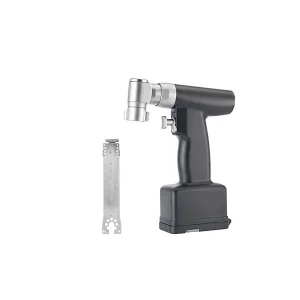
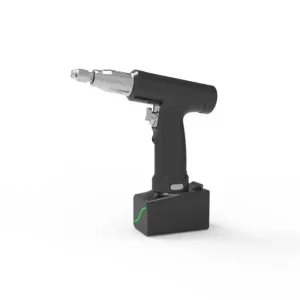

Whether you require custom drill bit shank prototyping, CE-MDR tender documentation, or high-volume private label surgical saw distribution, SNK's engineering team provides direct technical support.
