Engineered for precision osteotomy, joint reconstruction, and trauma interventions. Fully audited manufacturing with global device traceability.






Evaluating shifting procurement standards, international market consolidation, and supply chain sovereignty across Class IIa and Class IIb powered surgical instrument production.
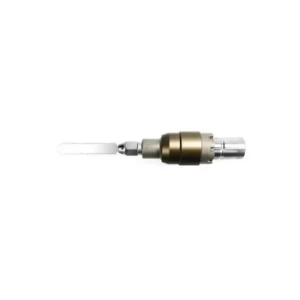
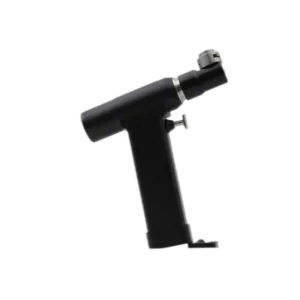
The surgical osteotomy sector has transitioned rapidly away from decentralized assembly toward vertically integrated, precision-machined powertrain solutions. In current orthopedic trauma, arthroplasty, and cardiothoracic procedures, an orthopedics swing bone saw (commonly designated as an oscillating or sagittal surgical saw) represents the frontline tool determining surgical resection planar fidelity and perioperative bone necrosis rates.
Historically dominated by legacy western Tier-1 original equipment manufacturers, the international market is undergoing a structural realignment. Rising healthcare budgetary pressures, mandatory European Union Medical Device Regulation (EU-MDR 2017/745) compliance costs, and expanding surgical caseloads across emerging economies have propelled specialized industrial factories in Asia to the forefront of global OEM and direct distribution partnerships.
Distributors and hospital procurement committees evaluate factory partners on quantitative biomechanical outputs rather than superficial price competition. Primary audit vectors include closed-loop CNC multi-axis milling repeatability, automated coil winding in brushless DC motors, dynamic balancing of eccentric crankshaft couplings, and verifiable thermal profile validation.
Furthermore, institutional suppliers are scrutinized under medical device single audit program (MDSAP) protocols. Factories must demonstrate that every surgical handpiece, from cannulated drills to oscillating swing bone saws, preserves airtight IPX7 or IPX8 seal integrity after subjecting components to accelerated vacuum steam sterilization (134°C autoclave cycles) without rotational velocity decay or critical bearing seizures.
Examining oscillation frequency, sweep arc geometry, blade mechanical deflection, and temperature containment within cortical bone structures.
Modern swing bone saws utilize sensorless brushless direct-current (BLDC) motors running at speeds up to 15,000 oscillations per minute (opm). Unlike antiquated brushed units that produce internal carbon dust and severe frictional heating, electronic commutation maintains consistent angular momentum even when passing through high-density femoral cortical margins.
The swing angle (typically calibrated between 4.0° and 5.5°) dictates cutting efficiency versus soft-tissue clearance. A tighter arc minimizes collateral ligamentous tearing in Total Knee Arthroplasty (TKA), whereas an oversized oscillation arc exacerbates blade flutter, compromises saw kerf uniformity, and generates excessive micro-fractures in osteoporotic bone.
Per ASTM F2180 guidelines, exposing osteocytes to temperatures above 47°C for longer than 60 seconds triggers permanent thermal osteonecrosis and subsequent implant loosening. Precision factories optimize rake angles and dual-pitch saw blade teeth while engineering high-conductivity alloy handpieces to suppress thermal spikes during prolonged resection runs.
| Performance Vector | Legacy Brushed Swing Saws | SNK Next-Gen Brushless Swing Systems | Clinical / Procurement Significance |
|---|---|---|---|
| Oscillation Frequency | 8,000 – 11,000 opm | 12,000 – 15,000 opm (Stepless Throttle) | Faster bone resection, reduced hand tremor, smoother kerf profile |
| Torque Stability under Load | ± 8.5% deviation under dense cortical load | < ± 1.5% closed-loop regulated deviation | Eliminates intraoperative blade stalling in subchondral sclerosis |
| Reprocessing Durability | 50–80 Autoclave cycles prior to brush change | 200+ Steam Autoclave (134°C) & EO cycles | Drastically lowers hospital total cost of ownership (TCO) |
| Acoustic Emission Level | 78 – 85 dB(A) | ≤ 65 dB(A) across operational bandwidth | Mitigates surgeon acoustic fatigue; enhances OR communication |
| Weight Distribution Balance | Front-heavy, offset motor center of gravity | Axially aligned ergonomic mass index | Decreases tendon strain during multi-plane osteotomies |
How high-frequency swing bone saws deliver tailored kinematic profiles across joint reconstruction, spinal decompressions, and pediatric traumatology.
In joint arthroplasty, the swing bone saw establishes the prosthetic seating bed. In distal femoral resections and proximal tibial plateau plateauing, any angular blade vibration produces planar deviations exceeding 0.5 mm, resulting in implant malalignment and premature polyethylene wear. High-rigidity quick-connect oscillating mechanisms guarantee micro-meter edge precision throughout extensive cut sequences.
In transforaminal lumbar interbody fusion and laminotomy, surgical corridors are extremely narrow. Utilizing wide oscillating blades near delicate dural margins is clinically hazardous. High-precision micro swing saws with customized ultra-thin profiles (down to 0.4 mm blade thickness) facilitate precise osteophyte resection and facetectomy without tearing the posterior longitudinal ligament or neural roots.
Pediatric diaphyseal realignments and fragile fracture fixations demand exceptional sensitivity. Heavy, unwieldy power tools induce hand fatigue and lead to over-penetration into posterior soft tissues. Lightweight ergonomic carbon-motor and micro-brushless swing saws afford fine manual tactile feedback, safeguarding pediatric periosteum and encouraging accelerated callus formation.
The next decade of surgical power instrument design moves beyond raw RPM metrics into digital intelligence, haptic boundary sensing, and sterile fleet telemetry.
As orthopedics adopts autonomous and semi-autonomous robotic arms (such as Mako, ROSA, and emerging open-architecture robotic systems), the swing bone saw must interface natively with kinematic robotic end-effectors. SNK’s development roadmap features high-speed controller area network (CAN) bus and digital optical communication channels embedded into the handpiece chassis.
This allows surgical navigation software to modulate motor torque and active oscillation speeds in real-time. If the saw blade traverses predefined 3D CT-reconstructed virtual safety boundaries, the system executes an active regenerative braking stop within 8 milliseconds, virtually eliminating pop-through soft tissue lacerations.
Reprocessing failure remains the primary failure mode of powered orthopedic tools in modern healthcare systems. Future iterations incorporate micro-RFID transponders and intelligent Battery Management Systems (BMS) that automatically record the thermal history, steam moisture exposure, and peak discharge curves across each surgical event.
Sterile processing departments (SPD) receive predictive maintenance alerts on localized displays before bearing degradation causes critical intraoperative tool stalls, securing uninterrupted surgical theatre scheduling and prolonged lifespan.
Bridging regulatory registration barriers, lifecycle maintenance overhauls, and accelerated OEM/ODM customization cycles.
Global orthopedic brands seeking rapid market entry benefit from our modular R&D framework. With pre-certified Class IIb technical design dossiers, external housing ergonomics, proprietary blade attachments, speed ranges (500 to 15,000 opm), and personalized anodization can be manufactured from CAD sign-off to pilot production within 3 to 4 weeks.
Securing local health authority clearance can stall expansion for years. SNK provides international distributor partners with complete audit-ready MDR documentation: biocompatibility test reports (ISO 10993), electrical medical safety files (IEC 60601-1 / IEC 60601-1-2 EMC), EUDAMED single registration numbers (SRN), and validated sterilization protocols.
Multi-hospital networks and large regional health authorities require uniform inventory systems to streamline OR nursing workflows and SPD staff training. SNK deploys interchangeable handpiece platforms that share universal high-capacity lithium battery packs, universal multi-bay chargers, and standardized oscillating saw attachments across departments.
High-speed resection blades, quick-couple adapters, and precision drill units manufactured under strict ISO 13485 cleanroom conditions.





Detailed responses on motor mechanics, regulatory dossiers, sterilization longevity, and OEM supply contracts.
Brushless DC (BLDC) motors eliminate physical commutator brushes, replacing them with electronic stator commutation. This delivers three distinct clinical benefits: First, BLDC systems avoid mechanical friction wear, eliminating carbon particulate generation inside sterile operating environments. Second, BLDC handpieces maintain flat torque curves; when encountering dense bicortical bone, the tool does not experience rotational velocity dips. Third, brushless drives run significantly cooler, resisting thermal transfer to handpiece housings, while delivering enduring resistance to repeated high-temperature autoclave cycles.
Preventing thermal osteonecrosis (cell death above 47°C) is achieved through a multi-tiered engineering approach: 1) Precision kinematic balance maintaining an optimal oscillation arc between 4.2° and 5.2°, which maximizes debris evacuation through the kerf rather than packing bone dust into friction-inducing paste; 2) Saw blades stamped and ground from imported medical-grade stainless steel with progressive rake geometry and cross-set teeth; 3) Ultra-low mechanical runout (<0.03 mm) eliminating unnecessary transverse vibration and lateral friction against bony margins.
SNK handpieces, saw adapters, and blades are rigorously validated under ISO 17665-1 for moist heat steam autoclaving (both vacuum pre-exhaust cycles at 134°C for 4 to 18 minutes, and gravity displacement at 121°C). The internal assemblies feature specialized fluororubber O-rings and hermetic acoustic barrier seals that withstand over 200 consecutive sterilization runs without grease extrusion or loss of IPX8 water ingress resistance. Ethylene oxide (EO) and low-temperature hydrogen peroxide gas plasma sterilization are also fully supported.
We supply global distributors with complete technical documentation dossiers conforming to the EU-MDR 2017/745 format and STED guidelines. This includes ISO 13485:2016 and MDSAP certificates, electrical safety and EMC compliance test reports under IEC 60601-1 / IEC 60601-1-2, biocompatibility certifications under ISO 10993, Free Sale Certificates (CFS/FSC) recognized in 21+ jurisdictions, risk assessment files under ISO 14971, and clinical evaluation reports (CER).
Standard customized configurations—including custom chuck interfaces, proprietary blade attachment connections, custom housing color anodizing, and laser-etched branding—can be designed, prototyped, and brought to pilot production within 3 to 4 weeks. For complete proprietary clean-sheet handpiece engineering (bespoke motor kinematics, integrated RFID communications, custom casing profiles), our turnkey R&D cycle takes approximately 8 to 12 weeks, supported by in-house CAD/CAM tooling and DIN 13972 validation facilities.
Partner with an accredited orthopedic power tool factory. Request full engineering blueprints, CAD files, CE-MDR registration dossiers, or evaluate sample demonstration kits for hospital tenders.
