State-of-the-art brushless handpieces, versatile drill adapters, and high-precision trauma tooling engineered for modern operating theaters.


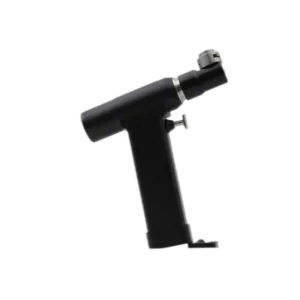




A rigorous technical breakdown of intramedullary tibial reaming and cannulated drill bit manufacturing, establishing benchmarks for thermal necrosis prevention and mechanical coaxiality.
The performance of an orthopedic tibia hollow drill bit depends strictly on raw material microstructure. SNK manufactures rotary cutting devices using vacuum arc remelted (VAR) AISI 316LVM (ASTM F138), custom-melt Custom 465 stainless steel, and nitrogen-strengthened 17-4PH martensitic alloys.
Intra-medullary tibial canal preparation presents significant hydrodynamic challenges. Our drill bits utilize a dual-pitch parabolic flute profile that optimizes bone debris clearance while avoiding medullary pressure spikes.
Cortical bone necrosis occurs when tissue temperatures exceed 47°C for more than one minute. SNK drills integrate aggressive razor-ground chisel edges with micro-irrigation channels to maintain physiological integrity.
Comprehensive orthopedic drilling methodologies tailored for tibial shaft fractures, high-energy tibial plateau reconstructions, and complex interlocking intramedullary nailing procedures.
Modern tibial intramedullary nailing requires versatile hollow drill bit designs compatible with both infrapatellar and semi-extended suprapatellar insertion techniques.
Secure distal locking requires exact screw hole diameter tolerances. Our cannulated and solid tibia drills offer calibrated shank dimensions matching universal quick-connect couplings (AO/Synthes, Zimmer, Stryker styles).
Standardizing surgical trays with SNK cannulated drill platforms drastically lowers institutional sterilization overhead, instrument tray weights, and procedure setup latencies.
Combining automated Swiss 5-axis CNC machining centers, automated robotic deburring, and ISO Class 7 cleanrooms to deliver unmatched price-performance ratios.
Equipped with ultra-precision Citizen and Star multi-axis CNC lathes, enabling continuous single-setup deep-hole gun-drilling and flute grinding for perfect coaxiality.
Every lot undergoes 100% non-contact laser optical profilometry and DIN 13972 drill accuracy testing, certifying edge concentricity down to ±0.005 mm.
Internal cannulated lumen surfaces are treated with proprietary ECM electropolishing, achieving mirror-like surface roughness (Ra < 0.2 μm) to prevent wire jamming.
With an annual output exceeding 38,000 surgical power sets and 450,000 rotary instruments, our Shanghai and regional hubs assure zero stockouts for multinational brand partners.
Pioneering advancements in digital surgical robotics, passive thermal sensing, and nanostructured biocompatible coatings.
Next-generation tibia drill bits feature optically calibrated passive fiducial geometries and electromagnetic trackers integrated directly into the drive hub.
To eliminate cutting heat without external fluids, SNK engineers are deploying physical vapor deposition (PVD) Diamond-Like Carbon (DLC) and Titanium Aluminum Nitride coatings.
Exploring real-time passive visual thermochromic rings on the drill shaft that provide immediate optical color-shift warnings if temperatures approach the 45°C boundary.
Comprehensive regulatory assurance, OEM/ODM co-development pipelines, and swift international delivery protocols for Tier-1 medical device importers.
All rotary instruments and handpieces are fully classified under CE-MDR (EU) 2017/745 (Class IIa/IIb rules), accompanied by complete Clinical Evaluation Reports (CER) and Basic UDI-DI tracking.
From custom cannulation inner diameters (ID 1.0 mm - 4.5 mm) to tailored flute lengths and proprietary drive connections, SNK delivers turnkey OEM solutions in as little as 3 weeks.
We maintain regional backup distribution inventory and rapid response hubs to support acute hospital tenders and distributor supply chain guarantees.
Explore our complete trauma series, featuring brushless cannulated drills, high-torque micro-cutting tools, and neuro-orthopedic adapters.
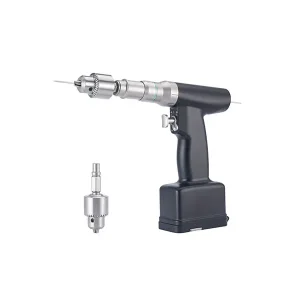




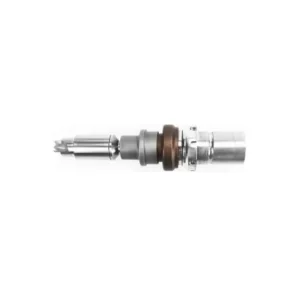
Expert answers addressing cannulation tolerances, reprocessing protocols, metallurgy certifications, and OEM manufacturing agreements.
