Engineered for low thermal escalation, extreme osteotomy precision, and multi-cycle autoclave resilience across demanding surgical operating environments.





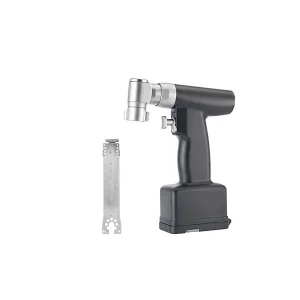

Analyzing biomechanical efficiency, thermal osteonecrosis prevention, and advanced electro-mechanical architectures in modern surgical power handpieces.
Bone cells undergo irreversible enzymatic denaturing when exposed to operational temperatures exceeding 47°C for longer than one minute. High-speed reciprocating osteotomy introduces significant frictional loads across cortical barriers.
Traditional carbon brush systems generate micro-particulates and suffer from carbon attrition under severe steam sterilization regimes. Solid-state brushless engineering delivers superior torque density in a compact form factor.
Modern surgical power units must endure harsh enzymatic chemical baths followed by high-pressure steam autoclaving cycles (134°C at 2.2 bar) without degradation of inner electronic windings.
Our OEM/ODM manufacturing protocols conform to the strict geometrical runout tolerances mandated by DIN 13972. Oscillating and reciprocating blade stroke amplitudes remain strictly within ±0.03 mm variation, ensuring reproducible surgical margins and preventing micro-fracturing along trabecular bone interfaces.
How state-of-the-art Chinese medical power tool facilities leverage end-to-end supply chain integration to deliver high-tier engineering at competitive economies of scale.
Advanced Chinese manufacturing facilities feature clusters of 5-axis DMG MORI CNC machining centers and Citizen Swiss-type lathes operating in temperature-controlled clean rooms. This internal integration allows micron-level production of planetary gearboxes, hardened transmission cams, and titanium ergonomic shells with zero vendor latency.
Prototyping workflows that take 12 to 16 weeks in Western production facilities are routinely executed within 21 days in China’s high-tech industrial hubs. From initial CAD optimization and finite element analysis (FEA) to pilot SLA additive prints and functional stainless steel samples, our design iteration velocity drastically truncates regulatory qualification lead times.
Operating under certified ISO 13485:2016 and MDSAP quality management systems, manufacturing protocols encompass 100% optical coordinate measurement machine (CMM) verification, dynamic motor load diagnostics, noise analysis inside anechoic chambers, and endurance benchmarking across multi-cycle continuous duty runs.
Strategic integration of smart surgical navigation, solid-state battery cells, and closed-loop robotic interoperability.
Handpieces are increasingly integrated with reflective tracking arrays and optical markers compatible with Stryker, Medtronic, and Brainlab navigation protocols. Future iterations incorporate real-time depth boundaries, automatically throttling motor oscillations when the blade approaches delicate neurovascular structures.
Battery chemistry transitions from standard nickel-cadmium architectures to high-drain, autoclave-tolerant lithium ternary cells. Incorporating onboard battery management systems (BMS), these portable power modules sustain unflagging cutting torque throughout 90-minute arthroplasty procedures on a single rapid charge.
Extensive clinical studies demonstrate that handpiece mass asymmetry directly contributes to pronator tendon strain in surgeons. Modern factories utilize lightweight titanium and PEEK composites to optimize center-of-gravity distributions, allowing axial precision throughout complex pelvic and spinal osteotomies.
| Performance Parameter | Legacy Carbon Motor Systems | SNK Next-Gen Brushless (BLDC) Platforms | Clinical Clinical Advantage |
|---|---|---|---|
| Cutting Stroke Rate | 8,000 – 10,000 CPM | 12,500 – 15,000 CPM (Continuously Variable) | Drastically accelerates resection speed; reduces surgeon fatigue |
| Torque Consistency | ± 7.5% under dense bone resistance | ± 1.5% with Active Closed-Loop Feedback | Eliminates blade stalling during dense diaphyseal cortical cutting |
| Sterilization Threshold | 50 – 80 Autoclave cycles before motor service | > 200 Consecutive Steam Autoclave cycles (134°C) | Reduces hospital maintenance and set turnaround costs by 60% |
| Operational Sound Pressure | > 78 dBA at 1 meter | ≤ 62 dBA at 1 meter | Enhances operating room verbal communication and reduces fatigue |
| Drive Mechanism | Mechanical Carbon Brush Commutator | Solid-State Electronic Commutation | Zero friction dust generation, pure cleanroom bio-compatibility |
Calibrated osteotomy configurations addressing specific mechanical challenges across multidisciplinary surgical departments.
Long-bone shaft fractures often necessitate resection of sclerotic non-viable bone prior to intramedullary nailing or external fixation. Portable reciprocating saws provide the axial linear stroke needed to debride jagged fracture margins precisely without risking soft-tissue wrapping.
In total hip and total knee replacements (THR/TKR), accurate proximal tibia planar resection and femoral neck osteotomy define implant longevity. Reciprocating configurations equipped with rigid keyhole blades provide clearance around anatomical collateral ligaments.
Primary and re-operative cardiac interventions require rapid, straight-line sternum bisection. High-frequency reciprocating sternum tools equipped with safety foot-guards prevent posterior laceration of the pericardium or anterior mediastinal vasculature during emergent re-entry.
Ponte osteotomies, pedicle subtraction, and en-bloc spondylectomy procedures demand micro-cutting margins within millimeters of the dura mater. Low-vibration, high-frequency linear sawing allows controlled bone removal with minimal collateral acoustic shock.
Canine cruciate ligament surgeries (such as TPLO and TTA) along with complex feline fracture reductions require ultra-compact, lightweight handpieces that deliver hospital-grade cutting power without overwhelming smaller anatomical structures.
Addressing set standardization, Central Sterile Supply Department (CSSD) compatibility, and B2B OEM regulatory qualification.
Hospitals grapple with crowded sterilization processing suites and escalating instrument turnaround overheads. By consolidating cannulated drilling, high-frequency oscillating sawing, and linear reciprocating attachments onto a unified brushless motor power base, healthcare systems lower tray counts, streamline inventory carrying costs, and reduce capital expenditure budgets by up to 35%.
Global medical distributors encounter escalating certification friction under the European Union Medical Device Regulation (EU MDR 2017/745). Leading Chinese factories provide complete technical design dossiers, clinical evaluation reports (CER), ISO 10993 biological assessments, and comprehensive post-market surveillance data for seamless submission under global health ministries.
From custom CNC laser etching, custom anodized color encasings for easy theatre identification, to localized instructions for use (IFUs) and tailored sterilization containers, modern ODM manufacturers configure turnkey private label lineups that allow Western brand houses to maximize operational gross margins while sustaining high surgical fidelity.
In-depth responses covering duty cycle management, thermal thresholds, custom adapter compatibility, and regulatory onboarding.
Complete your surgical suite with high-speed cranial adapters, cannulated trauma systems, replacement chucks, and certified high-durability blades.


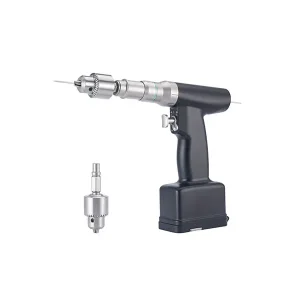



Streamlining the transition from product evaluation to commercial qualification for hospital networks, distributors, and global OEM brands.
Submit customized voltage, stroke-length, and adapter specifications directly to our Shanghai R&D engineering center.
Contact EngineeringAccess our complete product line registry, IFUs, sterilizer cycle charts, and MDSAP/CE-MDR verification records.
Request CatalogBecome an authorized territorial sales or technical service partner with direct factory warranty guarantees and rapid spare part delivery.
Global Programs