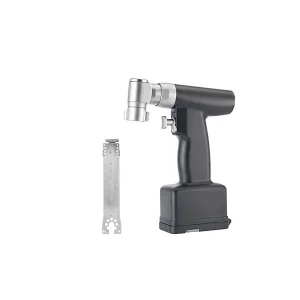
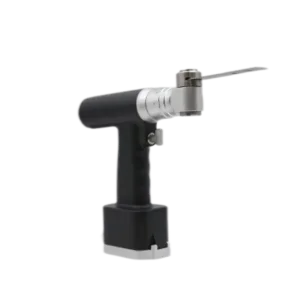
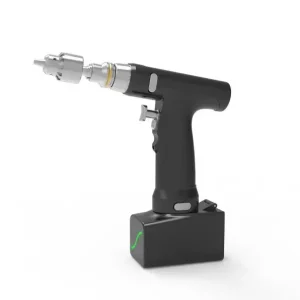
Our ISO 13485:2016-certified and CE-MDR-verified clean-room precision tool division manufactures ultra-high-efficiency brushless and carbon-driven systems built to identical structural tolerances as our heavy-duty forestry and timber conversion hardware.
As commercial timber harvesters, custom sawyers, and rural infrastructure developers shift toward decentralized, eco-sensitive timber recovery, the portable swing blade sawmill has emerged as a disruptive technological cornerstone.
Traditional horizontal band sawmills require logs to be repeatedly rotated using heavy hydraulics or cant hooks to square the cant. In contrast, swing blade sawmills pivot 90 degrees on a single axis, executing horizontal and vertical cuts along the stationary log without ever requiring log movement.
Swing blade sawmills utilize rigid circular saw plates tipped with premium tungsten-carbide or cobalt alloys. Unlike thin, flexible band blades susceptible to wave defects, crowning, and thermal fatigue, circular swing blades deliver unmatched planar dimensional stability across abrasive species.
Moving multi-ton logs over rugged terrain incurs substantial transportation overhead and severe soil degradation. Portable swing blade mills dismantle into modular components transportable via standard light-duty pickups or ATVs, enabling conversion right at the stump.
Achieving dimensional perfection in rough sawn timber requires balancing torsional stiffness, blade heat dissipation, and dynamic power distribution along the axis of cut.
| Performance Criteria | Industrial Swing Blade Sawmill (SNK Platform) | Conventional Narrow Band Sawmill | Double-Arbor Stationary Circular Mill |
|---|---|---|---|
| Cutting Directionality | Dual-Cut Bi-Directional (90° Swing on Return) | Single-direction forward cut; idle return | Single-direction fixed conveyor feed |
| Log Handling Requirement | Zero log turning; cuts around stationary log | Frequent turning to avoid stress bow | Complex heavy-duty log carriage required |
| Blade Service Life | 1,000+ hours plate life; replaceable teeth | 2–4 hours before re-sharpening; risk of fatigue crack | High tooling life; requires factory auto-bench |
| Max Practical Log Diameter | Up to 2.0 m (unlimited with step-over track) | Limited by throat clearance (typical 70–90 cm) | Limited by arbor spacing (typical 60 cm) |
| Field Maintenance Complexity | Diamond file sharpening on machine (5 mins) | Tooth setter and specialized sharpener required | Heavy mechanical downtime; off-site tooling service |
| Modular Portability | Sub-100 kg breakdown components | Trailer-mounted; road transit restricted | Permanent concrete foundation required |
The core structural advantage of our swing blade assembly lies in the patented dual-taper mechanical locking pivot. Machined on 5-axis DMG MORI machining centers, the index plate locks firmly at true 0.00° and 90.00°, preventing harmonic chatter during high-feed-rate pine or dense eucalyptus sawing.
The ground track framework employs custom extruded 6061-T6 structural alloy with integrated rack-and-pinion guides. This rigid rail structure resists deflection over an 8-meter span while weighing less than 48 kg per section, combining structural rigidity with true man-portable ergonomics.
Equipped with commercial Honda GX or Kohler EFI power plants matched to heavy-duty centrifugal clutches and dual micro-V cog belts, our sawhead maintains constant 2,800 RPM blade speed under varying load depths, completely preventing thermal scorch on resin-rich softwoods.
From dense tropical rainforests to remote arid pastoral stations, our portable swing blade sawmill platforms adapt to specific regional forestry mandates, timber species densities, and logistics constraints.
Target Species: Ironbark, Jarrah, Spotted Gum, Kwila.
Extreme Janka hardness ratings (>12 kN) crush band blades. The swing blade's heavy kerf and carbide inserts cut cleanly without deviating, producing premium structural posts and railway sleepers on location in the bush.
Target Species: Douglas Fir, Ponderosa Pine, Western Red Cedar.
Following catastrophic wildfires, salvaged beetle-kill and fire-charred timber ruin band blades with embedded silica and carbon grit. Our circular plates slice through outer char without tooth dulling, salvaging millions of board feet.
Target Species: Teak, Mahogany, Blackwood, Acacia.
Remote road infrastructure renders heavy logging trucks impractical. The swing blade mill is hand-carried into plantation reserves by a crew of four, yielding zero environmental footprint and high-value dimensional export planks.
Target Species: European Oak, Beech, Walnut, Larch.
Equipped with our modular slabbing attachment, the swing mill converts oversized historical parkland oaks into live-edge dining slabs up to 1.5 meters wide, capturing tremendous artisanal premiums for commercial woodworkers.
Combining high-precision CNC machining clusters with a robust industrial supply chain, our manufacturing facility delivers world-class swing blade sawmills with unmatched lead times and competitive total cost of ownership.
Unlike assemblers reliant on multi-tier outsourcing, 85% of all mechanical assemblies—including laser cutting of alloy rail guides, CNC gear turning, dynamic blade balancing, and electrostatic powder coating—are completed within our 45,000 m² smart plant.
Distributors require market-tailored motor configurations (Honda, Kohler, Briggs & Stratton, or pure electric 3-phase) and branded setworks. Our specialized R&D engineering hub transitions an OEM requirement from CAD finite-element simulation to functional field prototype in 21 days.
Situated within the Yangtze River Delta industrial belt, we leverage direct proximity to world-class container ports in Shanghai and Ningbo. We maintain a rolling buffer inventory of over 300 complete sawmill units and 10,000+ tungsten sawteeth for immediate international dispatch.
Our engineering vision focuses on decarbonization, semi-automated computerized kerf tracking, and connected digital telemetry to empower the next generation of precision forestry operators.
Transitioning from petrol engines to 96V automotive-grade LiFePO4 battery architectures. Eliminates jobsite exhaust emissions, reduces operator acoustic fatigue below 75 dBA, and satisfies ultra-stringent forestry park fire regulations prohibiting combustion spark hazards.
Integrating optical LiDAR scanners directly onto the saw carriage. The onboard microprocessor maps the log's real-time taper, knots, and defects, computing an AI-optimized cutting pattern to yield the maximum percentage of dimensional FOHC (Free of Heart Center) timber.
Replacing traditional aluminum alloy rails with carbon-fiber reinforced polymer (CFRP) structural box girders. This drops total track weight by 42% while tripling torsional rigidity, enabling single-person carry into remote mountainous alpine zones without vehicle access.
Our manufacturing protocols uphold the strictest machinery safety standards, ensuring total compliance for hospital medical tools and industrial timber machinery across Europe, the Americas, and Australasia.
All portable sawmills incorporate CE-compliant fail-safe emergency dead-man shutoffs, polycarbonate protective chip deflector guards, and zero-rebound anti-kickback geometry designed in accordance with European industrial machinery safety statutes.
Every internal combustion powerplant shipped with our equipment complies strictly with US EPA Phase 3 / CARB Tier 4 emissions and EU Stage V regulations, ensuring seamless customs clearance and regulatory licensing across North America and the European Union.
By producing surgical instruments and heavy cutting machinery in our accredited plants, we apply medical-grade quality management standards—including metallographic hardness testing and 100% torque deviation verification—to every forestry mechanical carriage.
In-depth answers addressing kerf loss, log diameter handling, single-operator economics, sharpening workflows, and distributor qualification.
While a thin band blade boasts an average kerf of 2.0 mm compared to 3.2 mm on our circular swing blade, the swing blade delivers higher practical recovery when handling taper, heavy knots, and oversized timber. Band blades frequently wave or bow under stress, requiring oversized dressing that results in greater wood waste during final planing.
Yes. Because the log remains stationary on ground skids, the operator never rolls, cants, or balances multi-ton logs. You step the saw carriage forward to make the horizontal cut, swing the blade 90 degrees at the end of the stroke, and cut back vertically. The completed board is lifted off immediately without touching the log.
Each sawmill includes a precision 12V diamond wheel jockey sharpener. You clamp the jig onto the blade plate without removing the blade from the arbor. Touching up all carbide teeth takes less than 5 minutes and maintains precise face angles for another 4 to 8 hours of continuous hardwood cutting.
Our standard 10-inch swing blade model cuts up to 10" x 10" (254 mm x 254 mm) in a single double-cut pass, and can cut up to 10" x 20" beams with our dual-pass indexing. The mill cuts logs up to 1.8 meters (6 feet) in diameter inside the standard frame, and unlimited diameter logs by stepping the rails along the log.
Thanks to our vertically integrated Chinese manufacturing supply chain, standard production lead time for a 20ft or 40ft container (holding 8 to 20 complete sawmill sets) is typically 20 to 25 working days. Custom color palettes, branded manual sets, and local motor adaptations add less than one week.
Our optional slabbing bar attachment replaces the circular blade gearbox on the carriage in under 15 minutes. It uses a high-speed harvester chain driven by the main engine to cut live-edge natural slabs up to 1,500 mm wide, offering extraordinary flexibility for boutique furniture and architectural timber.
Explore our full line of surgical, anatomical, and precision mechanical powered cutting systems engineered under the same zero-tolerance manufacturing discipline as our heavy forestry hardware.