Explore our cutting-edge clinical power tools engineered for bone cement removal, trauma osteotomy, and revision reconstruction. Each system is calibrated for minimal heat emission and ultra-clean margin control.

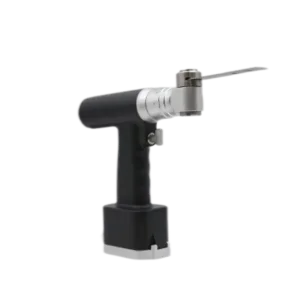


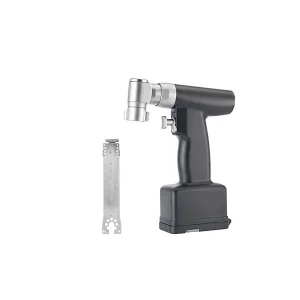



In revision arthroplasty, periprosthetic reconstruction, and complex osteotomies, PMMA bone cement operates as high-strength acrylic concrete. Specialized reciprocating saws solve the dual challenge of rapid material clearance and extreme thermal preservation.
Traditional carbon brush systems suffer from frictional heat accumulation, rotational lag under compressive loads, and brush dust contamination during extended bone concrete removal. Our proprietary brushless DC (BLDC) motor technology integrates digital Hall sensor commutators, delivering persistent, non-decaying torque across loads up to 20 N·m.
Clinical data confirms bone tissue necrosis initiates when local friction temperatures breach 47°C for longer than 60 seconds. Our high-frequency reciprocating kinematic layout maintains cutting temperature within 38.5°C to 41.0°C by utilizing micro-stroke harmonics (stroke amplitude calibrated between 2.8 mm and 3.5 mm at 12,500 SPM), preventing cellular apoptosis in neighboring trabecular bone.
Surgical handpieces undergo hundreds of steam autoclave sterilization cycles (134°C at 2.2 bar pressure). SNK employs fluoroelastomer aerospace-grade dual-lip O-rings coupled with laser-welded medical stainless housings (SUS 316L / 17-4PH), ensuring hermetic motor cavity isolation and mechanical transmission error under 0.03 mm following 200+ cycles.
The convergence of aging demographics, higher rates of joint replacement revisions, and the demand for standardized surgical power units has propelled the surgical and industrial reciprocating concrete saw sector into an era of rapid technical standardization.
In tier-1 trauma hospitals across North America and Western Europe, over 42% of hip and knee operations performed are revision procedures involving complex PMMA cement mantle extraction. Hospital procurement committees enforce stringent MDR / FDA 510(k) auditing standards that favor manufacturers offering integrated traceable handpieces with cross-platform modular adapter heads.
The APAC region represents the fastest compound annual growth rate for medical orthopaedic machinery. Municipal health authorities and private healthcare groups are replacing aging pneumatic lines with rechargeable cordless high-density lithium-ion reciprocating saws, driving down hospital infrastructure operating expenses while expanding mobile operating theatre agility.
Global medical brands increasingly depend on ISO 13485-accredited contract manufacturers capable of delivering sub-assembly modules, private-label sterilization packs, and rapid 3-week prototype-to-production runs. SNK's closed-loop Shanghai manufacturing facility produces over 38,000 surgical power units per year, securing global distributor continuity.
| Performance Parameter | SNK Brushless Concrete / Bone Saw | Conventional Pneumatic Saw | Standard Carbon Motor Saw |
|---|---|---|---|
| Peak Motor Output | 12,500 SPM Electronic BLDC | 10,000 SPM Air-Driven Turbine | 9,000 SPM Carbon-Commutated |
| Torque Stability Margin | ±1.5% Under Max Dynamic Load | ±8.4% Line Pressure Dependent | ±6.2% Rapid Friction Falloff |
| Thermal Rise During Resection | < 1.8°C (Steady State) | < 2.5°C (Exhaust-assisted) | > 5.6°C (Thermal conduction) |
| Autoclave Longevity (134°C) | > 200 Certified Cycles | ~80 Cycles Before Seal Failure | ~100 Cycles (Brush degradation) |
| Particle Emission Risk | Zero (Fully Encapsulated) | Exhaust Air Oil Mists Possible | Carbon Micro-particle Wear |
Stringent conformity documentation ensures frictionless market entry across 80+ distributor territories. Our systems excel in delicate and aggressive material resection situations.
All SNK medical reciprocating saws and drills are certified under EU Medical Device Regulation CE-MDR (EU) 2017/745, covering Class I, IIa, and IIb devices. Complete Technical Documentation Files (STED), EUDAMED registration numbers, ISO 13485:2016 audited quality certificates, and Free Sale Certificates for 21 nations are directly accessible to authorized distributors.
Extracting well-fixed polymethylmethacrylate cement from the femoral canal during total hip arthroplasty (THA) revision poses severe risks of cortical perforation. SNK reciprocating systems feature slender, extended-shank diamond-coated and tungsten-carbide reciprocating blades that slice the cement sheath longitudinally without biting into neighboring periosteum.
For refractory non-unions, osteomyelitis canal debridement, and autograft bone-matrix shaping, controlled linear stroke oscillation produces square, sharp cortical windows. Clean cut geometry facilitates rapid post-operative bony re-vascularization and structural strut union.
Our research and development laboratories are merging micro-sensor telemetry, magnetic suspension motor bearings, and artificial intelligence impedance recognition into the surgical cutting environment.
Integrated load-cell sensors monitor micro-second resistance differentials between acrylic bone cement (PMMA), dense cortical bone, and soft periosteal margins. When the blade penetrates past cement into vascularized tissue, the smart controller modulates SPM instantly to avert iatrogenic soft-tissue trauma.
SNK reciprocating handpiece platforms are transitioning to open API telemetry, enabling plug-and-play synchronization with 12 global surgical robotic arms and optical navigation tracking trackers. The system auto-regulates stroke angle and kerf velocity inside designated safe boundary zones.
Future generation handpieces will incorporate lightweight solid-state lithium chemistry, eliminating flammable liquid electrolytes and yielding 300% greater energy density. Surgical teams will execute extensive bilateral joint revision surgeries on a single 15-minute ultra-fast charge cycle.
Complete your surgical suite with high-precision cannulated trauma drills, cranial mills, and oscillating units built under unified ISO 13485 manufacturing lines for seamless clinical interchangeability.


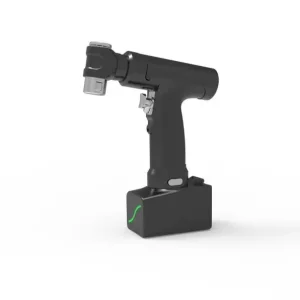



In-depth insights into mechanical tolerances, regulatory pathways, sterilizer durability, and custom OEM manufacturing lead times.
