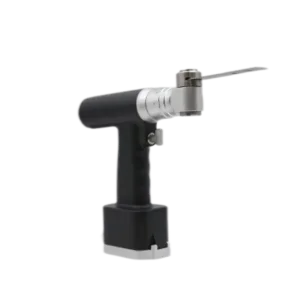
Direct-from-manufacturer surgical instruments qualified for joint replacement, trauma reconstruction, and minimally invasive bone resection.





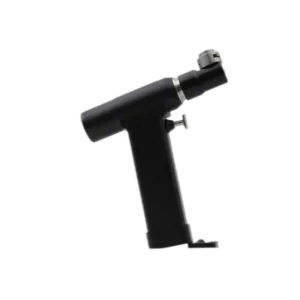

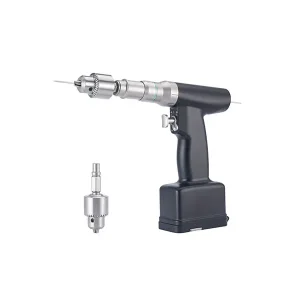
Orthopedic straight cutting forms the foundation of modern reconstructive osteotomy, total joint arthroplasty (TJA), and trauma repair.
Unlike sagittal or oscillating blades which operate via angular sweeps, straight reciprocating saws move linearly along an axial stroke. In both human and veterinary surgical settings, the primary technical limitation has been mechanical flexure and blade deflection. High-end surgical systems mitigate this using micro-tolerance guide assemblies, ensuring straight cutting planes without thermal bone necrosis.
Thermal osteonecrosis occurs when bone interface temperatures surpass 47°C for longer than one minute. High-precision reciprocating cut architectures balance stroke length (typically 2.5mm to 4.0mm) with frequency dynamics (10,000 to 15,000 cpm), maximizing linear cutting efficiency while clearing bone slurry and curbing friction-induced heat generation.
The global transition from MDD to EU-MDR (EU) 2017/745, alongside MDSAP audits across the Americas and Asia-Pacific, has raised technical documentation barriers. Reusable powered surgical handpieces must demonstrate absolute transmission retention after repeated thermal cycles without sacrificing motor balance or sterilization barrier integrity.
Modern medical power tool manufacturing in China has progressed from basic assembly to precision automated machining and complete supply-chain integration.
By situating core operations within the Yangtze River Delta medical hub, Chinese factories benefit from on-demand sourcing of biocompatible stainless steels (e.g., 440C, 17-4PH), high-torque brushless micro-motors, and medical-grade PEEK components.
Automated multi-axis CNC milling machines turn out reciprocating pushrods, blade chucks, and gearbox sleeves within DIN 13972 dimensional standards, eliminating hand-fitting discrepancies and ensuring universal chuck lock reliability.
Standard design customizations—ranging from customized stroke lengths and housing ergonomics to proprietary battery docking bays—can be engineered and verified in approximately three weeks, compared to eight weeks across traditional Western channels.
Manufacturing facilities operating under ISO 14644-1 Class 7 cleanroom controls conduct automated dynamic balancing and hermetic seal pressure tests on every handpiece, preventing saline and biological fluid ingress during high-pressure autoclaving.
Engineered for clean, directional bone margins across open surgical interventions, reconstructive procedures, and specialty surgeries.
Linear straight cut tracking is vital during primary sternotomy and redo cardiothoracic access. Reciprocating handpieces with integrated sternum guards deliver controlled division of the osseous midline, protecting retrosternal cardiac structures from accidental laceration while producing cleanly opposable bone surfaces for wire fixation.
In total hip arthroplasty (THA) revisions, extracting cemented or porous ingrowth stems requires controlled extended trochanteric osteotomies (ETO). Reciprocating straight cutting blades penetrate narrow intramedullary canals with zero radial kickback, releasing implants without compromising the remaining diaphyseal cortex.
Veterinary surgeons rely heavily on high-frequency reciprocating tools and dedicated TPLO saw adapters for accurate corrective osteotomies in canine stifle stabilization. Straight linear cutting control maintains bi-cortical margins without thermal damage, promoting faster bone healing and weight bearing in companion animals.
How hospital purchasing groups, tender committees, and device distributors navigate global supply chain transitions.
Modern hospital systems are phasing out carbon-brush motors in favor of brushless DC (BLDC) architectures. BLDC drives remove brush friction, produce virtually no carbon particulate contamination inside sterile fields, run noticeably cooler, and provide up to 300% longer operating life across autoclave cycles.
Procurement directors seek modular surgical power systems where one common motor handpiece supports cannulated drilling, reaming, oscillating sweeps, and reciprocating straight cuts through quick-release adapters. This shared architecture lowers hospital capital expenditure and simplifies sterile processing workflows.
Tier-1 legacy brands often rely on proprietary blade locking mechanisms and expensive repair programs. Sourcing directly from certified ISO 13485 manufacturers gives distributors access to open-standard blade locks, affordable spares, and stable margin models for hospital tenders.
Direct answers to core questions asked by biomedical engineering teams, clinical distributors, and regulatory auditors.
Equip your surgical handpieces with certified reciprocating attachments, precision saw blades, and specialized drill chucks.