

Factory-direct surgical motor handpieces, reciprocating resection adapters, and precision drill systems validated for high-throughput sterile reprocessing.


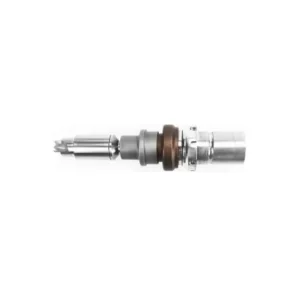
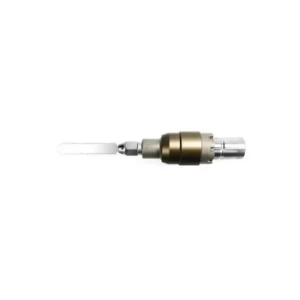
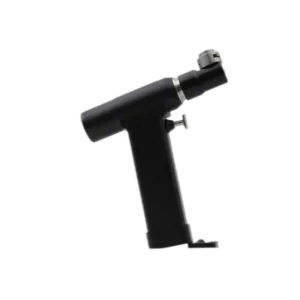


Navigating the commercial transition toward high-frequency brushless commutation, centralized sterile processing resistance, and dependable emergency warehouse reserves.
In contemporary hospital procurement and regional medical device distributorship, surgical reciprocating saws represent a mission-critical category within orthopedic trauma, joint revision, and thoracic sternotomy. Historically, hospital buying groups were constrained by prolonged factory lead times from legacy multi-national conglomerates, often stretching between 12 to 24 weeks. This vulnerability was sharply highlighted during recent supply chain bottlenecks.
Today, leading international buyers qualify a reciprocating saw the warehouse supplier based on physical stock readiness rather than mere manufacturing catalog promises. A certified warehouse supplier holds fully assembled, calibrated handpieces, sterile modular chucks, and dynamic reciprocating blades in strategic bonded storage. This allows prompt dispatch within 24 to 48 hours, neutralizing operating room downtime caused by sudden motor burnout or sudden increases in emergency trauma surgeries.
The surgical saw industry is witnessing an aggressive structural shift. Traditional carbon-brush motors, while financially economical for secondary clinics and tender bidding in cost-sensitive emerging markets, have mechanical limitations: thermal degradation and particulate wear during prolonged osteotomies.
Modern clinical engineering standards emphasize brushless DC (BLDC) motor platforms. By executing commutation via electronic hall sensors and micro-controllers rather than friction-based brushes, brushless reciprocating saws achieve linear torque curves reaching 12,500 oscillations per minute. Crucially, they exhibit minimal core thermal build-up, maintaining external handpiece surfaces below the 41°C threshold defined by medical safety standards (such as ASTM F2180), which prevents intraoperative thermal necrosis of adjacent soft tissues.
How advanced cleanroom robotics, integrated metallurgical machining, and ISO 13485:2016 governance deliver Tier-1 surgical precision at optimal total cost of acquisition.
Handpiece gearheads, cam drives, and reciprocating push-rods are forged from medical-grade 17-4PH stainless steel and TC4 titanium alloy, machined on 5-axis Swiss-style automatic lathes with positional tolerances under ±0.003 mm.
Every reciprocating saw motor drive undergoes 100% automated dynamic balancing in an ISO 14644-1 Class 7 cleanroom workshop. This suppresses high-frequency axial chatter that contributes to surgeon hand fatigue.
Leveraging an ecosystem of precision component tooling within our Shanghai industrial base, custom OEM/ODM reciprocating power configurations are prototyped and certified in as few as 3 weeks versus traditional 8 to 12 weeks.
| Performance Specification | Legacy Supplier Standard | SNK Factory Direct Standard | Clinical & Commercial Benefit |
|---|---|---|---|
| Torque Stability (ISO 6475) | ± 3.2% deviation | < ± 1.5% deviation | Prevents blade stalling in dense cortical bone; cleaner osteotomies. |
| Autoclave Life Cycle (134°C / 2.2 bar) | 80 – 100 cycles before rebuild | 200+ cycles validated | Transmission error <0.03 mm; cuts annual handpiece lifecycle costs in half. |
| Thermal Rise at Joint Contact | ΔT > 5.5 °C | ΔT < 2.0 °C (ASTM F2180) | Significantly reduces thermal osteonecrosis risk and promotes faster osteointegration. |
| Warehouse Replacement Dispatch | 4 – 8 weeks standard | ≤ 24 – 48 hours ready dispatch | Minimizes emergency buffer requirements and eliminates OR disruption. |
| MDR Regulatory Compliance | Phased MDD legacy reliance | CE-MDR (EU) 2017/745 + MDSAP | Guaranteed long-term regulatory compliance across EU & global hospital tenders. |
From trauma reconstructions to delicate veterinary tibial plateau leveling, discover how precise reciprocating dynamics adapt to varied surgical anatomies.
How artificial intelligence integration, dynamic load sensing, and standardized modularity are redefining the next generation of powered surgical tools.
Micro-controller drive units continuously monitor armature resistance in real-time. When transitioning from dense cortical bone to soft cancellous tissue or marrow cavities, the motor automatically modulates frequency to prevent sudden plunging and soft tissue damage.
Our quick-connect transmission hubs support open API optical tracking frames and robot end-effector clamps. This allows surgical reciprocating saws to integrate seamlessly with robotic arthroplasty platforms and 3D navigation guidance systems.
Next-generation high-rate medical battery packs integrate protective hermetic casing and thermal barriers capable of enduring automated washer-disinfector cycles without compromising internal cell cycle life or peak current discharge.
Essential criteria hospital supply chain directors, distributors, and private label partners must evaluate before signing long-term purchasing agreements.
Verify that the manufacturer holds accredited Notified Body certification under the European Medical Device Regulation CE-MDR (EU) 2017/745 with direct registration in the EUDAMED database. Confirm that Class IIa/IIb surgical saw systems have full technical documentation, Risk Management Files compliant with ISO 14971:2019, and validated usability studies according to IEC 62366-1.
A common procurement failure point is early mechanical degradation following repetitive autoclave sterilization. Demand complete empirical test reports documenting transmission backlash, gearbox torque retention, and motor insulation impedance after a minimum of 200 validated steam sterilization cycles at 134°C.
Avoid single-point supply vulnerabilities by partnering with an enterprise that maintains buffer inventory. Inquire about exact bonded warehouse quantities, spare gear assemblies, replacement rotor modules, and universal blade inventories ready for emergency dispatch.
For medical device distributors establishing proprietary brand lines, assess the factory's flexibility in engineering custom RPM curves, oscillating angles, branding typography, and molded tray layouts without requiring cost-prohibitive MOQs.
Clear, definitive answers to help biomedical directors, distributors, and OR charge nurses evaluate our reciprocating saw platforms.
Standardized quick-connect adapters, specialized cranial mill attachments, and high-performance carbon-series bone drills in active warehouse storage.




