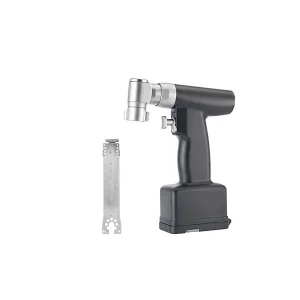
Explore our core surgical systems engineered for high-cycle autoclave durability, low thermal deviation, and micrometric osteotomy precision.
Why the intersection of oscillation dynamics, thermal osteonecrosis prevention, and hermetic sealing dictates modern surgical power tool reliability.
During bone osteotomy, temperatures exceeding 47°C for more than 10 seconds trigger irreversible microvascular collapse, bone tissue death, and subsequent implant loosening. SNK Sal Saws utilize high-frequency, low-amplitude oscillation engineered specifically to optimize chip evacuation and disperse friction heat well below critical thresholds.
Hospitals run high-throughput flash autoclaving cycles (134°C steam under 2.2 bar pressure). While standard surgical handpieces fail due to moisture ingress within 40-50 cycles, SNK’s multi-layered fluoroelastomeric seals and micro-welded titanium drive housings deliver verified transmission stability across > 200 harsh sterilization cycles.
Traditional carbon brush systems suffer brush disintegration, friction arcing, and severe torque degradation under dense cortical bone loads. SNK’s sensorless Brushless DC (BLDC) architecture provides continuous closed-loop speed regulation, delivering instant torque recovery with an industry-leading torque variance < ±1.5%.
A panoramic evaluation of how surgical power systems are shifting from commoditized mechanics toward smart, integrated robotic and minimally invasive ecosystems.
Orthopedic arthroplasty is rapidly adopting robotic-assisted surgery (RAS). Modern Sal Saws must support open communication protocols with optical tracking arrays and stereotactic cutting guides. SNK handpieces feature rigid mounting points and standardized tracking arrays, allowing sub-millimeter bone registration during robot-guided total knee arthroplasty (TKA).
Surgical trends prioritize tissue-sparing minimally invasive approaches (such as MIS-TLIF and unicompartmental knee arthroplasty). Operating through narrow retractors requires ultra-slim, low-profile saw head geometries. SNK’s 7 mm low-clearance oscillating head eliminates adjacent soft tissue impingement without sacrificing blade stiffness or cutting speed.
Bulky pneumatic hoses and trailing AC cables present significant contamination hazards and restrict surgeon range of motion. Modern ORs demand lightweight, fully autoclavable lithium-iron-phosphate (LiFePO4) power cells capable of maintaining steady voltage discharge throughout multi-hour revisions without mid-procedure battery swaps.
Hospitals are consolidating bloated instrument inventories. The legacy approach of separate power tools for trauma drills, reciprocating saws, cranial mills, and sagittal osteotomies is unsustainable. Modular handpiece ecosystems that support quick-docking locking collars cut capital equipment budgets by up to 55% across multi-specialty surgical centers.
Cutting through dense cortical bone into softer cancellous structures demands precise tactile responsiveness. Advanced sensorless drive algorithms detect instantaneous current draw changes, preventing blade binding, excessive skiving, and thermal buildup by modulating oscillation velocity in real time.
The regulatory transition from the EU MDD to the European Medical Device Regulation (MDR) has removed grandfather clauses for legacy surgical power tools. Manufacturers without extensive Post-Market Clinical Follow-up (PMCF), notified body biological evaluation files, and EUDAMED traceability are exiting the market, consolidating demand toward auditable tier-1 factories.
Comprehensive audit criteria evaluated by hospital purchasing syndicates, international distributors, and private-label orthopedic medical device brands.
Hospital OR managers analyze the cost per procedure rather than initial tool purchase price. Frequent motor burnouts, ruined battery packs, and high adapter replacement fees quickly erase upfront price savings.
Global regulatory compliance mandates complete Device Identification (UDI) laser-etched onto every handpiece, blade, and accessory pack, synchronized with national medical registries for complete clinical audit trails.
Surgical distributors need guaranteed inventory buffers to satisfy emergency trauma tenders and sudden surges in arthroplasty caseloads without long manufacturing lead times.
Third-party blade lock-in severely inflates procurement overhead. Modern procurement directors demand locking mechanisms that accept standard hub designs without proprietary adapter lockouts.
Targeted mechanical configurations engineered to address specific procedural difficulties across joint reconstruction, trauma stabilization, spine access, and cardiothoracic osteotomies.
Total knee and total hip arthroplasties demand planar resection surfaces to ensure zero gap tolerances beneath cobalt-chrome implant bases. Any blade wobble or vibration skews cutting planes, leading to early implant loosening.
Trauma theaters require high dynamic versatility, shifting quickly from high-torque drilling through hardened intramedullary canals to rapid sagittal bone cuts during limb salvage osteotomies.
Median sternotomies demand absolute cut trajectory control and complete soft tissue shielding behind the sternum to avoid lacerating the anterior pericardium or aortic arch structures.
Tibial Plateau Leveling Osteotomy (TPLO) requires radial semicircular sagittal cuts to neutralize cranial tibial thrust in canine patients. Eccentric runout will compromise the bone healing interface.
Pedicle subtraction and posterior column osteotomies involve working within millimeters of the dural sac and spinal cord roots, where heat dissipation and bone fragment containment are paramount.
Complex neuro-trauma craniotomies and mandibular reconstructions require seamless transitions between high-speed drilling, burring, and micro-sagittal contouring.
A multi-tiered regulatory and logistics framework designed to guarantee swift customs clearances, risk-free tender filings, and rapid after-sales response.
Fully certified Class IIa and Class IIb device portfolio audited by leading European Notified Bodies. Complete clinical evaluation reports (CER) and EUDAMED registration codes are furnished on-demand for distributor hospital tender submissions across all EU member states.
Our Quality Management System operates under the rigorous Medical Device Single Audit Program (MDSAP), satisfying regulatory requirements across the United States (FDA), Canada (Health Canada), Japan (PMDA), Australia (TGA), and Brazil (ANVISA).
With operational hubs and stocking distributors spanning 80+ partner markets, SNK supports regional healthcare operations with guaranteed delivery windows and dedicated loaner sets during planned sterilization maintenance.
Preview our active R&D developments focused on intelligent intraoperative sensing, advanced composite metallurgy, and zero-carbon sterilizable power architectures.
Integration of high-frequency closed-loop current feedback algorithms capable of detecting the micrometric boundary transition as a sagittal saw blade exits dense cortical bone into cancellous bone or soft tissue. The power handpiece throttles back motor oscillation within 8 milliseconds, virtually eliminating soft tissue iatrogenic lacerations.
Transitioning from traditional CNC billet machining to 3D-printed titanium alloy internal lattices. This reduces total handpiece weight by 32% while increasing structural dampening characteristics, lowering surgeon hand-arm vibration syndrome (HAVS) exposure during complex multi-hour joint revision reconstructions.
Eliminating exposed electrical contact pins that degrade during steam autoclaving. Next-generation systems feature wireless inductive charging built directly into standard DIN sterilization containment trays, powered by temperature-resistant solid-state graphene cells capable of surviving over 1,000 autoclave cycles without loss of capacity.
Key technical, regulatory, and commercial questions asked by biomedical engineers, hospital procurement teams, and surgical tool distributors.
Brushless motors use electronic commutation driven by Hall sensors or sensorless back-EMF circuitry, completely eliminating physical carbon brushes. This yields three critical advantages: first, there are no wearing carbon particles that can degrade handpiece seals or enter the sterile field; second, brushless motors generate up to 40% less internal heat, keeping handpiece temperatures comfortable during prolonged procedures; and third, torque output remains stable under heavy cutting resistance. Carbon-brush tools, while lower in initial acquisition cost, require periodic mechanical brush replacements and exhibit gradual torque degradation under heavy cortical loads.
We test our saw blades and drive heads using simulated synthetic bone blocks (Sawbones) and bovine cortical bone equipped with embedded thermocouple arrays spaced 0.5 mm from the cutting path. Under ASTM F2180 testing protocols, cutting feed rates and normal forces are strictly controlled via motorized test benches. Our proprietary tooth rake angles and relief geometries ensure that temperature rise remains well below 41°C under continuous cutting, safeguarding surgical margins against cellular osteonecrosis.
All SNK premium power handpieces, adapters, and blade assemblies are fully validated for both high-temperature pre-vacuum steam autoclaving (134°C / 273°F for 4–18 minutes at 2.2 bar) and Ethylene Oxide (EO) sterilization. Selected handpieces are also tested for low-temperature hydrogen peroxide gas plasma sterilization (STERRAD system compatibility). Our drive seals are specifically validated to maintain runout error below 0.03 mm across 200 consecutive pre-vacuum steam cycles.
Yes. SNK operates an agile manufacturing infrastructure backed by 16 automated production lines. We support comprehensive OEM/ODM engineering programs, including customized rotational speeds (500 to 15,000 RPM), tailored oscillation angles (3.5° to 5.2°), proprietary quick-connect collet designs, specialized surface color anodizing, and laser-etched private branding. Standard OEM prototypes can typically be delivered within 3 weeks, accompanied by full technical documentation.
SNK provides a standard 12 to 24-month comprehensive factory warranty on handpieces, covering motor assemblies, drive trains, and electronic controllers. For our authorized distribution partners, we maintain a revolving stock of over 200 standby tools and guarantee emergency surgical loaner dispatch within 24 to 48 hours to prevent operating theater downtime. Comprehensive service training and factory calibration kits are also available for certified regional biomedical repair centers.
Explore our specialized range of modular reamers, reciprocating saws, and veterinary adapters designed to expand your clinical operating capacity.