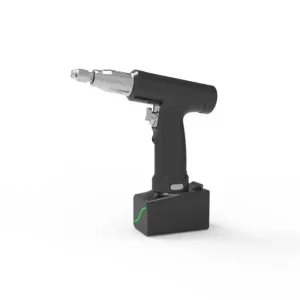
Engineered to exact clinical benchmarks, our Class I–IIb precision tools deliver uncompromised reliability across neuro, trauma, and orthopedic workflows.







A technical assessment of modern reciprocating power actuation in complex surgical resection and high-specification precision manufacturing.
The global demand for high-performance reciprocating power tools—colloquially categorized in precision sectors under the reciprocating saw or "sawzall" architecture—has transitioned decisively from mechanical bulk cutting toward micro-controlled, thermally managed, and high-duty continuous actuation. In high-stakes arenas such as orthopedic arthroplasty, trauma osteotomy, cardiothoracic sternotomy, and specialized industrial fabrication, cutting instruments are subjected to severe biomechanical, biological, and thermal stresses. A failure in blade concentricity, stroke harmonic dampening, or motor temperature isolation can compromise clean margins, induce bone necrosis, or lead to structural failure.
Historically dominated by legacy western conglomerates operating on high-margin licensing, the international supply ecosystem has experienced a fundamental transformation. Global hospital procurement directors, orthopedic implant brands, and technical equipment distributors are actively qualifying high-tier original equipment manufacturers (OEMs) and original design manufacturers (ODMs) possessing specialized engineering capabilities. This shift is motivated by the requirement for rapid adaptability: transitioning from older, brush-based, high-vibration systems to sensor-driven, brushless direct-current (BLDC) powertrains capable of sustaining over 12,500 to 15,000 SPM without thermal thermal bleed-through beyond 41°C.
Global healthcare systems, particularly under statutory tender structures in the European Union, the United Kingdom (NHS), and ASEAN healthcare systems, are confronting severe operating room margin compression. Tier-1 branded handpieces frequently demand excessive replacement pricing while offering locked proprietary interfaces. Precision-engineered alternative platforms provide open chuck interoperability, reducing total operational acquisition cost by up to 45% without forfeiting safety margins.
In osteotomies and sternotomies, frictional heating exceeding 47°C precipitates irreversible enzymatic thermal osteonecrosis, degrading osteocyte viability and impeding postoperative bone healing. Next-generation sawzall platforms utilize finite element analysis (FEA) to calibrate blade oscillation dynamics, micro-pitch geometries, and axial stroke dampening to maintain surgical contact temperatures systematically below critical thresholds.
The regulatory transition from the legacy Medical Devices Directive (MDD 93/42/EEC) to the stringent Medical Device Regulation (EU MDR 2017/745) has precipitated a massive rationalization of compliant power tool offerings globally. Factories lacking extensive cleanroom infrastructure (ISO 14644 Class 7), lifetime autoclave biocompatibility dossiers, and direct EUDAMED traceability are systematically eliminated from global qualification registries.
Detailed performance parameters across specialized trauma, joint replacement, thoracic surgery, and veterinary orthopedics.
In total joint arthroplasty revisions (hip and knee) and high-energy traumatic fractures, reciprocating saws perform critical extraction of failed hardware, cement mantle clearance, and distal femoral or proximal tibial corticotomies. Unlike oscillating sagittal saws whose angular swing can deflect off dense cortical margins, the inline linear stroke of a medical sawzall provides direct axial plunge capabilities into deep, narrow wound beds where soft-tissue retraction is severely restricted.
The primary sternotomy incision in coronary artery bypass grafting (CABG) and open valve surgeries requires instantaneous cutting force paired with absolute stopping precision. Brushless sternum reciprocating units (such as the S2150 series) integrate rigid sternum foot guards that shield the anterior pericardium and ascending aorta from accidental laceration during emergency and routine median sternal division.
Tibial Plateau Leveling Osteotomy (TPLO) in canine cranial cruciate ligament disease requires rapid radial osteotomies utilizing semi-circular and straight reciprocating blades. Operating at sustained speeds up to 12,000 SPM ensures thermal rise is constrained, mitigating non-union or post-operative plate destabilization.
Mini-open transforaminal lumbar interbody fusion requires narrow, elongated reciprocating micro-blades to perform bilateral facetectomy and laminotomy. Micro-reciprocating actions allow bone carving adjacent to the thecal sac without the wrapping hazard inherent in high-speed rotary burrs.
Dual-use medical-grade reciprocating technology translates directly into cleanroom aerospace, composite trimming, and micro-component de-gating where spark generation, pneumatic oil exhaust, and macro-vibrations must be strictly precluded from the controlled assembly cleanroom.
A deconstructive blueprint of modern brushless sawzall drive mechanics, planetary gear assemblies, and autoclave survivability.
The transition from mechanical carbon-commutated handpieces to sensorless/sensored brushless DC (BLDC) motors represents the single largest leap in surgical reciprocating saw reliability over the past two decades. In traditional carbon-brush systems, physical sliding contact generates carbon micro-particulates, electrical arcing, and substantial resistive heat. Under repeated saturated steam autoclave cycles (134°C at 2.1 bar for 18 minutes), commutator degradation accelerates, leading to torque stutter and eventual catastrophic stator burn-out.
Clinical Thermal Law: According to ASTM F2180 and ISO 6475, cutting tool bone interface temperatures must not breach 47°C for more than one second. Advanced BLDC stator coils utilize low-hysteresis neodymium-iron-boron (NdFeB) grade N45SH magnets, stable up to 180°C, encapsulated within hermetic titanium/anodized aluminum canisters.
A critical engineering differentiator between low-cost utility reciprocating saws and surgical-grade units lies in the mechanism converting rotary motor output to linear reciprocating displacement. Low-end systems rely on conventional wobble plates or basic slider-crank linkages, which exhibit non-linear acceleration profiles, excessive lateral runout, and high frictional lash. Medical-grade sawzall platforms utilize hardened 17-4PH precipitation-hardened martensitic stainless steel Scotch-yoke mechanisms or counterbalanced dual-opposing barrel cams. This architectural approach delivers pure harmonic motion, curbing transverse vibration to less than 1.2 m/s² and restricting tip deflection to under 0.03 mm over continuous operation.
| Engineering Attribute | Standard Commercial Reciprocating Saw | SNK Medical-Grade Brushless Sawzall | Clinical / Technical Advantage |
|---|---|---|---|
| Motor Architecture | Pneumatic or Carbon Brush DC | Slotless 3-Phase Brushless DC (BLDC) | Zero brush contamination, 300% longer cycle lifespan |
| Linear Oscillation Speed | 0–3,000 SPM | 0–15,000 SPM (Variable Micro-Trigger) | Cleaner osteotomy cut margins, reduced structural splintering |
| Sterilization Survivability | Wipe-down or ETO Only (Non-Autoclavable) | 200+ Autoclave Cycles (134°C Steam) | Complies with ISO 17665 hospital CSSD protocols |
| Runout / Radial Backlash | ±0.25 mm to ±0.50 mm | < ±0.03 mm (DIN 13972 Tested) | Sub-millimeter resection accuracy, bone preserve |
| Thermal Handpiece Delta (ΔT) | ΔT > 18°C after 3 minutes | ΔT < 2°C (ASTM F2180 Compliant) | Prevents tissue charring and clinician thermal fatigue |
How the Shanghai precision manufacturing cluster provides vertical integration, agile OEM delivery, and documented risk mitigation.
By establishing end-to-end production within our Shanghai facility—spanning high-speed 5-axis CNC machining centers, automated coil winding, laser micro-welding, and cleanroom encapsulation—we eliminate multi-tier supplier markups and subcontracting variances. Raw biomedical alloys entering the facility undergo optical spectrometry verification before machining.
Whereas legacy European and American medical device device contract manufacturers often quote 8 to 14 months for custom speed curves, chuck configurations, or brand badging, our flexible intelligent manufacturing lines compress the complete sample-to-verification pipeline down to 21 working days without compromising ISO 13485 verification stages.
Assembly takes place within certified ISO 14644-1 Class 7 cleanrooms with real-time airborne particulate monitoring. Every single reciprocating saw drive is laser-etched with a unique Device Identifier (UDI) compliant with GS1 standards, granting seamless integration into hospital traceability networks and EUDAMED records.
The strategic strength of China’s advanced medtech corridor resides in the integration of specialized micro-engineering supply ecosystems. Within a 50-kilometer radius of our Shanghai production hub, our procurement network accesses specialized vacuum heat treatment services, micro-gear grinding facilities, bio-compatible surface coating specialists (PVD, Teflon, micro-arc plasma oxidation), and calibrated metrology laboratories. This density shields global distribution partners from cross-border supply bottlenecks, shipping embargoes, and single-source dependency risks.
Exhaustive certification matrices guaranteeing audit readiness across 21 international jurisdictions and regional tenders.
Navigating the transition from MDD to MDR requires complete clinical evaluation reports (CER), rigorous biological safety testing (ISO 10993), electromagnetic compatibility (IEC 60601-1-2), and electrical medical safety (IEC 60601-1 3rd/4th Ed.). We maintain complete, ready-to-audit technical documentation dossiers enabling our European distribution partners to submit Annex IX conformity declarations with zero lead-time lag.
Operational interruptions in an operating theater carry substantial institutional liabilities. To ensure uninterrupted hospital workflows, our global localization program deploys forward stocking hubs, providing express components and standby systems to international partners on aggressive response timelines.
Anticipating structural engineering shifts toward optical tracking, real-time bone impedance feedback, and autonomous robotic integration.
Integrating high-frequency current sensing and acoustic micro-resonance into the sawzall transmission will allow future systems to detect transition zones between hard cortical bone, cancellous marrow, and soft periosteal tissues. The handpiece autonomously modulates stroke amplitude and cuts motor power within 4 milliseconds upon breakthrough, providing a mechanical failsafe against soft-tissue laceration.
As robotic-assisted total knee and hip systems proliferate globally, reciprocating saws are evolving from standalone manual tools into quick-docking robotic end-effectors. Our R&D pipeline incorporates dynamic communication interfaces (CAN-bus, RS-485, and low-latency wireless) interfacing directly with optical navigation cameras, dynamically constraining saw strokes within predefined stereotaxic boundaries.
Battery technology remains a major pain point due to autoclave heat sensitivity. SNK is actively validating next-generation solid-state lithium ceramic battery chemistry capable of directly withstanding 134°C steam autoclaving without detachment from the handpiece, eliminating sterile transfer funnels and radically simplifying sterile processing workflows.
In-depth responses tailored to hospital biomedical engineers, procurement directors, and distributor regulatory auditors.
Complete your surgical suite standardization with clinical drills, high-frequency sternum saws, and multi-size k-wire adapters.