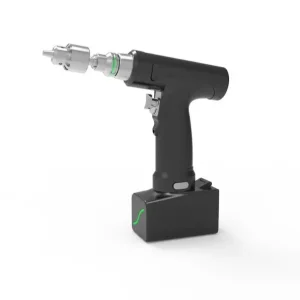
Engineered for trauma, orthopedics, veterinary surgery, and cardiothoracic resection with micro-stepped variable frequency control.


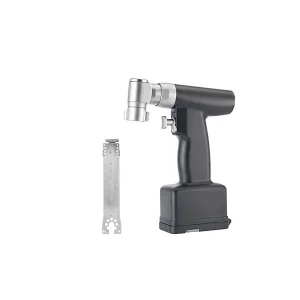
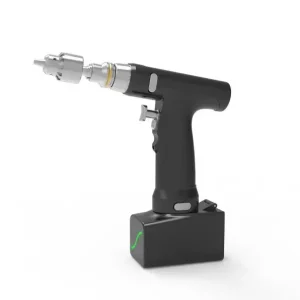




Analyzing clinical micro-resection, surgical-grade "Sawzall" systems, and why advanced hospitals and industrial procurement directors demand closed-loop brushless architecture.
Annual smart automated manufacturing line output across ISO 14644-1 certified cleanrooms.
Validated adverse event tolerance threshold across 16 high-precision surgical assembly chains.
Autoclave steam and EO sterilization durability with transmission runout below 0.03 mm.
Clinical verification in premier hospitals globally including Peking Union Medical College Hospital.
While an industrial "Sawzall" (reciprocating saw) prioritizes sheer demolition horsepower and stroke lengths exceeding 28 mm, medical-grade variable speed reciprocating bone cutters demand microscopic kinematic precision.
Bone tissue permanently undergoes irreversible necrosis when exposed to cutting friction exceeding 47°C for more than one second. Industrial reciprocating drives lack the variable-speed modulation necessary to avert cellular death.
Global procurement teams across North America, the European Union, and Latin America are diversifying away from monopolistic legacy tier-1 suppliers in favor of agile, ISO 13485:2016-certified specialized factories.
Comprehensive qualification matrix used by Group Purchasing Organizations (GPOs), medical device distributors, and hospital engineering committees to validate variable speed saw suppliers.
Torque output must remain uncompromised even at lowest trigger pull. Trauma bone drill and reciprocating saw systems require ISO 6475 validation confirming torque deviation stays under ±1.5% across varying cortical densities.
Handpieces and quick-lock blade couplers must withstand routine moist steam autoclaving (134°C at 2.2 bar) and Ethylene Oxide (EO) sterilization without internal bearing seizure or grease migration.
Enterprise procurement prefers unified handpiece drive systems capable of accepting reciprocating saw adaptors, oscillating saws, cannulated reamers, and cranial attachments to slash overall inventory overhead.
Direct manufacturers must maintain ready contingency buffers (200+ safety units), with emergency dispatch within 24 hours and direct technical engineering dossiers prepared for local MoH registrations.
| Specification Feature | SNK Precision Surgical Reciprocating System | Conventional Aftermarket Medical Saws | Industrial Grade Variable Speed Saws |
|---|---|---|---|
| Motor Drive Architecture | Sealed Sensorless Brushless DC (BLDC) | Carbon-Brush Motor with Commutator | Standard AC/DC Brushed Motor |
| Variable Speed Modulation | 0 - 15,000 SPM (Hall Effect Stepless Control) | 0 - 10,000 SPM (Linear Resistor) | 0 - 3,200 SPM (Mechanical Trigger) |
| Reprocessing / Sterilization | Autoclave 134°C, EO, Plasma (200+ Cycles) | Limited Autoclave (50-80 Cycles) | Non-Sterilizable (Surface Wipe Only) |
| Torque Fluctuation Margin | < ±1.5% (ISO 6475 Benchmarked) | ±3.5% to ±5.0% | > ±15.0% Unregulated |
| Regulatory Dossier Support | CE-MDR 2017/745, ISO 13485, EUDAMED Traceable | Legacy MDD 93/42/EEC (Expiring) | UL/CE Machinery Directive (Non-Medical) |
How variable speed surgical reciprocating saws empower trauma surgeons, veterinary orthopedists, and thoracic specialists worldwide.
In acute orthopedic trauma, shaft osteotomies and compound fracture debridement require high-frequency linear reciprocation to slice through dense femoral or tibial cortical bone without fracturing adjacent structural margins.
Primary and re-operative sternotomy demand flawless cutting control. The SNK S2150 sternum saw system incorporates reciprocating kinematics with a rigid sternal protector shoe to preserve mediastinal tissues and pericardial walls.
Canine cruciate ligament disease requires specialized Tibial Plateau Leveling Osteotomy (TPLO) procedures. SNK radial and reciprocating adapters interface seamlessly with high-speed brushless veterinary drive units.
A rigorous examination of electrical architecture, mechanical transmission, and next-generation smart surgical navigation integration.
Traditional mechanical carbon brushes wear out, generate abrasive conductive dust, and spark under heavy load. SNK's next-generation platform employs a 36V brushless stator controlled via digital Field-Oriented Control (FOC).
Converting rotary motor energy into linear reciprocating stroke motion necessitates extreme material toughness. Our gearbox utilizes aerospace-grade Nitronic 60 stainless steel mated with diamond-like carbon (DLC) coated planetary gears.
The roadmap for variable speed reciprocating systems converges with computer-assisted orthopedic surgery (CAOS). SNK is developing standardized CAN-bus and Bluetooth Low Energy (BLE) telemetric integration.
Ensuring frictionless hospital tender approval, ministry of health import clearance, and rapid logistics replenishment across all regional jurisdictions.
While many overseas suppliers struggle under the phased-out MDD directive, SNK’s entire product line is certified under CE-MDR (EU) 2017/745 for Class I, IIa, and IIb devices, complete with EUDAMED registration traceability.
Our manufacturing plant operates under ISO 13485:2016 and the Medical Device Single Audit Program (MDSAP), satisfying FDA QSR 21 CFR Part 820 requirements, Health Canada licensing criteria, and ANVISA guidelines.
Direct proximity to our Shanghai high-tech manufacturing center affords regional buyers unparalleled response speed, minimizing operating room instrument downtime during peak surgical schedules.
In-depth responses covering motor dynamics, regulatory submissions, autoclave life, and bespoke OEM/ODM manufacturing partnerships.
Brushless motors utilize electronic digital commutation instead of physical friction brushes. As a result, they eliminate carbon dust generation, reduce heat escalation, yield 30% longer runtime per battery pack, and withstand hundreds of rigorous autoclave cycles. Carbon-brush motors feature a simpler drive layout and lower initial procurement expense, making them ideal for high-volume public tenders and secondary healthcare clinics with strict capital budgets.
No. Industrial reciprocating saws operate with aggressive stroke lengths (28 mm - 32 mm), lack sterile internal sealing, generate severe thermal friction exceeding bone necrosis thresholds (47°C), and shed microscopic metal and carbon particulate matter into the surgical field. SNK surgical reciprocating saws are engineered to DIN 13972 and ISO 6475 standards with fine surgical strokes (3.2 mm), biocompatible coatings, and hermetic autoclave steam isolation.
Our handpieces incorporate linear Hall-effect magnetic sensors coupled to closed-loop digital motor controllers. Surgeons can smoothly feather blade velocity from delicate starting positioning (under 2,000 SPM) to rapid bone sectioning (12,500 - 15,000 SPM). The internal microcontroller constantly monitors load current, throttling back motor drive instantly if binding occurs, keeping bone interface temperatures below 41°C under saline irrigation.
All flagship handpieces, adapters, and saw blades are validated under ISO 11134 for high-temperature moist steam autoclaving (134°C for 18 minutes), ISO 11135 for Ethylene Oxide (EO) gas, and low-temperature hydrogen peroxide gas plasma reprocessing. Transmission runout remains certified below 0.03 mm even after 200 consecutive high-pressure autoclave cycles.
We supply a complete regulatory dossier including the EU Declaration of Conformity under MDR (EU) 2017/745, ISO 13485:2016 quality management certificates, MDSAP audit certificates, EUDAMED registration numbers, ISO 10993 biocompatibility testing data, ASTM F2180 thermal performance verification, and validated Instructions for Use (IFU) in over 10 languages.
Leveraging our flexible smart manufacturing lines and dedicated in-house CNC machining and DIN 13972 testing centers, custom OEM configurations (including bespoke trigger stroke lengths, speed curves between 500 and 15,000 RPM, private brand housings, laser engraving, and custom battery connectors) are typically realized within 3 weeks from approved CAD signoff.
Complete interchangeable tool ecosystem designed to mate seamlessly with SNK multifunctional high-speed handpieces.