Engineered for sternotomy, high-impact joint arthroplasty, micro-trauma, and neurosurgical cranial decompression.




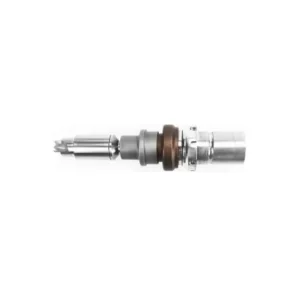


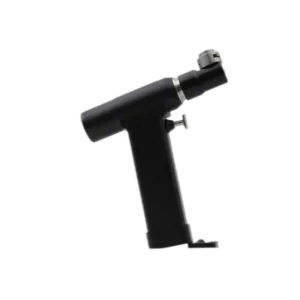
Comprehensive market analysis: How brushless DC (BLDC) motor architecture is reshaping modern orthopedic trauma, joint revision, and veterinary surgical instrumentation.
The global commercial theater is experiencing an accelerated migration from cumbersome pneumatic air lines and corded AC power consoles toward autonomous, high-density lithium-ion cordless reciprocating saws. Pneumatic hoses introduce severe trip hazards in high-traffic sterile fields, demand frequent compressor maintenance, and restrict surgical reach during rapid trauma intervention. In contrast, modern cordless reciprocating systems deliver uninterrupted surgeon mobility, optimal center-of-gravity balance, and eliminate cord draping contamination vectors entirely.
Traditional surgical power tools with physical carbon brushes suffer from friction heating, mechanical wear, and conductive carbon dust release during high-speed reciprocating cycling. Brushless motors utilize sensorless electronic commutation with neodymium rare-earth rotor magnets. This architectural shift yields over 85% electro-mechanical conversion efficiency, generates zero internal debris, minimizes thermal transfer to surgeons' sterile gloves, and ensures constant linear torque even under heavy cortical bone loads.
The most critical engineering benchmark separating consumer power tools from medical reciprocating systems is survivability under repeated 134°C (273°F) high-pressure steam sterilization. High-grade fluororubber dual-lip dynamic seals, vacuum silicone potted electronic motor stators, and PEEK bearing cages isolate sensitive circuit drivers from moisture ingress, vacuum dry stages, and alkaline enzymatic washers, surpassing 200 validated autoclave cycles without dielectric degradation.
Why multinational medical technology brands and international hospital consortia partner with specialized OEM/ODM manufacturing ecosystems in Shanghai.
Reciprocating saws demand microscopic tolerances within the eccentric crank rocker mechanism to convert rotational motor revolutions into high-frequency linear push-pull strokes. Our facility integrates Swiss-type multi-axis CNC lathe cells and German DMG MORI 5-axis centers. Every surgical handpiece casing is carved from aerospace-grade aluminum 7075 or medical titanium Ti-6Al-4V, preserving structural integrity with gear eccentricity tolerances held beneath ±0.005 mm.
Medical devices require rigorous bioburden and particulate control at point of assembly. All critical brushless motor insertions, ultrasonic component washing, clean lubrication greasing, and sterile barrier packaging are executed in Class 10,000 clean environments certified to ISO 14644-1. We guarantee initial bioburden counts remain well below limits required for subsequent ethylene oxide (EO) or terminal radiation processing.
Western surgical tool manufacturers typically operate on 12 to 18-month product iteration cycles due to fragmented subcontracting. Capitalizing on Shanghai's comprehensive industrial supply cluster, our engineering team executes functional prototyping, rapid metal 3D printing (SLM), motor controller firmware tuning, and DIN 13972 mechanical stress benchmarking within 3 to 4 weeks, enabling clients to seize emerging tender opportunities effortlessly.
Engineered to satisfy demanding trauma cutting, cardiac sternotomies, orthopedic joint reconstructive procedures, and veterinary orthopedics.
In compound fracture non-union treatments, severe diaphyseal trauma, or corrective limb shortening, orthopedists require rapid transverse and oblique bone cuts through dense femoral and tibial cortices. Brushless reciprocating saws provide the linear thrust and blade stability necessary to prevent binding during deep intercortical passage. Variable speed triggers allow surgeons to execute precise initial cortical notching before engaging full linear oscillating power.
During open-heart surgery, coronary artery bypass grafting (CABG), and aortic valve replacements, rapid and clean longitudinal division of the sternum is critical. Fitted with our specialized sternum saw adapters and tissue retractor guards, the reciprocating motion prevents posterior pericardial laceration. The brushless drive eliminates high-frequency hand tremors, resulting in smooth bone margins that promote postoperative osteosynthesis and reduce dehiscence risk.
Removing well-fixed femoral stems, acetabular bone spikes, or hardened polymethylmethacrylate (PMMA) bone cement in revision total hip arthroplasty (THA) is notoriously hazardous. Narrow, flexible reciprocating saw blades navigate down the intramedullary canal adjacent to prosthetic implants where oscillating saws cannot enter. Controlled linear reciprocation cleanly fractures the cement-bone mantle without damaging cortical bone integrity.
Veterinary surgeons performing Tibial Plateau Leveling Osteotomy (TPLO) and triple pelvic osteotomies on canine patients demand high-torque handpieces with specialized radial and reciprocating blades. Our lightweight, ergonomically balanced handpieces reduce forearm fatigue during multi-patient veterinary trauma clinics while delivering sterile battery swapping convenience.
Quantitative breakdown of internal drive dynamics, heat suppression algorithms, and autoclave endurance standards.
| Performance Parameter | SNK Medical Brushless System | Conventional Carbon Motor Tool | Pneumatic / Air Turbine System |
|---|---|---|---|
| Motor Technology | Sensorless FOC BLDC Motor (Rare-Earth NdFeB) | Brushed Copper Commutator Drive | Compressed Air Vane Turbine |
| Oscillation Frequency | 0 – 15,000 CPM (Stepless Trigger Regulation) | 8,000 – 11,000 CPM (Speed Sag Under Load) | 12,000 CPM (Requires stable pneumatic supply) |
| Surface Thermal Rise | < 2.5°C over 10 min continuous resection | > 9.5°C (Requires frequent cooling pauses) | Negative delta (Exhaust freezing risk) |
| Sterilization Method | Steam Autoclave (134°C / 0.22MPa), EO, Plasma | EO preferred; Limited steam cycles (50 max) | Full steam autoclave (requires oil flushing) |
| Autoclave Life Expectancy | Validated > 200 consecutive cycles | 50 – 80 cycles before brush degradation | 150 cycles (Vane wear common) |
| Blade Locking System | Tool-free quick-twist quick-release chuck | Manual hex wrench collar clamp | Proprietary locking adapter |
| Noise Emission Level | < 62 dB(A) at 1 meter ISO 3744 | > 78 dB(A) with audible brush whine | > 82 dB(A) due to exhaust pressure hiss |
Strategic tender readiness for hospital procurement managers, MDR submission requirements, and next-generation smart surgical robotics convergence.
Navigating the stringent European Medical Device Regulation (MDR) requires exhaustive clinical evaluation reports (CER), post-market clinical follow-up (PMCF) plans, and ISO 13485:2016 audited quality systems. Our products maintain registered EUDAMED Master Files and meet Class IIa/IIb classification requirements. We supply complete Technical Files, biocompatibility test records (ISO 10993), electrical safety and EMC protocols (IEC 60601-1 / IEC 60601-1-2) to ensure rapid local registrations across EU, Latin America, Middle East, and Asia-Pacific authorities.
The foremost frontier in surgical power innovation is real-time tissue differentiation. By monitoring high-resolution BLDC back-EMF feedback, instantaneous phase-current spikes, and resonant mechanical vibrations, our intelligent controller algorithms detect when a reciprocating saw blade transitions from rigid cortical bone into soft neurovascular structures or periosteum. The drive halts linear movement in under 8 milliseconds, virtually eliminating iatrogenic soft-tissue laceration.
As orthopedic operating rooms adopt autonomous robotic cutting platforms, handpiece systems must bridge manual dexterity with robotic end-effector tracking. Our next-generation ODM platforms feature embedded optical tracking array brackets, dynamic CAN bus telemetry output, and sub-millimeter balance characteristics engineered specifically for collaborative robotic arm linkages (Cobots) in total knee arthroplasty (TKA).
In-depth responses compiled by our Chief Medical Device Engineer and International Tender Compliance Directors.
Interchangeable modular attachments engineered for multi-procedure trauma and arthroplasty operating theaters.






