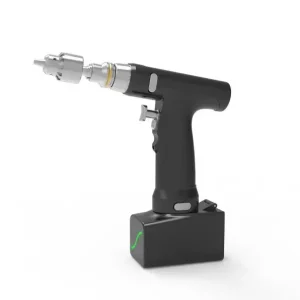
Engineered under ISO 13485:2016 conditions to fulfill extreme operational durability criteria, high-torque brushless power transfer, and sub-micron tolerance performance.

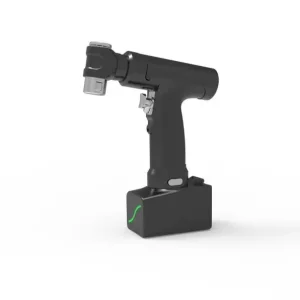




Analyzing the intersection between big-box consumer power tool supply chains—such as Lidl Parkside frameworks—and the high-precision kinematic manufacturing ecosystems required for heavy-duty industrial and surgical instruments.
Global procurement networks operating under large-format retail and industrial tenders prioritize universal battery compatibility (e.g., 12V, 20V Team platforms). Modern ODM reciprocating assemblies demand ultra-low internal impedance, multipoint thermal throttling, and intelligent cell management (BMS) to preserve continuous runtimes across extended cutting cycles without voltage sag.
While DIY-oriented models historically utilized carbon-brush configurations for commercial affordability, modern procurement protocols demand brushless motors. Electronic commutation eliminates frictional contact, extending continuous lifecycle limits up to 400% while isolating interior electromagnetic hardware from metal chips, wood particulates, and airborne contaminants.
Whether navigating consumer electrical mandates (CE, RoHS, WEEE) or transitioning toward severe clinical/industrial directives (ISO 13485:2016, EU-MDR 2017/745), modern Original Design Manufacturers must deliver complete traceable validation batches, including EMC conformity reports, drop resistance metrics, and finite element stress verification.
Deep-dive architecture into linear reciprocating stroke dynamics, orbital cut profiles, and active thermal mitigation.
Linear reciprocating motion inherently causes primary and secondary inertia imbalances. By engineering inverse dual-gear counterweights rotating synchronously against the blade clamp carriage, vibrational transfer to the outer housing is reduced by over 68%, mitigating micro-fracture fatigue in industrial operators and surgeons alike.
Modern reciprocating solutions incorporate selectable pendulum action. Under high-speed cutting phases, orbital mechanics lift the blade away on the return stroke, eliminating friction-induced heat buildup. In precision medical bone cuts, this kinematics keeps temperatures below the 41°C osteonecrosis threshold (ASTM F2180).
Where commercial consumer products rely on fundamental rubber o-rings, industrial and surgical ODM variants implement fluororubber fluoroelastomers and labyrinth mechanical seals. This architecture enables repeated terminal steam sterilization (134°C autoclave cycles) and prevents ingress of saline, grit, or bone debris.
Ensuring frictionless international deployment through rigorous alignment with regional regulatory mandates.
All tool platforms leaving the ISO 13485 cleanroom ecosystem feature full EUDAMED traceability, complete Technical Documentation Files (TDF), and validated biocompatibility / safety dossiers in compliance with EU 2017/745 and low-voltage directives.
Integration with 510(k) pathway requirements, ANSI/AAMI ES60601-1 electrical safety compliance, and UL 62841 motor safety criteria. Rapid delivery of CAD STP files, testing reports, and custom firmware parameterization within 21 business days.
Equipped with centralized staging inventories, providing under-48-hour response times across European medical distributors and under-24-hour dispatch for critical regional hubs within the Asia-Pacific territory.
The progression of cordless cutting solutions toward connected, intelligent, and sensor-augmented operation.
Field-Oriented Control (FOC) motor commutation algorithms dynamically adjusting amperage to maintain fixed stroke frequencies under fluctuating tissue and timber density.
Bluetooth Low Energy (BLE) tracking modules inside tool housings monitoring vibration harmonics, motor operational hours, and predicting preventive maintenance cycles.
Piezoelectric sensor integration at the quick-release chuck delivering real-time material transition detection, auto-halting strokes upon bone penetration or metal wall breach.
Next-generation pouch-cell energy dense architectures eliminating thermal runaway risks while decreasing tool handle diameter by 35% for unprecedented ergonomics.
Direct technical answers regarding OEM adaptation, ODM custom tooling, certification, and powertrain specifications.
Engineered quick-connect attachments, specialized blade matrices, and heavy-torque drive modules designed for high-cycle interchangeability.