Explore our core medical instrument line, engineered to withstand aggressive autoclave cycling, precision neuro-burr interfacing, and seamless operating room workflows.





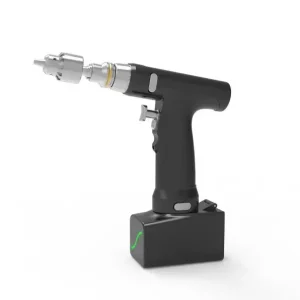

In cranial access procedures—ranging from emergency burr-hole evacuation to multi-flap osteoplastic craniotomies—the cranial drill adapter serves as the mission-critical kinetic interface between brushless high-speed handpieces and neuro-perforator cutting heads.
The neurosurgical trephination threshold requires a rapid drop-off in axial force the instant the inner cortical skull plate yields. Our ODM cranial drill adapters integrate micro-planetary reduction gearing (gear ratios ranging from 4:1 to 16:1) configured to step down high motor revolutions (up to 15,000 RPM) into optimal perforator cutting velocity (800 to 1,200 RPM).
Thermal osteonecrosis occurs when local bone temperature exceeds 47°C for more than one minute. SNK cranial adapters are engineered according to ASTM F2180 heat emission guidelines. Precision fluid circulation conduits and titanium alloy thermal breaks keep surface heat transmission under 41°C during continuous heavy reaming.
The adapter features a calibrated mechanical interlock compatible with Hudson, Jacobs, and proprietary quick-release perforator drill bits. Upon sensing axial resistance drops below 5 N at complete calvarial penetration, the adapter's spring-loaded detent assembly safely disengages within milliseconds to safeguard the dura mater.
Combining sub-micron CNC fabrication with an end-to-end ISO 13485 cleanroom ecosystem, we deliver agile contract manufacturing that reduces time-to-market by up to 60%.
Our clean facility houses 16 automated high-precision production lines equipped with 5-axis DMG MORI and Citizen Swiss-type turning centers. Adapter chuck tolerances are sustained within ±0.003 mm, guaranteeing seamless interchangeability between high-speed surgical drive units and cranial perforators.
Every shaft undergoes cryogenic stress-relief treatment and electrochemical micro-deburring to prevent stress microfractures during intraoperative shock loads.
While traditional Western tooling cycles demand 8 to 14 weeks for mechanical prototyping, our collocated CAD/CAM engineering, EDM wire-cutting, and dedicated DIN 13972 testing laboratory enable complete functional prototypes and pilot runs within 21 calendar days.
Distributors receive finished, anodized, laser-etched, and autoclaved evaluation samples accompanied by comprehensive dimensional verification dossiers.
Direct integration into the Yangtze River Delta medical device cluster lowers raw material procurement costs for medical-grade 316LVM surgical steel and biocompatible grade-5 titanium (Ti-6Al-4V ELI). Our OEM partners capture a 35% to 50% margin improvement compared to European contract manufacturers.
Tiered scalable batch sizes—from 50-piece localized distributor pilot programs to 10,000-unit continuous hospital tender contracts—accommodate lean procurement.
Medical device distributors cannot afford customs holds, unannounced MDR audits, or registration rejections. SNK delivers complete regulatory dossiers for frictionless entry.
Unlike competitors operating under obsolete MDD transitional grace periods, our cranial adapter portfolios hold comprehensive CE-MDR Class IIa and Class IIb certification audited by EU Notified Bodies, backed by active EUDAMED registration and Single Registration Number (SRN) data.
Through the Medical Device Single Audit Program (MDSAP), our factory is verified across five distinct regulatory territories under a single certification rubric: United States (FDA), Canada (Health Canada), Australia (TGA), Brazil (ANVISA), and Japan (MHLW/PMDA).
Winning national healthcare and ministry-of-health procurement tenders requires meticulous supply chain transparency. SNK equips distributors with localized tender binders containing translated Instructions for Use (IFU), sterilization protocol certifications, and laser-marked Unique Device Identification (UDI).
From rapid emergency decompression to ultra-precise skull base resections, SNK cranial drill adapters ensure consistent tactile feedback and patient safety.
In acute traumatic brain injury (TBI) and massive middle cerebral artery (MCA) infarction, time to intracranial pressure relief directly governs patient survival. Our adapters enable swift, effortless drill bit click-in without secondary chuck wrenches, allowing surgeons to execute 4 to 6 cranial burr holes in under 90 seconds with zero stalling under severe lateral loading.
Pediatric calvaria exhibit thinner, softer bone architecture requiring sensitive clutch thresholds to avoid premature brain parenchyma plunge. The customizable torque tensioning on SNK ODM adapters allows calibrated low-resistance disengagement, granting pediatric neurosurgeons delicate control across fragile coronal sutures.
Reaching deep clival tumors, pituitary adenomas, or petroclival meningiomas demands long-shank slim adapters that preserve deep-field endoscopic visibility. SNK manufactures extended low-profile cranial adapters with 70mm to 110mm reachable shaft profiles that minimize line-of-sight obstruction under continuous robotic navigation.
Review the measurable biomechanical and endurance advantages that set our contract manufacturing platforms apart.
| Performance Parameter | SNK ODM Cranial Adapter System | Standard Market Equivalent | Clinical / Operational Advantage |
|---|---|---|---|
| Concentric Runout Deviation | ≤ 0.015 mm (ISO 6475 Benchmarked) | ≥ 0.045 mm | Prevents chatter, reduces irregular bone kerf, preserves margins |
| Autoclave Cycle Durability | 200+ Steam Cycles (134°C @ 2.2 bar) | 80 – 100 Cycles | Cuts annualized OR hospital replacement expenditure by over 50% |
| Operating Surface Temp | < 41°C (Continuous 10-min duty) | 48°C – 54°C | Exceeds ASTM F2180; zero risk of calvarial thermal osteonecrosis |
| Clutch Disengagement Speed | < 12 milliseconds post-drop | 35 – 60 milliseconds | Immediate halt on calvarial breakthrough prevents dural tearing |
| Motor Platform Compatibility | Brushless & Carbon Core (Multi-fit) | Proprietary Handpiece Only | One adapter connects across trauma, neuro, and ortho handpieces |
| Material Formulation | Custom 455 SS & Ti-6Al-4V ELI Alloy | Standard 304 / 316 Stainless | Superior tensile strength prevents chuck shearing under torque spikes |
In-depth responses covering mechanical tolerances, custom private labeling, tender qualifications, and sterilization validation.
Expand your surgical equipment catalog with our CE-certified trauma and cardiothoracic tools, built to identical high-reliability medical standards.


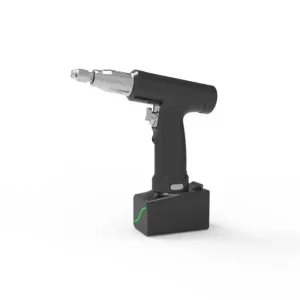




As operating rooms transition toward computer-assisted navigation and autonomous robotic craniotomy platforms, SNK is actively architecting next-generation smart adapter interfaces.
Modern stereotactic cranial navigation requires millimetric instrument registration. Our ODM roadmap incorporates integrated retroreflective tracker geometry directly onto the adapter body. This reduces registration offset, eliminates cumbersome clip-on arrays, and maintains dynamic line-of-sight across image-guided neurosurgical platforms.
By embedding passive acoustic wave channels into the cranial adapter housing, upcoming SNK systems detect the pitch shift when cutting through outer cortical, cancellous diploë, and inner cortical calvaria. This acoustic resonance feedback can automatically trigger handpiece motor braking before mechanical disengagement engages.
To assist central sterile supply departments (CSSD) in managing equipment lifecycle tracking, future-ready SNK adapters can incorporate high-temperature autoclavable RFID chips. Hospitals can instantaneously scan adapters to log cycle counts, verify maintenance intervals, and ensure total MDR EUDAMED post-market traceability.
