

OEM High-Frequency Bone Resection Adapter for Orthopedic Surgery - China Suppliers & Factory for SNK Oscillating Saw Manufacturer, Supplier
Explore Specification
Engineered for high-duty trauma, joint reconstruction, and micro-resection procedures. Explore our high-precision handpieces, brushless micro-motors, and interchangeable adapter platforms.

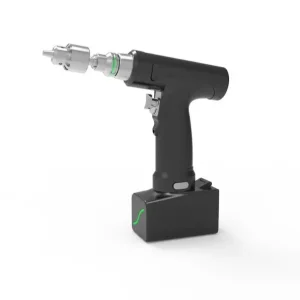

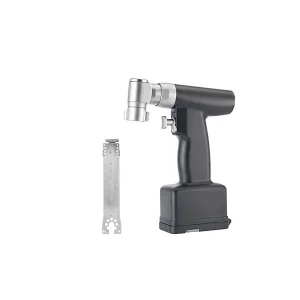

A rigorous examination of micro-reciprocating kinematic conversions, thermal osteonecrosis prevention, and contract manufacturing standards in China's advanced medical equipment corridor.
In both advanced medical bone resection and precision microscopic manufacturing, the demand for compact, ultra-precise reciprocating motion tools—often colloquially classified under Dremel-type reciprocating saws and micro-reciprocating modular attachments—has witnessed exponential global growth. Traditional rotary power instruments, while efficient for high-velocity burring and boring, create substantial centripetal displacement and excessive heat dissipation when performing delicate planar cuts or narrow-kerf resections. Transitioning high-speed rotational energy into linear reciprocating stroke mechanics with sub-millimeter tolerances represents one of the pinnacle challenges in mechanical kinematics and micro-surgical tool fabrication.
The modern industrial and commercial landscape has split into two demanding vectors: specialized industrial fine-carving and high-spec surgical osteotomy. Whether utilized in delicate reconstructive trauma surgery, veterinary TPLO procedures, or fine micro-tooling of carbon-reinforced composite substrates, the functional efficiency of an ODM (Original Design Manufacturer) reciprocating saw relies on stroke amplitude stability, thermal dissipation suppression, and mechanical fatigue endurance under continuous, multi-directional axial loading.
Converting up to 15,000 RPM brushless motor rotation into linear reciprocating strokes requires hardened martensitic stainless steel (440C/custom 17-4 PH) linkages. Our customized gearboxes maintain mechanical backlash under 0.03 mm even after 300 continuous operating hours.
Thermal management is paramount during continuous osteotomy. Exceeding 47°C during cortical bone penetration induces permanent bone cell necrosis. SNK engineering incorporates micro-cooling ventilation and frictionless sealing interfaces to ensure handpiece head temperatures stay beneath 41°C.
Unlike standard consumer micro-tools, surgical and medical-grade ODM reciprocating attachments must withstand over 200 cycles of 134°C pressurized saturated steam sterilization (EN 285) without bearing seizure, lubricant degradation, or structural torque falloff.
Combining complete vertical supply chain integration with certified ISO 13485:2016 cleanrooms and multi-axis CNC swiss machining to deliver unmatched B2B lead times.
The manufacturing of high-reliability micro-reciprocating saws has shifted radically over the past decade. Where Western brand houses traditionally commanded dominance through proprietary rotary systems, China’s specialized precision manufacturing ecosystems—most notably located in Shanghai and the Yangtze River Delta—have established closed-loop industrial ecosystems capable of executing multi-axis CNC machining, micro-motor winding, optical inspection, and class 7 cleanroom packaging within an integrated geographical radius.
For multinational B2B distributors, medical device brand owners, and industrial tool manufacturers, sourcing through an experienced Chinese ODM enterprise transforms economic unit margins while safeguarding technological intellectual property and regulatory compliance.
Components such as reciprocating pushrods, eccentric cams, and drive collets require sub-5-micron tolerances. Our facility deploys DMG MORI and Citizen Swiss CNC lathes operating under direct CAD/CAM synchronization.
Every handpiece undergoes fully documented quality release in accordance with EU CE-MDR (EU) 2017/745 (covering Class I, IIa, IIb instruments) and MDSAP audit standards, ensuring rapid global market authorization.
While traditional European or American OEM lines require 8 to 16 weeks for custom tooling validation, our agile manufacturing framework allows custom reciprocating hub designs and motor tuning within 3 weeks.
Handpieces undergo continuous dynamometer verification across the entire 500 to 15,000 RPM operational range. Sound pressure is strictly capped under 68 dBA to minimize surgical and industrial noise fatigue.
Evaluate exact engineering metrics to match handpiece architecture with target tender requirements, hospital procurement profiles, or industrial applications.
| Performance Parameter | High-End Brushless Reciprocating System | Standard Carbon-Motor Reciprocating System | Clinical / Industrial Benefit |
|---|---|---|---|
| Operating Speed Spectrum | 0 – 15,000 RPM (Continuous Variable) | 0 – 12,000 RPM (Stepped Resistance) | Enables precision micro-cuts in hard cortical bone without blade stall. |
| Commutation Mechanism | Sensored Electronic Micro-Inverter | Sacrificial Carbon Brushes | Zero particulate shedding; compliant with ultra-clean ISO Class 5 OR suites. |
| Torque Stability (Deviation) | < ±1.5% (ISO 6475 Benchmarked) | ± 3.8% under variable axial load | Prevents blade deflection, preserving osteotomy margins during resection. |
| Sterilization Survivability | > 200 Autoclave / Plasma Cycles | 50 – 80 Reprocessing Cycles | Reduces whole-life hospital equipment acquisition cost by over 45%. |
| Handpiece Surface Temp Rise | < 2.0°C after 15 min continuous run | > 5.5°C after 15 min continuous run | Eliminates danger of surgeon hand fatigue and adjacent soft tissue heating. |
| Acoustic Emission Level | ≤ 62 dBA at max stroke speed | ≤ 72 dBA at max stroke speed | Creates a calm, focused operating environment during delicate surgeries. |
From complex orthopedic trauma centers in North America to specialized veterinary clinics and industrial prototyping labs across Europe and Asia.
In total joint arthroplasty (TKA/THA) and severe compound fracture stabilization, reciprocating micro-saws provide deep pelvic, femoral head, and calcaneal cuts where standard oscillating fan-shaped blades lack linear depth of penetration.
Tibial Plateau Leveling Osteotomy (TPLO) and feline fracture reductions mandate high torque inside compact, tight anatomy. Our modular adapters connect directly to low-vibration brushless drives to optimize small-animal surgical outcomes.
Beyond the surgical theatre, industrial modelmakers, aerospace composite fabricators, and micro-die makers utilize our industrial-spec ODM Dremel reciprocating saw attachments for burr removal, channel profiling, and composite trimming.
The trajectory of reciprocating cutting systems over the next decade points toward smart end-effectors, haptic feedback integration, and closed-loop robotic osteotomy.
As orthopedic robotics (e.g., Mako, Rosa) proliferate globally, reciprocating saws are being re-engineered as digital robotic end-effectors with CAN-bus communication and optical tracker positioning pins directly machined into the casing.
Next-gen ODM handpieces incorporate real-time current load monitoring. When the saw blade penetrates through dense cortical bone into softer trabecular cancellous structures or soft tissue, the system automatically slows or disengages in <10 milliseconds.
Moving away from heavy external battery packs or cumbersome cables, new developments integrate 21700-cell autoclavable battery pods seamlessly inside the ergonomic grip, maintaining optimal handpiece center of gravity.
How distributor purchasing managers, OEM brands, and clinical procurement officers can mitigate quality risk and accelerate margin expansion.
Procuring medical-grade or heavy-duty industrial reciprocating tools on an ODM/OEM basis requires evaluating four non-negotiable vectors:
1. Complete Design Dossier Ownership: Ensure your factory partner maintains primary engineering IP, complete 3D CAD modeling libraries, and documented test reports under DIN 13972 and ASTM F2503 guidelines.
2. Regulatory Dossier Traceability: Global tenders demand verified CE-MDR 2017/745 declarations, ISO 13485:2016 management certificates, and clean EUDAMED registration profiles.
3. Flexible Customization Framework: An elite ODM partner will readily customize stroke lengths (2.5mm – 4.5mm), operating frequencies (up to 15,000 CPM), collet coupling locks, customized blade shanks, and laser-etched OEM branding within scalable production runs.
4. Rapid Buffer & Spares Inventory: Severe surgical stockouts damage distributor reputations. Partner with manufacturers that maintain over 200 ready-to-ship standby power systems and critical replacement gears at all times.
Explore our complete complementary suite of hollow cannulated drills, acetabular reamers, and neurosurgical cranial adapters configured for global hospital tenders.







Authoritative insights addressing technical feasibility, regulatory compliance, autoclave sterilization, and custom private-label ODM development programs.
An oscillating saw moves in a small radial arc (usually 4° to 6°), which is ideal for flat planar osteotomies like knee joint cuts. In contrast, a reciprocating saw operates with a push-pull linear stroke (typically 2.5mm to 4.0mm). This linear trajectory is essential for deep slot cutting, sternotomies, femoral re-routing, and tight bone channel preparation where arc oscillation cannot penetrate.
Standard ODM configurations (customizing stroke length, interface coupling, collet mechanism, and speed tuning from 500 to 15,000 RPM) take approximately 3 weeks from approved 3D CAD sign-off to functional sterilized batch samples. Turnkey ground-up custom tooling usually concludes within 6 to 8 weeks.
Yes. All SNK surgical reciprocating handpieces and saw adapters are validated under EN 285 standards for repeated 134°C saturated steam autoclaving (over 200 cycles) as well as low-temperature hydrogen peroxide plasma (VHP) and ethylene oxide (EO) sterilization. Gearboxes remain protected by medical fluorosilicone seals.
Our manufacturing headquarters in Shanghai operates under ISO 13485:2016 and MDSAP (covering USA, Canada, Australia, Brazil, Japan). The full range of powered surgical instruments holds valid CE-MDR (EU) 2017/745 certification covering Class I, IIa, and IIb devices with registered EUDAMED traceability.
Brushless motors eliminate carbon brush contact wear, eliminating graphite particle contamination inside the operating theater. They operate roughly 30% cooler, deliver instantaneous torque response with a torque variation under ±1.5%, and offer more than quadruple the operating lifespan under continuous autoclave exposure.
SNK provides comprehensive technical documentation packages including DIN 13972 accuracy validation, biocompatibility reports (ISO 10993), electrical safety certifications (IEC 60601-1), Free Sale Certificates (FSC) filed across 21 nations, and multilingual Instructions for Use (IFU).