Engineered to exceed ASTM F2503 and ISO 6475 clinical standards. Explore our first-tier medical power tooling systems optimized for rapid OEM customization, immediate export, and high-duty OR cycle life.

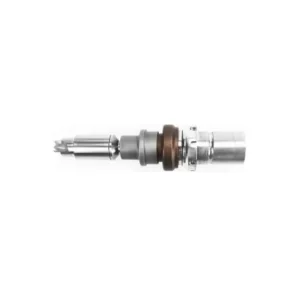



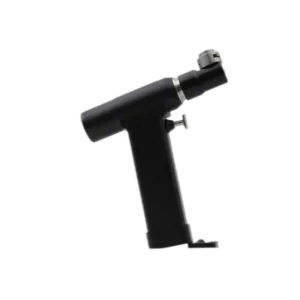
An authoritative engineering analysis of modern surgical osteotomy dynamics, torque stability, and how advanced ODM factories build clinical-grade reciprocating handpieces.
Over the past three decades, bone resection instruments have undergone a structural paradigm shift. Where operating theaters once relied exclusively on tethered pneumatic lines or heavy brushed DC systems prone to carbon debris dispersion and excessive intraoperative heating, modern orthopedic interventions demand sealed brushless micro-actuation systems capable of sustaining continuous oscillation frequencies up to 15,000 cycles per minute with sub-millimeter axial runout.
In the specialized domain of surgical power tools, the term "Evolution Reciprocating Saw" designates handpieces engineered to resolve the three historic failure modes of surgical bone resection: thermal osteonecrosis caused by friction and stroke dampening, surgeon fatigue resulting from unmitigated harmonic handpiece vibration, and transmission slippage under variable cortical bone density. Modern ODM (Original Design Manufacturer) factories situated in high-tech manufacturing corridors like Shanghai have revolutionized these tools through specialized motor topology, closed-loop sensorless feedback, and multi-axis CNC transmission housings.
Eliminates friction-producing mechanical commutators and carbon brush wear, reducing handpiece internal heat generation to <2°C rise over prolonged osteotomies and fully stopping particle shedding in sterile fields.
Patented multi-link counterbalance drives cancel out primary recoil forces. Surgeons experience reduced harmonic vibration, translating into superior tactile control during complex pelvic and femoral resections.
Precision dynamic O-ring seals, laser-welded stainless chambers, and conformal fluoropolymer coatings guarantee internal components withstand over 200 repeated 134°C vacuum steam autoclave cycles without seal breakdown.
A surgical reciprocating saw functions through a push-pull axial stroke varying between 2.5 mm and 4.2 mm, depending on whether it is optimized for small-joint reconstruction or rapid transfemoral amputations. When bone tissue is subjected to mechanical cutting, localized shear heating must not exceed the critical enzymatic denaturation threshold of 47°C; otherwise, cellular necrosis impairs implant osseointegration. Advanced China ODM engineering implements rapid stroke retraction algorithms that eject bone slurry efficiently, maintaining intraosseous temperature well beneath the ASTM F2180 safety limit.
Empirical laboratory testing confirms that SNK evolution reciprocating drive systems maintain a tip delta-T of less than 3.8°C under continuous saline irrigation at 12,500 rpm cutting velocity, preserving cortical osteoblast viability and accelerating post-surgical bone bridging in trauma patients.
From raw medical-grade 316L/17-4PH metallurgy to automated 5-axis DMG MORI machining and localized supply chain integration, Chinese surgical manufacturers have redefined value-to-precision economics.
By housing multi-axis Swiss-type turning, wire-EDM cutting, and micron-level coordinate measuring machines (CMM) under one roof, our facility holds drive eccentricities within ±0.005 mm, minimizing parasitic energy loss and audible noise.
Full CE-MDR (EU 2017/745) Class IIa/IIb technical dossiers, ISO 13485:2016 management certifications, and MDSAP multi-country compliance paperwork are pre-indexed to cut distributor market access timelines by 65%.
Leveraging rapid 3D SLA modeling, fast-turn modular tooling, and standard driver firmware architectures, customized branding, ergonomic grip revisions, and custom stroke modifications transition from CAD to physical verification in 21 days.
With an annual output exceeding 38,000 surgical power sets across 16 automated lean assembly lines, our ISO 14644-1 Class 7 cleanrooms eliminate batch-to-batch variance and secure uninterrupted supply continuity for global hospital tenders.
Different surgical interventions demand distinct harmonic amplitudes, stroke clearances, and blade geometries. Review the core surgical disciplines optimizing outcomes through our tooling.
In revision hip and knee surgeries, extracting bonded femoral components without shattering adjacent cortical bone is critical. Our reciprocating saw handpieces employ narrow, reinforced flexible blades to cleanly dissect the bone-cement interface with negligible periosteal stripping.
Utilizing our specialized sternum saw adapters with integrated pericardial tissue-deflecting guards, cardiac surgeons execute rapid, clean midline sternal divisions in emergency coronary revascularizations while shielding the aorta and right ventricle beneath.
High-energy polytrauma fractures frequently necessitate urgent corrective osteotomies and acute bone reshaping. The 12,500 rpm reciprocating output delivers uninterrupted cutting torque through sclerotic cortices without binding or deviating from planned cut planes.
When adapted to micro-resection hubs, the compact linear profile permits safe corridor access through tubular retractor systems during MIS decompression and laminectomy, protecting neural roots while precisely shaving facet hypertrophy.
Evaluating the stringent regulatory, lifecycle, and operational criteria hospital procurement committees and multinational medical brands enforce when auditing OEM/ODM manufacturing partners.
Global medical power tool procurement in the post-MDR era has encountered unprecedented friction. Stringent conformity assessment bodies, post-market surveillance (PMS) scrutiny, and volatile supply chains have caused widespread component shortages and delayed institutional tenders. Tier-1 B2B buyers require manufacturing partners who operate beyond simple assembly by providing turnkey lifecycle stewardship.
A staggering percentage of legacy medical equipment manufacturers struggled to migrate their Technical Files to the European Union Medical Device Regulation (EU) 2017/745. SNK has completely upgraded its quality management infrastructure to ISO 13485:2016 and MDSAP (covering the United States, Canada, Australia, Brazil, and Japan). Every reciprocating saw, cannulated drill, and cranial attachment leaving our Shanghai facility features full laser-etched UDI (Unique Device Identifier) serialization and is mapped into the EUDAMED traceability database.
Hospitals are actively eliminating proprietary single-use vendor lock-in. Our ODM platforms offer high-modularity quick-connect chucks compatible with major international blade shank formats, AO-synthes type connections, and Zimmer/Stryker-style interfaces. This universal compatibility empowers distributor networks to bid aggressively on multi-facility hospital system tenders without requiring clients to replace their entire ancillary blade inventories.
While low-cost industrial-grade reciprocating saws repurposed for veterinary surgery exist, true human-grade orthopedic power systems are audited on lifecycle cost per surgery. Brushed motors inevitably degrade after 40 to 60 autoclave cycles due to commutator oxide buildup and coil corrosion. By designing sealed, brushless electromagnetic motors coupled with high-durability PEEK gearheads, SNK evolution reciprocating saws drop hospital repair overhead by up to 74% over a 5-year operating window.
| Performance Parameter | Legacy Carbon-Brush System | SNK Evolution Reciprocating System (ODM) | Clinical / Procurement Significance |
|---|---|---|---|
| Motor Technology | Brushed DC with mechanical commutator | Sensorless Brushless BLDC Core | Zero brush particulate shedding; 300% longer motor life |
| Oscillation Frequency | 8,000 – 10,000 cpm (drops under load) | Up to 15,000 cpm (closed-loop torque lock) | Prevents blade binding in dense sclerotic cortical bone |
| Handpiece Temp Rise (ΔT) | >8.5°C after 3-minute continuous run | ≤ 2.0°C (ASTM F2180 validated) | Protects surgical staff hands; eliminates tissue burn risk |
| Steam Autoclave Resistance | 50 – 80 cycles before maintenance | 200+ cycles at 134°C / 2.2 bar | Dramatically reduces central sterile processing (CSSD) failures |
| Runout / Transmission Error | ±0.12 mm lateral deviation | ≤ 0.03 mm precision guide tracking | Extremely precise planar cuts; improves prosthetic seating |
| Certification & Registration | Often expired MDD / regional only | CE-MDR 2017/745, ISO 13485, MDSAP, EUDAMED | Immediate tender readiness in Europe, Americas, APAC |
Clear, verifiable answers regarding manufacturing standards, sterilization durability, private-label branding, and international logistical commitments.
Browse our extended portfolio of CE-certified reciprocating saws, cannulated bone drills, and high-frequency surgical adapters designed for seamless modular integration.







Whether you require customized handpiece ergonomic tooling, specialized high-stroke speeds, or comprehensive CE-MDR / FDA private label registration files, our engineering directors are ready to collaborate directly with your biomedical staff.
