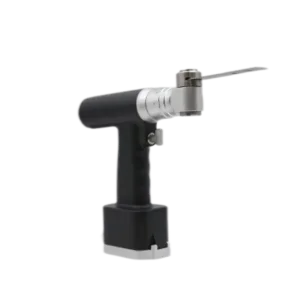
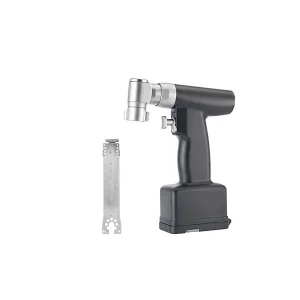
Autonomous motor telemetry, thermal mitigation beneath 41°C, and fully validated dynamic sterilization durability across high-throughput operative suites.







A comprehensive metallurgical and kinematic examination of handheld surgical power systems across modern operative theaters.
The global landscape of surgical intervention is witnessing a profound transition from pneumatically driven and tethered electric handpieces toward autonomous, lithium battery operated brushless micro bone saws. Historically, surgical theaters relied heavily on pneumatic turbines or carbon-brushed electric instruments. While pneumatic systems provided robust torque, their operational dependence on pressurized gas lines introduced physical clutter to the sterile field, limited surgeon maneuverability, and presented continuous maintenance liabilities surrounding hose integrity and particulate exhaust. Similarly, first-generation brushed motors exhibited mechanical degradation over repeated autoclave cycles, resulting in carbon dust contamination, severe thermal spikes exceeding the critical 47°C osteocyte necrosis threshold, and inconsistent torque delivery under dense cortical bone loading.
Today, the commercial demand for micro bone saws is overwhelmingly propelled by the exponential rise in outpatient procedures within Ambulatory Surgical Centers (ASCs), high-precision osteotomies in craniomaxillofacial (CMF) surgery, elective foot and ankle reconstructions, and small-bone reconstructive orthopedic procedures. The modern surgical micro saw is no longer merely a mechanical cutting instrument; it represents an integrated biomechatronic assembly where high-energy-density lithium chemistry, sensorless brushless direct-current (BLDC) commutation, and micron-tolerance micro-blade geometries converge to deliver sub-millimeter kerf precision without thermal or mechanical trauma to surrounding soft tissue envelopes.
Traditional carbon brushes experience physical friction, leading to component wear, rotor sparking, and thermal escalation. Electronic brushless motors utilize hall-less micro-controllers to cycle electromagnetic coils, eliminating internal frictional losses, boosting thermal efficiency by up to 45%, and drastically extending the mean time between failures (MTBF) during intensive operating conditions.
Operative bone resection demands high instantaneous burst torque when navigating dense cortical structures. Our specialized lithium-ion cell chemistries feature custom Battery Management Systems (BMS) capable of handling transient 20A continuous discharge without thermal runaway, preserving balanced voltage across multi-cell packs through hundreds of sterilization lifecycles.
Thermal osteonecrosis occurs when local osseous tissue exceeds 47°C for longer than 60 seconds, permanently compromising bone regenerative remodeling. SNK engineered micro saws leverage optimized blade rake geometries, reduced oscillation amplitude (4.5° arc), and brushless thermodynamic control to keep the cutting boundary strictly under 41°C under saline irrigation.
How Shanghai Snaikang Technology (SNK) synthesizes advanced 5-axis CNC machining, Class 7 cleanrooms, and vertical integration to outpace global procurement expectations.
Operating out of Shanghai's advanced industrial corridor, Snaikang Technology Development Co., Ltd. has spent over 16 years perfecting an integrated, closed-loop manufacturing ecosystem for medical power tools. Unlike Western manufacturers who typically depend on fragmented multi-tier subcontractors for motor winding, plastic injection, CNC chassis milling, and electronic assembly, our Shanghai facility consolidates 90% of the value chain under direct ISO 13485:2016 oversight.
Our facility houses 16 automated production lines with high-precision 5-axis Swiss-type multi-axis turning centers (yielding machining tolerances within ±0.003 mm). By coupling local access to high-purity medical-grade titanium (Ti-6Al-4V ELI), surgical stainless alloys (Custom 455 and 440C), and rare-earth Neodymium magnets (NdFeB) with our in-house automated robotic surface passivation and cleanroom packaging suites, we achieve unmatched cost-to-performance ratios and lightning-fast ODM execution.
In the medical device contract manufacturing arena, Western original equipment manufacturers frequently quote 9 to 14 months to transition a modified micro bone saw from preliminary industrial design to functional, pre-clinical prototype. SNK leverages an agile industrial prototyping system: initial CAD-to-physical ergonomic prototypes are generated in 7 business days, with fully validated, autoclave-ready, small-batch pilot runs delivered in approximately 3 to 4 weeks.
With an annual manufacturing capacity of 38,000 orthopedic power sets and a permanent buffer stock of over 200 ready-to-deploy modular handpieces, we insulate global distributor partners from catastrophic supply chain disruptions, tender penalties, and extended hospital backorders.
| Engineering Attribute | SNK ODM Brushless Micro Saw | Standard Legacy Carbon Motor | Western Premium Brands |
|---|---|---|---|
| Motor Architecture | Brushless DC (Sensorless Commutation) | Mechanical Carbon Brush Assembly | Brushless DC (Proprietary Closed System) |
| Rotational / Oscillating Velocity | Variable up to 15,000 RPM (Configurable) | Fixed 8,000 - 10,000 RPM | 12,000 - 14,000 RPM |
| Dynamic Blade Kerf Deviation | < 0.03 mm after 200 autoclave runs | > 0.08 mm after 50 autoclave runs | < 0.03 mm after 150 autoclave runs |
| Operating Noise Profile | < 58 dBA at maximum excursion | 72 - 78 dBA (High gear whine) | 62 - 65 dBA |
| OEM/ODM Lead Time to Production | ~3 to 4 Weeks | 6 to 8 Weeks | 24 to 36 Weeks |
| Regulatory Traceability | CE-MDR (EU) 2017/745, ISO 13485, MDSAP | Legacy MDD / ISO 9001 | CE-MDR, FDA 510(k), ISO 13485 |
From micro-vascular hand reconstruction to delicate craniomaxillofacial remodeling, discover how specialized kinematics elevate surgeon precision.
Navigating the delicate scaphoid, metacarpal nonunions, or performing radial shortening osteotomies demands an ultra-light handpiece envelope (<480g) that does not introduce neuromuscular fatigue. SNK micro saws feature micro-haptic throttles allowing progressive feathering from 500 RPM for precise notch creation to maximum velocity without blade skip, ensuring complete protection of flexor tendons and neurovascular bundles.
Corrective hallux valgus procedures (such as Chevron or Scarf osteotomies) and complex midfoot micro-arthrodesis require exceptionally rigid sagittal saw blades that resist skiving under dense plantar cortex. Our micro-saw hub incorporates a micro-cam locking clamp providing zero angular lash, guaranteeing planar cuts that ensure anatomical bone apposition and accelerated union rates.
Orthognathic Le Fort I maxillary advancements, bilateral sagittal split osteotomies (BSSO), and pediatric cranial remodeling require ultra-thin kerf blades (0.25 mm to 0.35 mm). SNK brushless technology maintains razor-flat torque delivery, eliminating vibration jitter that could inadvertently fissure thin sinus walls, pterygoid plates, or damage the inferior alveolar nerve.
In targeted transforaminal and endoscopic decompression procedures, bone resection tools must operate within tight surgical tubular retractor pathways. Our 7 mm profile micro oscillating attachments provide spine surgeons with deep surgical access to resect hyperplastic facet joints and ossified posterior longitudinal ligaments without thermal impingement upon the dural sac.
Veterinary surgeons operating on toy-breed canines, felines, and avian exotics cannot deploy standard human orthopedic power handpieces without massive periosteal stripping. Our specialized TPLO micro adapters accommodate miniature radial blades from 6 mm to 12 mm radius, ensuring accurate proximal tibial cuts that preserve delicate joint geometry.
In pediatric sternotomies and emergency revision trauma, our high-frequency oscillating and micro-reciprocating platforms facilitate rapid bony access with built-in soft-tissue protection footplates, minimizing blood loss and preventing internal mammary artery trauma during urgent sternal division.
From intelligent tissue impedance feedback to steam-autoclavable solid-state batteries and robotic arm integration.
Future micro bone saw controllers will integrate closed-loop torque sensing that measures back-EMF variations at 1,000 Hz. The micro-controller instantaneously detects when a blade transitions from dense cortical bone to soft cancellous tissue or dura mater, automatically dialing back excursion speed in under 12 milliseconds to prevent iatrogenic plunge injuries.
Traditional surgical battery packs require complex aseptic transfer funnels or low-temperature hydrogen peroxide gas plasma sterilization because high-heat steam destroys standard organic electrolytes. SNK is pioneering high-temperature solid-state electrolyte cells designed to withstand repeated 134°C moist heat autoclaving directly inside the handpiece chassis.
As robotic-assisted orthopedic platforms (e.g., MAKO, ROSA) become mainstream, handpieces must provide mechanical and electrical integration. SNK micro bone saws incorporate standardized quick-release robotic mounting flanges and pre-calibrated reflective optical tracker arrays, compatible with open-source medical navigation protocols.
The critical regulatory, logistical, and lifecycle criteria multinational distributors evaluate before onboarding an ODM medical device manufacturer.
The regulatory transition from the obsolete Medical Device Directive (MDD 93/42/EEC) to the Medical Device Regulation (MDR (EU) 2017/745) has severely disrupted European healthcare supply chains. Many small-scale factories have abandoned European registrations due to prohibitive notified body costs and rigorous Post-Market Clinical Follow-up (PMCF) mandates.
SNK maintains active Class I, Class IIa, and Class IIb CE-MDR conformity certifications backed by comprehensive Technical Documentation, ISO 13485:2016 quality management auditing, and continuous EUDAMED database registration. Global distributors partnering with our Shanghai manufacturing base gain immediate tender eligibility across 21 covered territories without regulatory friction.
Procurement directors in Tier-1 hospital systems prioritize Total Cost of Ownership over initial capital acquisition prices. Traditional multi-national brands enforce proprietary blade chuck geometries, locking hospital chains into exorbitant recurring blade replacement fees that drain department operating budgets.
Our ODM micro bone saw solutions offer flexible chuck options: proprietary ultra-stable locking chucks or multi-brand universal quick-connect couplers (compatible with Stryker, ConMed, and Linvatec blade interfaces). By liberating hospital procurement departments from single-vendor lock-in, SNK systems routinely slash annual per-procedure saw blade expenditures by 35% to 55% while maintaining strict cutting accuracy.
Authoritative insights into technical architecture, sterilization protocols, warranty lifecycles, and ODM engineering collaboration.
Complete modular interchangeability: transform a single sterile handpiece across trauma, arthroplasty, and reconstructive bone resection.