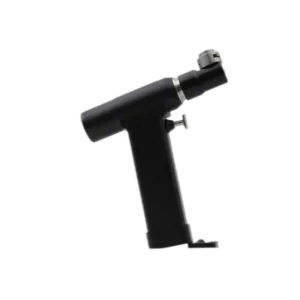
Direct from our ISO 13485:2016 production facility: verified surgical drilling, reaming, and cutting platforms driven by continuous-discharge high-rate power systems.







In modern surgical theaters, the powered orthopedic drill is no longer just a mechanical motor in an ergonomic grip—it is a closed-loop electromechanical instrument whose performance ceiling is strictly governed by its electrochemical power source.
Early-generation powered bone drills relied heavily on Nickel-Cadmium (NiCd) and Nickel-Metal Hydride (NiMH) chemistries. While chemically robust against over-discharge, their bulky volumetric footprint, severe memory effects, sluggish continuous current delivery (<10A), and rapid thermal buildup under high-torque osteotomy reaming created major operational limitations for surgeons.
Today, as arthroplasty procedures like total hip replacement (THA) and total knee arthroplasty (TKA) demand prolonged, high-torque reaming exceeding 16 to 20 N·m, medical device OEMs require advanced Lithium Nickel Manganese Cobalt Oxide (NMC) and Lithium Iron Phosphate (LiFePO4) cell topologies. These high-drain cells must supply continuous discharge currents of 25A to 35A with instant pulse spikes above 45A without collapsing handpiece voltage rails or inducing dangerous thermal transfer to surgeon hands.
| Electrochemical Core | Tier-1 Grade-A 18650 / 21700 NMC |
| Nominal Pack Voltage | 9.6V / 13.2V / 14.8V Modular |
| Continuous Discharge Limit | 30A Continuous (45A Peak Pulse) |
| Cycle Life Retention | >80% Capacity after 800 charge cycles |
| Reprocessing Pathway | Autoclavable (134°C) OR Aseptic Funnel Transfer |
| Cell Balancing Drift | < 5mV Differential Active Tracking |
| Safety Standard Matrix | IEC 62133-2, IEC 60601-1, UN 38.3, CE-MDR |
A critical divergence in hospital procurement specifications centers on how the energy system handles operating room sterility protocols without degrading electrochemical longevity.
Engineered for high-throughput European and North American academic centers demanding standardized washer-disinfector and steam autoclave cycles (134°C at 2.2 bar) without separating internal battery modules.
Favored by outpatient surgical centers (ASCs) and trauma services aiming to extend battery service life beyond 5 years. Unsterilized high-capacity battery packs are inserted into an autoclaved handpiece via sterile funnels.
Modern surgical power supplies incorporate intelligent battery management systems. These communicate cycle count, internal impedance, operating cell temperature, and predicted runtime straight to the surgeon's console.
Procuring orthopedic power tool batteries requires strict cross-functional alignment between biomedical engineers, regulatory compliance officers, and institutional finance directors.
Under EU-MDR 2017/745 and FDA 21 CFR 820, batteries are Class II accessories. Every production batch requires complete DMR/DHF files, UDI laser engraving, and audited supplier ISO 13485 certification.
Drill stalls during intramedullary nailing or acetabular reaming present serious patient risk. Hospital buyers mandate flat discharge curves with low internal resistance (<25mΩ per pack).
Tier-1 surgical OEM replacement batteries carry enormous price markups. Hospitals and distributor partners look to qualified ODM suppliers to lower acquisition costs by 40-60% without sacrificing reliability.
Modern sterile processing departments demand 4-bay intelligent charging docks with fast charge rates (under 45 minutes to 90% capacity) and automated pre-charge diagnostic routines.
| Facility Standard | ISO 14644-1 Class 7 & Class 8 Cleanrooms |
| Spot Welding Precision | Automated High-Frequency Fiber Laser Welding |
| Cell Group Matching | Automated 4-parameter cell binning (V, IR, Cap, dV) |
| Environmental Aging | 100% 3-Cycle Dynamic Thermal Stress Aging |
| Hermetic Seal Verification | Helium Mass Spectrometer Leak Detection (<10⁻⁸ Pa·m³/s) |
| Traceability Infrastructure | Individual 2D Matrix Laser Code mapped to MES DB |
| ODM Tooling Lead Time | Rapid CNC Prototyping: 10 Days; Steel Mold: 28 Days |
The manufacturing of medical-grade battery packs requires an ecosystem that combines world-leading battery chemical supply chains with precision medical device compliance. Our Shanghai production center embodies this integration, setting a benchmark for global OEM and ODM orthopedic power systems.
By automating the cell sorting and welding workflow, human error is completely removed from critical safety stages. Every individual cell goes through automated resistance matching to guarantee zero parasitic load imbalance across the series-parallel pack.
The global orthopedic surgical power tool market has traditionally been controlled by a handful of tier-1 multinationals who lock hospital systems into expensive, closed accessory ecosystems.
Global health providers face mounting budgetary pressure. Hospitals are moving away from legacy vendor lock-in, actively qualifying ISO 13485-certified ODM suppliers who provide equivalent form-fit-function battery solutions with transparent pricing.
Third-party "re-celling" carries safety, regulatory, and liability risks for operating rooms. Professional ODM manufacturing offers brand-new, factory-warranted, MDR-compliant packs at prices comparable to risky refurbishments.
Regional orthopedic distributors are creating their own brand equity. By partnering with our engineering team, distributors can launch proprietary surgical power lines with custom battery aesthetics, tailored housings, and dedicated charging stations.
A battery that excels in delicate neurosurgery micro-drilling will not meet the continuous, heavy-duty requirements of trauma femur rodding. We engineer power configurations for specific surgical disciplines.
Continuous back-to-back intramedullary reaming and rapid Kirschner wire driving. Requires 14.8V high-capacity packs, instant tool response, zero-downtime hot-swap mechanics, and ruggedized shock housings capable of surviving 1.5-meter OR floor drops.
Space-constrained outpatient clinics focus heavily on ergonomics, rapid turnarounds, and quiet operation. Lightweight 9.6V slimline packs reduce surgeon wrist fatigue during high-volume sports medicine and foot/ankle arthroscopy cases.
Disaster relief, mobile field surgical units, and military deployments where reliable autoclave steam or stable electrical grids are unavailable. Solar-compatible DC charging hubs and hermetically sealed packs with wide operating temperatures (-10°C to 50°C).
Veterinary specialty hospitals performing TPLO osteotomies and fracture fixation demand cost-efficient, long-lasting power systems. Robust, easy-to-maintain battery models provide high clinical reliability within practical operational budgets.
Direct technical answers addressing the key design, regulatory, and commercial questions raised by biomedical teams and procurement directors.
Medical-grade high-drain Lithium Nickel Manganese Cobalt Oxide (NMC) in 18650 or 21700 formats is the gold standard. They provide the high energy density and continuous high-discharge C-rates (25A-35A) required for heavy femoral reaming and sagittal sawing without experiencing voltage drop or overheating.
Autoclavable packs use specialized polyphenylsulfone (PPSU) or PEEK outer shells, high-temperature fluorosilicone double-gaskets, and fully potted internal electronics. The internal cells and BMS are encased in thermally dissipative, vibration-dampening resins that insulate sensitive parts from moisture ingress and short-term thermal peaks.
Transport requires UN 38.3 test certification (altitude simulation, thermal testing, vibration, shock, external short circuit, impact, overcharge, forced discharge) alongside safety data sheets (SDS) and drop test validation. At the device level, medical packs must comply with IEC 62133-2 and ISO 14971, and integrate into the handpiece's IEC 60601-1 and CE-MDR technical files.
Yes. Our engineering team specializes in mechanical form-factor reverse modeling, interface contact tooling, communication protocol decoding (SMBus, I2C, UART), and full circuit architecture design. We deliver prototypes in as little as 3 weeks and complete volume tool production in 6 to 8 weeks.
Aseptic shield setups allow unsterilized battery cores to run inside autoclaved handpiece housings. Because the cells are never exposed to high-pressure steam, cycle life increases from ~200 cycles to over 800 cycles. This cuts long-term hospital replacement costs by roughly 50%, while keeping initial pack manufacturing costs lower.
Standard production configurations offer flexible MOQ options starting at 50 units for distributor inventory replenishment. Custom ODM casing, specific BMS programming, customized contact pins, and private labeling programs typically begin at 200 units, supported by full validation testing and compliance documentation.
Explore our complete range of certified carbon-brush and brushless surgical instruments, built for smooth integration with precision battery systems.