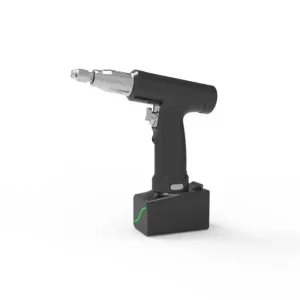
Explore our certified surgical handpieces designed to seamlessly couple with our ODM micro sagittal saw blades, reciprocating cutters, and cannulated micro-drills for precision bone resection.






In the clinical realm of powered osteotomy systems, standard sagittal saw blades fail to satisfy the complex geometrical constraints of specialized micro-surgical procedures. The phrase "Other Type Micro Sagittal Saw Blades" represents non-standard, customized coupling interfaces (hubs), ultra-thin kerf profiles, bent shanks, angled hubs, and procedure-tailored tooth configurations engineered specifically for delicate anatomical regions. From oral-maxillofacial reconstructions to intricate podiatric and pediatric orthopaedics, tier-one medical device companies and multi-regional hospital networks increasingly rely on ODM (Original Design Manufacturer) partners to engineer bespoke blade geometries that bypass the limitations of generic catalog offerings.
Global surgery suites feature fragmented handpiece ecosystems: Stryker®, ConMed Linvatec®, DePuy Synthes®, Zimmer Biomet®, and specialized European brushless micro-systems. Our ODM solutions deliver customized hub geometry—including keyless rapid-snap, multi-hex, star-lock, and slotted friction locks—enabling distributor brand consolidation without infringing protected designs.
In delicate osteotomies (such as cranial transposition or sagittal split osteotomies), wide blade kerfs produce structural bone loss, gaps that hinder primary union, and excessive debris. Modern ODM micro blades utilize precision laser profiling down to 0.25 mm – 0.4 mm blade thicknesses, minimizing intraoperative resection gaps and optimizing post-fixation healing.
Under EU-MDR 2017/745, surgical cutting blades are classified as reusable or single-use invasive Class IIa/IIb surgical accessories. OEM/ODM suppliers must furnish verified biocompatibility dossiers (ISO 10993), validated cleanroom washing protocols (ISO 17664), corrosion tests, and traceable batch metallurgy certificates.
Bone is an anisotropic, viscoelastic composite material composed of collagen fibrils reinforced with hydroxyapatite platelets. Resecting cortical bone without causing irreversible microvascular death demands stringent mastery of rake angles, gullet clearance, and oscillation dynamics.
Pioneered by Eriksson and Albrektsson, scientific consensus confirms that exposing osteocytes to temperatures above 47°C for longer than 60 seconds induces alkaline phosphatase denaturation, microvascular thrombosis, and secondary aseptic necrosis. Our micro sagittal saw blades are designed with positive rake teeth (typically 5° to 10°) and optimized chip clearance pockets that channel bone particulate away from the friction zone, dropping operating interface heat by up to 34%.
During deep-angle cuts, ultra-thin micro blades are susceptible to lateral bending (buckling mode instability), resulting in wedge-shaped cuts and uneven osteotomy planes. SNK's ODM other-type blades undergo cryogenic martempering and selective taper grinding: the blade body maintains a rigid backbone thickness (e.g., 0.50 mm) tapering down to a micro-kerf cutting edge (0.32 mm), eliminating directional wander during precise split osteotomies.
Dense bone dust packing inside the cutting space is the principal catalyst for exponential frictional heat surge. By integrating diamond-polished parabolic tooth gullets via wire-cut EDM and high-speed CNC laser ablations, bone chips are rapidly swept laterally into the saline irrigation flow, ensuring constant tooth re-engagement with bone rather than churning bone meal.
| Blade Type / Hub Config | Kerf Width (mm) | Usable Length (mm) | Material Substrate | Primary Clinical Application | Max Arc Oscillation |
|---|---|---|---|---|---|
| Type A: Micro-Fine Straight | 0.28 – 0.35 mm | 15 – 25 mm | AISI 420MoV / 3R12 Sandvik | CMF / Le Fort I Osteotomy | 4.5° @ 25,000 CPM |
| Type B: Angled / Offset Shank | 0.40 – 0.50 mm | 20 – 32 mm | Custom 17-4PH Precipitation Hardened | Sagittal Ramus / Subcondylar | 5.0° @ 20,000 CPM |
| Type C: Fan-Tooth Micro-Kerf | 0.30 – 0.42 mm | 10 – 18 mm | Medical High-Carbon Martensitic | Akin / Chevron Hallux Valgus | 3.8° @ 30,000 CPM |
| Type D: Reverse Quick-Snap Hub | 0.38 – 0.48 mm | 25 – 40 mm | AISI 440A Vacuum Quenched | Pediatric Trauma & Small Joint | 4.5° @ 22,000 CPM |
| Type E: Custom Robotic Actuator | 0.35 – 0.45 mm | 18 – 35 mm | Titanium Nitride (TiN) Coated 420 | Computer-Assisted Navigation Resection | 6.0° @ 18,000 CPM |
Collaborating with an experienced Chinese precision medical device manufacturer bridges the gap between prototype CAD ideation and serialized, high-throughput MDR-compliant production. Below is the systematic 6-tier roadmap deployed for our global medical brand partners.
High-resolution optical 3D scanners reverse-engineer existing surgical handpiece clamping chucks. Advanced Finite Element Analysis (FEA) simulates cyclic fatigue stress along hub clamping pinches and blade neck junctures up to 50 million cycles.
Rather than traditional stamping—which introduces heavy internal stresses, edge burrs, and micro-fissures—we implement ultra-short pulse (USP) laser cutting. This guarantees sharp, Burr-free tooth geometries with a heat-affected zone (HAZ) of zero.
Blades undergo inert-gas vacuum quenching followed by deep cryogenic processing at -196°C. This converts retained austenite into tempered martensite, locking in exceptional edge retention, spring-back resiliency, and hardness ratings of 54 to 58 HRC.
Blades undergo electrolytic micro-polishing to reduce surface roughness down to Ra < 0.15 μm. Nitric/citric acid chemical passivation forms an ultradense chromium-oxide (Cr2O3) passive barrier compliant with ASTM A967 for severe autoclave sterilization resistance.
Every production lot undergoes multi-sensor coordinate measurement inspection verifying hub interface dimensions within ±0.01 mm. Pitch distance, set alternating tooth offsets, and blade thickness parallelism are validated with laser interferometers.
Blades are ultrasonic cleaned in multi-stage deionized cascades and packaged within ISO Class 7 cleanrooms into medical-grade Tyvek/PET blister pouches. Gamma-irradiation validation or EO sterilization validation dossiers are supplied for rapid distributor market entry.
Standard bone saws are engineered for knee or hip joint arthroplasties where power overrides finesse. In contrast, Other Type Micro Sagittal Saw Blades are strictly dedicated to high-consequence anatomical corridors bordering nerves, blood vessels, and cosmetic contours.
Used in delicate Le Fort I maxillary advancements, bilateral sagittal split osteotomies (BSSO), and genioplasties. Ultra-thin blades preserve the inferior alveolar nerve bundle while producing fine cuts that facilitate seamless rigid titanium mini-plate osteosynthesis.
Indicated for scaphoid nonunion debridement, distal radius corrective wedge osteotomies, and metacarpal shortening. The low-profile shaft and minimal vibration protect flexor tendons and palmar neurovascular arches from accidental mechanical friction.
Essential for hallux valgus corrections (Chevron, Ludloff, and Scarf osteotomies) and metatarsal head resections. Angled hubs enable the surgeon to maneuver around tight interdigital interspaces without excessively stretching soft-tissue envelopes.
Tailored for delicate pediatric cranial vault remodeling in craniosynostosis and micro-laminoplasty spinal troughs. Minimal kerf limits bone gap distance, encouraging rapid pediatric callus bridge formation and structural consolidation.
The surgical blade is transitioning from a passive steel consumable into an actively engineered electromechanical interface. SNK is actively leading innovation across three key vectors.
As semi-autonomous orthopaedic robots (e.g., Mako, Rosa, VELYS) integrate micro-bone resections, blades require tight harmonic balancing to avoid triggering robotic feedback sensors. Our next-gen ODM blades feature dynamic resonance suppression slots to eliminate high-frequency chatter under robotic haptic control.
Applying Diamond-Like Carbon (DLC) and Chromium Nitride (CrN) vacuum thin-film coatings reduces the friction coefficient between steel and wet bone tissue from 0.4 down to 0.08. This directly curtails frictional heat spikes and prevents biological tissue adhesion during lengthy operations.
Leveraging generative bone density algorithms, tooth pitches are designed non-uniform (variable tooth frequency) to suppress chatter resonance during transition phases across high-density cortical bone into softer trabecular cancellous bone beds.
Sourcing ODM medical blades goes far beyond finding a capable machine shop. It demands an enterprise partner capable of supporting hospital group purchasing organizations (GPOs), private label distributors, and multinational orthopaedic brands with regulatory readiness and rapid logistics.
Every customized hub model is paired with ready-to-file Technical Documentation dossiers (TD), including full Biocompatibility Reports (Cytotoxicity ISO 10993-5, Irritation/Sensitization ISO 10993-10), Residual Ethylene Oxide Sterilization Valuations, and Mechanical Fatigue Stress Reports.
High-resolution fiber-laser etching applies distributor brand logos, catalog part numbers, dimensional indicators, UDI-compliant 2D DataMatrix barcodes, and batch identification directly onto the blade body with zero micro-cracking or corrosion initiation points.
To shield global distributors from material volatility, SNK maintains cold-rolled surgical steel inventory stocks of Sandvik and medical-grade martensitic alloys, maintaining uninterrupted multi-thousand lot production runs with rapid 21-day cycle turnarounds.
Critical technical insights addressing raw metallurgy, blade lifespan, compliance protocols, and custom tooling development.
Complementing our custom ODM sagittal and oscillating saw blade lines, these heavy-duty drills, wire drivers, and specialized surgical accessories ensure full procedural workflow continuity across trauma, spine, and small-bone surgery suites.




