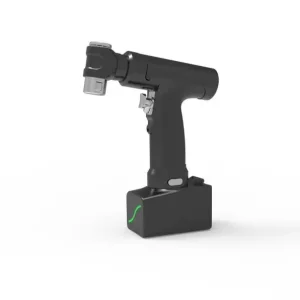
Engineered for seamless integration, high-torque tactile response, and rigorous autoclaving endurance. Explore our verified precision production line:




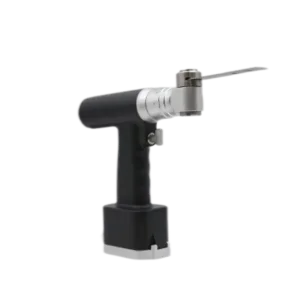


A comprehensive examination of clinical benchmarks, procurement bottlenecks, and the worldwide evolution toward open-standard cranial perforation.
Cranial osteotomy demands uncompromising micro-precision. In elective neuro-oncology resections and acute trauma craniectomies, the neurosurgical drill handpiece must sustain continuous rotational speeds ranging from 60,000 to 80,000 RPM while maintaining drill concentricity within ≤0.015 mm runout.
For decades, legacy tier-1 manufacturers such as Stryker® (Core, RemB, Maestro platforms) and Medtronic® have commanded premium market shares. While their equipment delivers surgical fidelity, the accompanying commercial model introduces notable procurement friction across emerging and established healthcare networks alike.
Global hospital networks, sovereign health tenders, and specialized distributor brands are actively qualifying third-party original design manufacturers (ODMs) to engineer fully compatible, high-specification alternatives.
How state-of-the-art multi-axis CNC micro-machining, localized rare-earth motor fabrication, and cleanroom automation deliver superior cost-to-performance metrics.
Our manufacturing cluster leverages ultra-precision DMG MORI and Citizen 5-axis Swiss lathes capable of machining surgical-grade Ti-6Al-4V titanium and 17-4PH precipitation-hardened stainless steel to dimensional tolerances of ±0.002 mm.
By capturing domestic upstream synergies in sintered Neodymium-Iron-Boron (NdFeB) high-energy magnets, our brushless motors achieve extraordinary power-to-weight ratios without the thermal penalty common in legacy brushed designs.
Operating out of ISO 14644-1 Class 7 cleanrooms, all craniotomy drill systems undergo computerized multi-point dynamometer diagnostics, sterile barrier packaging, and individual laser engraving for direct regulatory traceability.
| Performance Specification | Legacy Tier-1 Standard (Stryker® OEM) | SNK ODM Factory Benchmark | Advantage / Procurement Value |
|---|---|---|---|
| Maximum Free Speed | 75,000 - 80,000 RPM | 80,000 RPM (Variable Step Control) | Equal Precision High bone resective speed |
| Spindle Concentricity (Runout) | ≤ 0.020 mm | ≤ 0.015 mm (Micron Lathe Checked) | +25% Better Minimized surgical vibration |
| Cranial Perforator Auto-Stop | Integrated Mechanical Clutch | Dual-Spring Magnetic Quick-Release | Redundant Safety Instant dural protection |
| Autoclave Longevity (134°C) | 100 - 150 cycles before seal refresh | 200+ validated steam autoclave cycles | +33% Lifespan Lowers maintenance overhead |
| OEM Customization Window | 8 to 12 Weeks (Rigid configurations) | 3 Weeks (Rapid CAD/CAM tooling) | Agile Supply Fast tender delivery |
| Total Procurement Unit Cost | Baseline Reference (100%) | 40% - 55% of Legacy Capital Cost | Massive Savings Optimal Capex allocation |
From time-critical emergency trauma craniectomies to micro-invasive pediatric reconstructions, explore how cranial power handpieces adapt to diverse surgical envelopes.
In acute epidural or subdural hematoma evacuations, surgical access must be attained within minutes. High-torque rapid cranial perforation allows surgeons to establish primary burr holes within 15 seconds per site.
Navigating petroclival meningiomas and anterior communicating artery aneurysms necessitates precise unroofing of the orbit and anterior clinoidectomy without transmitting thermal trauma to optic nerves.
Correcting craniosynostosis and congenital calvarial dysmorphism requires gentle, thin-kerf osteotomies in pediatric patients whose cranial vault thickness can be less than 2.0 mm.
Deep Brain Stimulation (DBS) and stereotactic parenchymal biopsies rely on precise, circular burr holes that align perpendicularly with rigid Leksell or CRW stereotactic guidance frames.
Smart auto-sensing algorithms, cordless sterility breakthroughs, and robotic navigation interfaces shaping modern neurosurgery.
A complete institutional buyer’s guide for qualifying neurosurgical power tool manufacturers under the newest regulatory directives.
Navigating the transition from MDD to MDR requires exhaustive clinical evidence. Our facility maintains full Class IIa and Class IIb technical documentation dossiers, verified by accredited EU Notified Bodies.
To support global medical distributor tenders in one unified audit regime, our quality management system satisfies the Medical Device Single Audit Program (MDSAP).
Our rapid design and prototyping infrastructure bridges conceptual drawings into fully validated, sterile-packed surgical inventory in record turnaround times.
Authoritative answers addressing engineering tolerances, reprocessing durability, compatibility, and OEM/ODM private-label partnerships.
Browse our precision-manufactured trauma drills, hollow systems, and neurosurgical cranial mill adapters engineered for superior clinical outcomes.