Direct factory configurations manufactured under DIN 13972 accuracy verification, equipped with brushless and carbon motors optimized for orthopedics, trauma, and precision osteotomy.


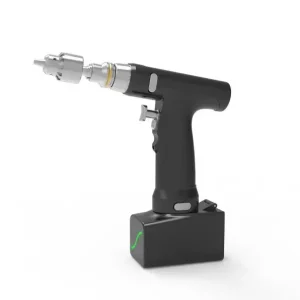

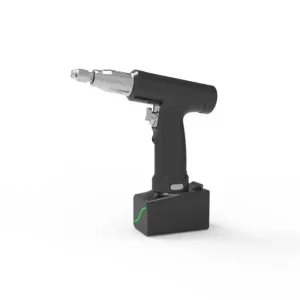

In contemporary surgical osteotomy, the demand for compact, high-power-density cutting tools has accelerated drastically. Surgeons navigating minimally invasive surgical (MIS) corridors, transoral robotic surgery (TORS), pediatric craniofacial reconstruction, and sternotomy revisions require an instrument that combines extreme volumetric compactness with relentless linear reciprocating torque.
As a leading Chinese medical equipment manufacturer and original design manufacturer (ODM), Snaikang Technology Development Co., Ltd. (SNK Medical) bridges the gap between precision kinematic mechanical design and commercial scalability. Our sub compact reciprocating saws integrate fully sealed brushless DC (BLDC) motors, dual-eccentric mass-balanced gearheads, and ultra-durable IPX8 hermetic sealing to withstand over 200 harsh steam autoclave reprocessing cycles.
Exploring next-generation kinematic mechanics, intelligent haptic motor drivers, and sterile battery platforms designed for surgical ergonomics.
Traditional surgical power tools frequently relied on carbon brush arrangements which presented friction-induced heating, particulate shedding, and finite life cycles. Our latest micro reciprocating saw platforms implement coreless slotless brushless permanent magnet motors.
By eliminating rotor copper cogging, efficiency is elevated past 88%. This yields a form factor under 180 grams while delivering peak push-cutting forces exceeding 45 N, ensuring unhindered bone cutting without blade stalling in dense cortical bone.
The forward frontier of surgical cutting tools involves sensor-integrated drive systems. Current SNK prototyping incorporates micro-electromechanical sensor (MEMS) arrays coupled with high-speed digital signal processors (DSP).
By monitoring micro-current draw fluctuations and acoustic resonance during bone cutting, the reciprocating saw automatically throttles stroke speed upon breakthrough from hard cortical bone into soft trabecular matrix or periosteal tissue, safeguarding vulnerable neural and vascular structures.
A longstanding vulnerability of wireless surgical tools has been the dichotomy between handpiece sterilization and battery longevity. Legacy workflows mandate aseptic battery transfer sleeves.
Our engineering roadmap introduces high-temperature lithium titanate (LTO) and solid-state battery matrices integrated directly into titanium handpiece enclosures. Entire sub compact assemblies can be autoclaved as a singular hermetically sealed unit without disassembly, vastly streamlining theater turnaround time.
How sub compact reciprocating mechanics solve critical access, visibility, and precision challenges across modern clinical workflows.
In pediatric surgery, distal radius fractures, metatarsal osteotomies, and hallux valgus corrections, traditional sagittal oscillating saws introduce excessive angular deflection, risking collateral collateral ligament injury. The sub compact reciprocating saw operates with a strictly axial push-pull trajectory.
Paired with our micro saw blades (kerf width as low as 0.35 mm), bone loss is reduced by up to 60%, drastically accelerating post-operative bone union while preserving delicate joint architecture.
Secondary sternotomy (redo cardiac procedures) carries high surgical mortality due to cardiac retrosternal adhesion to the posterior table of the sternum. Bulky conventional sternum saws can easily penetrate adjacent vascular structures.
Sub compact reciprocating saws equipped with tactile blade guards and specialized reciprocal motion dampening give cardiothoracic surgeons millimeters-level depth precision, cleanly transecting osteosynthetic wires and cortical bone without adhering soft tissues.
Cranio-maxillofacial (CMF) surgery mandates handpieces that can maneuver inside confined oral apertures without obscuring endoscopic or direct optical lines of sight. Our pencil-grip and angled sub compact designs allow continuous rotational clearance.
Low-vibration counter-balanced drives maintain surgeon hand stability over lengthy 8-hour microvascular free flap reconstructions, preventing musculoskeletal fatigue.
Veterinary orthopedic surgeons dealing with feline, canine, and exotic avian patients frequently suffer from oversized human orthopedic instruments. A sub compact reciprocating saw provides the exact power-to-weight ratio required for precise TPLO (Tibial Plateau Leveling Osteotomy) and corrective osteotomies.
The customizable torque curve prevents thermal necrosis in small animal bones with delicate vascularization.
Behind our high-precision surgical instruments lies a vertically integrated manufacturing ecosystem operating at the intersection of automated machining, continuous quality surveillance, and lean global logistics.
Handpiece housings and reciprocating eccentric push-rods are fabricated from medical-grade aviation alloys and German surgical stainless steel. Operating high-precision 5-axis German and Japanese CNC centers allows single-clamping production.
Dimensional tolerances are maintained under ±0.005 mm, guaranteeing perfect coaxial alignment of high-speed transmission gearboxes and absolute liquid-tight hermetic seals.
Surgical power tools require contamination-free assembly to prevent particulate entrapment inside micro bearings. Our Shanghai facility features automated positive-pressure cleanroom assembly lines.
Automated ultrasonic cleaning stations, automated robotic screw torqueing stations, and optical laser scanning ensure every single sub compact reciprocating saw leaves the assembly line with zero bio-burden residue.
Unlike contract assemblers who outsource testing, our specialized testing facility executes 100% full-duty burn-in cycles. Every batch undergoes dynamometer torque curve logging, acoustic vibration profiling, and continuous 200-cycle high-pressure steam testing.
Torque deviation is verified to hold within ±1.5% (ISO 6475 standard), ensuring clinical consistency from the first incision to the last.
How tier-1 medical distributors, multi-national brand holders, and government hospital supply boards define technical specifications when qualifying an ODM manufacturing partner.
| Evaluation Parameter | Standard Commercial Grade | SNK Medical OEM/ODM Sub Compact Standard | Clinical / Commercial Value |
|---|---|---|---|
| Motor Technology | Brushed DC motor (high wear, carbon dust) | High-Flux Brushless DC (BLDC) Motor | Zero particulate contamination, runs <2°C cooler, 300% longer operational life. |
| Sterilization Reprocessing | 50–100 cycles before gearbox looseness | Validated 200+ Cycles (Steam Autoclave 134°C & EO) | Drastically lowers total cost of ownership (TCO) for hospital operating theaters. |
| Dynamic Reciprocating Stroke | Fixed stroke (typically 3.0 mm) | Configurable Stroke Options (2.5 mm, 3.5 mm, 4.5 mm) | Allows customized optimization for either micro-cutting or rapid debulking. |
| Universal Blade Chuck | Proprietary closed interface | Quick-Release Universal Keyless Collet | Compatible with standard AO, Stryker, and Linvatec shank styles; reduces hospital stock overhead. |
| Noise & Vibration Level | >75 dB(A), uncalibrated vibration | <60 dB(A), Laser Counter-Balanced Dual Eccentric | Reduces surgeon hand tremor and operational fatigue during prolonged procedures. |
| OEM DFM Lead Time | 8 to 14 weeks typical | Rapid Prototyping & Mold Production in ~3 Weeks | Accelerates time-to-market for brand owners seeking rapid international market entry. |
Enterprise procurement teams cannot afford supply chain shocks. Our dedicated stocking system holds over 200 standby finished power tools and complete modular spare parts inventories at all times. Dispatch for emergency surgical reserve kits operates on a strict under-24-hour SLA for Asia-Pacific and under-48-hour SLA for European logistic hubs.
Navigating stringent worldwide regulatory hurdles with turnkey documentation, audit trails, and multi-market certifications.
While many overseas suppliers continue operating under obsolete MDD certificates or transitional grace periods, the entire SNK orthopedic power portfolio is certified under the rigorous EU CE-MDR (EU) 2017/745 framework.
Full EUDAMED registration traceability, Class IIa / IIb device classifications, and clinical evaluation reports (CER) are readily available to our European distribution network.
Our quality management architecture is dual-certified to ISO 13485:2016 and the Medical Device Single Audit Program (MDSAP). This singular accreditation harmonizes regulatory surveillance across the United States (FDA), Canada (Health Canada), Brazil (ANVISA), Japan (PMDA), and Australia (TGA).
Distributors can expedite domestic registration dossiers without repeating invasive third-party factory quality audits.
We provide comprehensive OEM private labeling customization, including laser etched serializing, unique device identifiers (UDI barcode standards), and localized instructions for use (IFU) translated across English, German, French, Spanish, Russian, and Arabic.
Additionally, active Free Sale Certificates (FSC) filed in 21 countries eliminate unnecessary tender delays for regional ministries of health.
Complete modular assemblies designed for interchangeable application across neurosurgery, cardiothoracic bone cutting, and high-load trauma reconstruction.

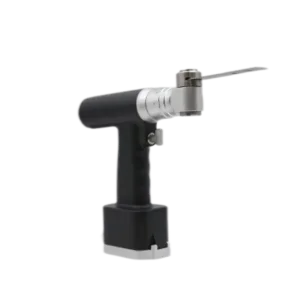




Key engineering, regulatory, and distributor logistics questions answered by our chief biomedical technical team.
Sagittal oscillating saws move across an angular sweep (typically 4° to 5°). While effective for large bone resections in total knee arthroplasty (TKA), this arc movement causes broad soft tissue lateral clearance issues in confined spaces. A sub compact reciprocating saw executes an axial, linear push-pull trajectory with stroke amplitudes between 2.5 mm and 4.5 mm.
This allows surgeons to perform deep-cavity bone splitting, sternum re-entry, and precision osteotomies through tight soft tissue tunnels without risking tangential friction burns or laceration of adjacent nerves and blood vessels.
Traditional handpieces fail because repeated thermal expansion cycles compromise motor insulation and cause elastomeric O-rings to embrittle, allowing steam to flood delicate transmission bearings. SNK handpieces utilize aerospace-grade Viton fluoroelastomer and PTFE dual-lip hermetic dynamic shaft seals, combined with Class H vacuum-impregnated motor windings.
Our instruments are subjected to empirical validation in automated autoclaves for over 200 cycles at 134°C / 0.22 MPa. Post-test analysis routinely demonstrates gearbox transmission backlash remains strictly below 0.03 mm.
For standard branded catalog models, our production lines maintain continuous rolling stock with typical dispatch within 48 to 72 hours. For custom ODM programs requiring modified stroke amplitude, proprietary blade chuck interfaces, specialized torque profiles (500 to 15,000 RPM/SPM), custom ergonomics, and laser branding, our Design for Manufacturability (DFM) prototyping process takes approximately 3 weeks.
Flexible initial MOQs (starting as low as 10 to 50 sets depending on customization depth) allow distribution partners to register products with their local health authorities before scaling up mass volume purchase orders.
We furnish complete, audit-ready regulatory dossiers. This includes full CE-MDR (EU) 2017/745 technical documentation, ISO 13485:2016 and MDSAP certificates, biocompatibility test reports (ISO 10993 compliant for handpiece contact and blade biocompatibility), electrical safety and EMC reports (IEC 60601-1 / IEC 60601-1-2), thermal validation reports (ASTM F2180), and Free Sale Certificates (FSC) filed across 21 member jurisdictions.
Thermal osteonecrosis occurs when bone cutting friction pushes local temperatures above 47°C for longer than 60 seconds. Our sub compact reciprocating saws feature intelligent Hall-effect stepless electronic triggers coupled with micro-pulsed torque delivery.
This allows the surgeon to feather cutting speeds dynamically during delicate periosteal approaches and deploy full linear cutting momentum only when engaging dense cortical bone. Combined with aggressive chip-evacuating surgical blades, temperatures are consistently retained well below thermal necrosis thresholds.
Yes. SNK designs its quick-release reciprocating chuck to accommodate industry-standard universal shank geometries. Whether your clinical network uses standard AO-type quick coupling, cross-pin mounts, or dual-notched shank formats, our engineering department can customize or supply collets ensuring seamless cross-compatibility with your existing hospital blade consignments.
Accelerate your regional market share with CE-MDR certified surgical drills, reciprocating systems, and oscillating saws manufactured with true Industry 4.0 precision. Speak directly with our chief biomedical engineering team today.
