Engineered for continuous operating theater cycles, dynamic torque management, and high-temperature autoclave durability.




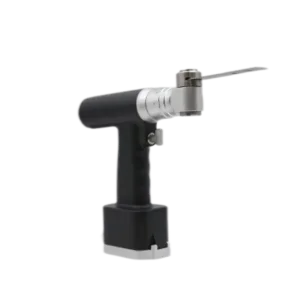



A rigorous review of Total Cost of Ownership (TCO), multi-regional regulatory entry points, and high-volume clinical duty cycles.
In the demanding realm of surgical powered instrumentation, medical device distributors, hospital purchasing consortia, and OEM global brand owners face intensifying pressure. Sourcing an ODM Variable Speed Reciprocating Saw requires evaluating far more than initial purchase costs. The global clinical procurement landscape has transitioned from simple hardware acquisition to holistic lifecycle governance, prioritizing thermal necrosis risk containment, ergonomic micro-vibration suppression, and strict compliance with the European Medical Device Regulation (EU MDR 2017/745) alongside FDA 510(k) Class II pathways.
Over 70% of lifecycle costs in surgical power tools originate post-procurement via motor coil burnout, seal failures during autoclave cycles, and component fatigue.
Regulatory bottlenecks represent the highest commercial risk in private labeling. Full technical dossiers and EUDAMED traceability are prerequisite assets.
Tailored development paths that shorten clinical validation pipelines from traditional 18-month cycles down to agile 3-week prototype runs.
Advanced biomechanics in bone resection: Balancing stroke amplitude, oscillatory harmonic damping, and bone matrix vitality.
| Performance Parameter | Conventional Carbon Motor Tools | SNK ODM High-Frequency Brushless Platform | Clinical Advantage to Hospital & Patient |
|---|---|---|---|
| Operating Frequency | 0 – 9,000 SPM (Unregulated) | 0 – 15,000 SPM (Variable Stepless Trigger) | High Efficiency Reduces resection time by up to 40% during complex osteotomies. |
| Resection Temperature Rise | ΔT > 8.5 °C (Exceeds 47 °C Necrosis Threshold) | ΔT < 2.0 °C (Stabilized below 41 °C) | Bone Vitality Completely eliminates thermal necrosis risk, promoting rapid osteogenesis. |
| Transmission Eccentricity | 0.08 mm – 0.12 mm Runout | ≤ 0.03 mm after 200 Steam Cycles | Cut Precision Yields flat graft interfaces, crucial for total joint prosthetic seatings. |
| Acoustic Emission Level | 78 dB(A) – 84 dB(A) High Pitch | ≤ 62 dB(A) Low-Frequency Dampened | OR Environment Drastically decreases surgeon fatigue and staff stress in operating theaters. |
| Motor Commutation System | Mechanical Carbon Brush Assembly | Digital Sensorless Brushless (PMSM) | Maintenance-Free Eliminates conductive dust emissions into the internal sterile sleeve. |
Standard reciprocating bone saws struggle with friction-induced heat. SNK's variable speed controllers employ real-time current monitoring that prevents localized temperature spikes above 41 °C, fully compliant with ASTM F2180 specifications.
Equipped with linear hall-effect throttles, our reciprocating saws allow micro-stepping between delicate pelvic osteotomy and heavy-duty femoral neck division, preventing accidental soft-tissue laceration behind cortical walls.
Dual reciprocating counterweights neutralize primary oscillatory vectors. This results in minimal axial vibration transferred to the surgeon's hand, ensuring straight cutting planes with micron-grade surface fidelity.
The technological evolution of orthopedic reciprocating power systems through 2028 and beyond.
Integrating ultra-high magnetic density neodymium magnets capable of operating continuously up to 180 °C without demagnetization during intense emergency resections.
Transitioning from medical stainless steel to composite titanium housing coupled with carbon-fiber reinforced PEEK neck assemblies, cutting total handpiece weight by 35%.
Native integration with 12 open surgical navigation protocols, facilitating active tracking arrays for robot-assisted joint arthroplasty platforms.
Advanced micro-controllers that sense instantaneous load density drops, automatically halting blade movement the millisecond the cortical wall is breached.
Inside SNK's dedicated orthopedic power systems manufacturing base in Baoshan, Shanghai.
All critical gearbox assemblies, precision Swiss-machined needle bearings, and sensor boards are joined inside certified Class 7 controlled environments, eliminating particulate contamination before final hermetic sealing.
In-house test laboratories equipped with digital torque dynamometers, axial runout sensors, and laser Doppler vibrometers confirm that reciprocating saw blade flutter never exceeds 0.03 mm throughout maximum continuous velocity runs.
Subjected to rigorous 200+ cycle testing under 134 °C pressurized steam autoclaves and low-temperature hydrogen peroxide gas plasma (STERRAD compatible), maintaining electrical insulation resistance above 100 MΩ.
Laser-etched Unique Device Identification (UDI) linked to internal production batch records allows real-time EUDAMED post-market clinical follow-up (PMCF) compliance across all European distribution channels.
Expand surgical versatility with interchangeable high-frequency attachments designed for minimal downtime.





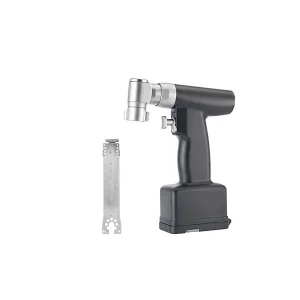
Maintaining clinical uptime across tier-one trauma hubs and private clinic chains worldwide.
Strategic bonded warehouse facilities maintain continuous buffer inventories:
Turnkey documentation packages to streamline ministerial submissions:
Direct technical empowerment for local biomedical hospital staff:
Essential guidance for chief biomedical engineers, procurement directors, and orthopedic distributor executives.
