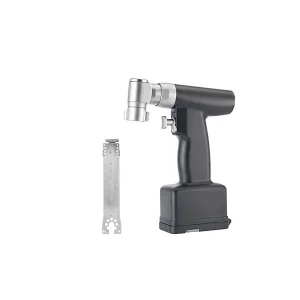
Explore our core medical-grade modular drive handpieces, specialized bone drills, and high-frequency cutting modules certified for demanding operating theatre environments.







A technical examination of next-generation oscillating saws, sagittal precision mechanisms, and surgical power unit ergonomics.
In modern surgical suites, cutting efficiency, cut kerf precision, thermal necrosis prevention, and ergonomic control dictate the clinical value of bone resection tools. Often referred to colloquially in specialized workshops and clinical trade as the "Zaw Saw" or high-frequency surgical bone cutter, the oscillating and sagittal bone saw system has evolved from traditional pneumatics and carbon-brush DC architectures into high-density brushless motor platforms (EC motors).
Surgical resection requires consistent power under fluctuating mechanical resistance. While traditional mechanical brushed motors suffer from frictional brush drag, thermal dissipation issues, and carbon particulate shedding during intensive autoclave sterilization, brushless configurations utilize electronic commutation algorithms. SNK’s brushless drive units regulate oscillation frequency continuously across speeds up to 15,000 cycles per minute (cpm), suppressing rotational deviation to under ±1.5% and maintaining bone resection temperatures strictly below the 47°C threshold that triggers osteocyte death.
Clinical Thermal Control Insight: According to ASTM F2180 guidelines, heat generation during continuous osseous resection must not exceed osteo-inductive thermal tolerances. SNK precision blade hubs and low-friction planetary gearing structures dissipate mechanical friction away from the surgical interface, stabilizing local bone contact temperatures below 41°C even during deep femoral or acetabular osteotomies.
Global medical device distributors and hospital group purchasing organizations (GPOs) face dual pressures: intensifying regulatory scrutiny (EU MDR 2017/745, US FDA 510(k), UKCA) and increasing fiscal constraints on hospital capital equipment expenditures. Procuring reliable ODM/OEM orthopedic power tools necessitates suppliers that can provide not merely assembly labor, but audited Class IIa/IIb medical device design dossiers, traceable metallurgy certificates, and reliable post-market surveillance (PMS) compatibility.
Our manufacturing protocols ensure zero-defect tolerance. Through complete EUDAMED traceability, full technical file transparency, and pre-audited sterilization validation reports for steam autoclaving and ethylene oxide (EO), SNK guarantees seamless distributor regulatory clearance across North America, the European Union, Latin America, and the Asia-Pacific territory.
Engineered at our Shanghai advanced manufacturing hub with 16 automated lines, closed-loop CNC machining, and automated DIN 13972 testing.
Flexible tooling cells allow rapid changeovers between cannulated bone drill spindles, oscillating saw couplings, and high-frequency sternum cutter heads without machining recalibration lag.
Surgical handpieces withstand extreme sterilization cycles without ingress or insulation breakdown, utilizing aerospace-grade fluororubber seals and hermetic encapsulation.
We maintain an operational reserve of over 200 complete standby orthopedic systems to shield international distributor networks from supply chain shocks.
| Performance Parameter | SNK Brushless Ultra Series | SNK Standard Carbon Series | Conventional Industry Baseline |
|---|---|---|---|
| Oscillation / Drilling Frequency | 0 – 15,000 cpm / rpm (Variable) | 0 – 12,000 cpm / rpm | 10,000 cpm / rpm (Fixed) |
| Torque Stability (ISO 6475) | Deviation < ±1.5% | Deviation < ±2.8% | Deviation ±3.5% to 5.0% |
| Sterilization Reprocessing Limit | 200+ Autoclave Cycles (134°C) | 100 Autoclave Cycles (134°C) | 60 – 80 Autoclave Cycles |
| Shaft / Transmission Runout | ≤ 0.025 mm | ≤ 0.040 mm | ≥ 0.060 mm |
| Surface Temperature Rise (Continuous) | < 2.0°C (Controlled) | < 4.5°C | > 6.0°C (Risk of necrosis) |
From total joint arthroplasty to emergency level-one trauma centers, our systems are optimized for surgeon ergonomics and tissue-sparing precision.
Achieves pristine planar bone resection margins essential for implant bone-cement integration. High blade rigidity minimizes deflection across hard cortical femoral cuts.
Ultra-thin 7 mm oscillating saw adapters and micro-resection heads facilitate clear osteotomies during MIS-TLIF and decompressive laminectomies without soft-tissue drag.
Rapid emergency sternotomy cutters and robust cannulated intramedullary drilling handpieces engineered to operate reliably under rapid-response trauma requirements.
Technical, regulatory, and production clarifications directly from our engineering team.
Complete your surgical suite with high-reliability adapters, reaming heads, and sternum cutting systems engineered for multi-specialty intervention.