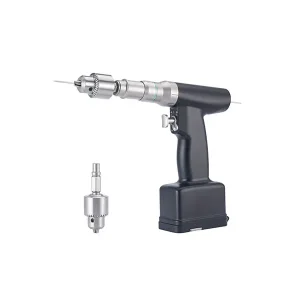
Explore clinical-grade electric bone drills, surgical sagittal saw adaptors, and high-torque hollow-core cannulated drilling assemblies precision-matched to low-velocity high-load surgical protocols.



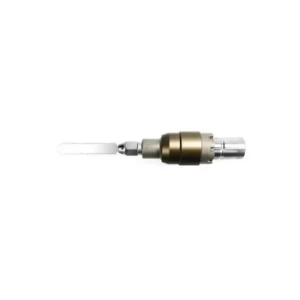



An authoritative analysis of biomechanical drilling requirements, regulatory transition to EU MDR 2017/745, and global supply shifts toward vertically integrated precision contract manufacturing.
In contemporary trauma surgery, pelvic reconstruction, and large-joint arthroplasty, the rotational speed of bone drilling systems constitutes the definitive boundary between successful osseointegration and postoperative bone loss. High-velocity rotational instruments (exceeding 1,500 to 2,000 RPM without dedicated irrigation) inevitably generate localized frictional temperatures exceeding 47°C—the widely recognized biological tipping point beyond which cellular osteocyte necrosis, enzymatic denaturation, and microscopic devascularization become irreversible.
As an established OEM/ODM contract manufacturer specializing in certified medical devices, SNK has re-engineered the classic power transmission matrix. Operating across an stepless 0-1000 RPM profile, our specialized drills utilize precision epicyclic planetary gearboxes and brushless DC (BLDC) motors that prioritize torque multiplication over uncontrolled rotational speed. This mechanical configuration delivers maximal chip-evacuation efficiency along the drill flutes while keeping intramedullary and cortical thermal elevation well below 2°C, completely verified through ASTM F2180 thermodynamic bench tests.
The medical power tool market is undergoing an unprecedented restructuring driven by the stringent mandate of the European Medical Device Regulation (EU MDR 2017/745) and the global harmonization of MDSAP (Medical Device Single Audit Program). Tier-1 medical multinationals are increasingly shedding internal manufacturing overheads, relying instead on certified Tier-1 OEM/ODM manufacturing hubs capable of providing complete technical design documentation, biocompability certifications, and automated Class 7 cleanroom assembly.
China’s precision medical manufacturing sector, exemplified by SNK’s Shanghai industrial production base, has evolved from low-cost assembling to high-end mechatronic design. By uniting computerized multi-axis CNC Swiss machining, automated gear hardening, and DIN 13972 standardized testing, SNK enables multinational distribution partners to rapidly establish compliant, private-label orthopaedic power tool systems that pass Notified Body scrutiny with minimized time-to-market.
| Performance Parameters | Legacy High-Speed Drills (>1500 RPM) | SNK Low-Speed OEM Series (0-1000 RPM) | Clinical & Commercial Impact |
|---|---|---|---|
| Thermal Rise at Cortical Interface | Exceeds 55°C without chilled saline flush | Maintained <41°C (Tested via ASTM F2180) | Eliminates risk of thermal osteonecrosis and delayed bone healing |
| Continuous Output Torque | Low continuous torque (<3.5 N·m) | High torque gearing (up to 20 N·m at low gear) | Prevents stalling during deep intramedullary reaming and dense bicortical drilling |
| Autoclave Durability Benchmark | Seal failure at ~80–100 steam cycles | Validated >200 cycles (134°C at 2.2 bar) | Reduces hospital maintenance costs and lowers hospital total cost of ownership (TCO) |
| Concentric Cannulated Runout | > 0.12 mm lateral eccentricity | ≤ 0.03 mm precision concentricity | Avoids K-wire binding, drill bit walk, and inaccurate pilot hole axis |
| Regulatory Compliance Status | Legacy MDD expired dossiers | Full CE-MDR (EU) 2017/745 & EUDAMED filing | Immediate market qualification for EU and global government tenders |
From complex polytrauma reconstruction to high-demand veterinary tibial plateaus, discover how 0-1000 RPM handpieces deliver unmatched precision across specialized operative environments.
During interlocking nail fixation, dynamic hip screw (DHS) applications, and periarticular plating, the 0-1000 RPM drill provides tactile surgical feedback. The surgeon can effortlessly sense cortical breakthrough, halting rotation instantly to preserve neurovascular structures on the far cortex while drilling pilot channels for bicortical lock screws.
Reaming femoral shafts and preparing acetabular sockets in total hip arthroplasty demands relentless rotational power at 250 to 500 RPM. SNK's planetary transmission preserves up to 20 N·m of torque, preventing motor stall when large-diameter reamers engage dense cancellous architecture under high axial force.
Tibial Plateau Leveling Osteotomy (TPLO) in small animals necessitates smooth, high-torque radial cuts without micro-chatter. Equipped with high-torque brushless motors and precision saw adapters, SNK systems protect fine canine fibulae and periosteal tissues from excessive thermal impact and mechanical stress.
When utilizing cranial burrs, trephines, or mini-cannulated screw drivers in pediatric or craniomaxillofacial contexts, exact speed throttling between 0 and 600 RPM ensures that fine bone grafts, dura mater, and facial osteotomy margins retain uncompromised structural integrity.
Examining intelligent motor telemetry, robotic-assisted compatibility, and autoclave-tolerant electronic architectures defining next-generation medical bone drills.
The transition from mechanical handpieces to connected intelligent surgical instruments represents the cornerstone of SNK’s long-term research pipeline. As hospitals adopt image-guided robotic surgery and AI-driven operating environments, the powered bone drill must integrate beyond analog actuation.
Integrating real-time back-EMF feedback within brushless controllers detects cortical-to-cancellous bone boundary transitions within 5 milliseconds, enabling automatic rotational braking upon far-cortex penetration.
Developing native wireless telemetry protocols compatible with Brainlab, Stryker, and open-platform surgical navigation platforms, transmitting instantaneous RPM, torque load, and drill axis positioning directly to the OR display.
Migrating toward solid-electrolyte pouch cells that eliminate explosion risks, withstand up to 1,000 autoclave re-charges without capacity decay, and reduce overall handpiece weight by 28%.
From custom gear ratios and private-label CNC machining to regulatory dossier filing, SNK empowers medical brands with agile, compliant, and vertically integrated manufacturing capacity.
Clients can configure RPM ranges (300, 1000, 1250, 1600 or stepless 0-15000 RPM), cannulation diameter (up to 4.5mm), and locking mechanisms (AO quick-coupling, Jacobs chuck, Hudson, or Zimmer shank formats).
We supply comprehensive technical files, biocompatibility test results (ISO 10993), electrical safety records (IEC 60601-1), and sterilization validation dossiers essential for FDA 510(k), CE-MDR, and regional MoH approvals.
With 16 automated production lines, full in-house Swiss machining, and 200+ units in ready reserve inventory, our standard OEM adaptation cycle completes in ~3 weeks versus the 8-12 week legacy average.
Direct technical answers addressing the real evaluation criteria of hospital procurement committees, orthopedic surgeons, and biomedical engineering teams.
Standard industrial power tools operate at speeds between 2,500 and 5,000 RPM, which immediately causes bone tissue temperature to surge past 47°C, initiating osteonecrosis and delayed consolidation. The 0-1000 RPM medical speed window delivers high axial torque (up to 20 N·m), allowing the drill bit flutes to systematically clear bone swarf without friction build-up, maintaining viable, vascularized bone margins along the entire osteotomy channel.
Brushless DC (BLDC) motors employ electronic commutation rather than mechanical carbon brushes. This eliminates internal particulate wear, drastically reduces thermal generation inside the handpiece, guarantees higher rotational efficiency, and withstands hundreds of high-temperature autoclave cycles. Carbon-brush motors offer a cost-effective, straightforward alternative ideal for regional tenders, veterinary clinics, or budget-sensitive secondary healthcare institutions.
SNK handpieces are engineered with medical-grade stainless steel housings, high-temperature PEEK insulators, and multi-tier fluoro-elastomer (FKM) dynamic seals. They undergo strict validation according to ISO 17665, confirming zero moisture intrusion and stable concentricity (<0.03 mm transmission deviation) across more than 200 standard autoclave cycles (134°C at 2.2 bar steam pressure) as well as EO and hydrogen peroxide gas plasma sterilization.
Yes. SNK designs universal coupling modular interfaces that readily accept AO quick-coupling shanks, Jacobs key chucks (0.5–6.5mm), Hudson fittings, and Zimmer attachments. Our hollow cannulated systems support Kirschner wires ranging from 0.8mm to 4.0mm in diameter, ensuring full compatibility with hospital instrument kits already in service.
Every product supplied under SNK’s OEM/ODM framework is supported by an exhaustive documentation matrix including ISO 13485:2016 certification, CE-MDR (EU) 2017/745 Class IIa certificates with registered EUDAMED traceability, IEC 60601-1 electrical safety reports, and Free Sale Certificates (FSC) filed across 21 sovereign nations.
For standardized systems and accessories, dispatched warehouse response times are within 48 hours for Europe and 24 hours for Asia-Pacific. For bespoke OEM/ODM projects requiring custom laser-marking, customized planetary gear reduction ratios, or private-label sterilization containers, our typical sample and production turn-around is achieved in approximately 3 to 4 weeks.
Review additional surgical bone drills, micro-drill handpieces, high-frequency oscillating saws, and versatile orthopedic drill adapters engineered for heavy-duty hospital demands.