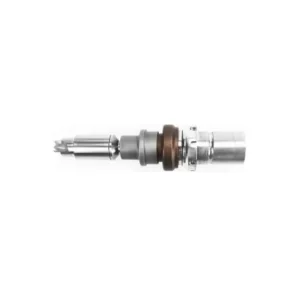
Engineered to DIN 13972 accuracy benchmarks and validated for over 200 steam/EO autoclave cycles with zero transmission degradation.






The convergence of minimally invasive surgery (MIS), global aging demographics, and stringent post-market surveillance under EU MDR (2017/745).
In modern orthopedic surgical interventions—ranging from long-bone open reduction and internal fixation (ORIF) to total hip and knee arthroplasty (THA/TKA)—the bone drilling system is far more than an electromechanical driver; it is a critical interface between medical engineering and human osteology. Cortical bone exhibits anisotropic and viscoelastic properties, meaning mechanical resistance fluctuates dynamically based on bone mineral density, osteoporotic degeneration, and drill point depth.
A central challenge in surgical bone drilling is mitigating thermal osteonecrosis. Extensive clinical literature confirms that cortical bone exposed to temperatures exceeding 47°C for longer than 60 seconds experiences irreversible osteocyte death, enzymatic micro-vascular thrombosis, and secondary implant loosening. As a result, premier OEM bone drilling manufacturers must focus intensively on motor torque curvature, optimized drill flute geometry, automated irrigation clearance, and precision speed attenuation under load. Modern high-torque brushless DC (BLDC) drives provide real-time torque compensation, preventing the drill bit from stalling in dense cortical layers while preventing friction-induced thermal spikes.
The competitive landscape for orthopedic surgical power tools is experiencing structural reorganization. Historically, multinational medical device conglomerates managed power tool assembly entirely in-house. However, intense pressure on public health system budgets, expanding procurement tenders in emerging markets, and stringent requirements under the European Union’s EUDAMED database have driven OEMs and medical distribution leaders toward qualified OEM/ODM contract manufacturers.
Surgical centers now demand toolkits that offer universal modularity. A single handpiece drive platform must seamlessly accept quick-coupling cranial perforator adapters, high-speed burrs, sagittal saw attachments, acetabular reaming chucks, and cannulated drill shafts. For medical brand owners, partnering with a specialized contract manufacturing factory allows them to bring complete surgical tool ecosystems to market in a fraction of the historical time, without absorbing millions in capital expenditure for micro-machining and cleanroom assembly infrastructure.
Accelerating product qualification with advanced Swiss 5-axis CNC machining, micro-gear grinding, and closed-loop ISO Class 7 cleanroom assembly.
The Yangtze River Delta medical device corridor provides a complete, localized ecosystem—from medical-grade 316L stainless steel forging and brushless motor winding to biocompatible silicone overmolding and PEEK insulation.
While European or North American medical device development cycles often extend to 12–18 months for physical handpiece revisions, advanced Chinese engineering facilities compress this process significantly.
Modern Chinese factories operate under ISO 13485:2016 and MDSAP certified Quality Management Systems, with 100% end-of-line functional screening rather than statistical sampling.
Specific torque configurations, speed envelopes, and ergonomic balance tailored across major surgical disciplines.
Cannulated bone drills with hollow-bore drives (diameters 2.0–4.5 mm) accommodate Kirschner wires and guidewires. They deliver controlled torque (3.5–5.5 N·m) at speeds up to 1,200 RPM, ensuring smooth cortical penetration without axial drift.
Acetabular reaming requires low-speed, high-torque output (250–350 RPM with up to 18–22 N·m torque) to shape cancellous bone without thermal necrosis or gear chatter, backed by oscillating saws running at 12,500 cpm for clean bone cuts.
Cranial drilling handpieces feature automatic clutch release mechanisms that stop rotational drive instantly when passing from inner cortical bone into the epidural space, protecting sensitive dural structures.
Featuring 7 mm ultra-thin oscillating saws for MIS-TLIF disc access, alongside high-frequency sternum saws equipped with protective footplates, designed for rapid, stable cuts during emergency sternotomies.
From brushless digital commutation to optical robotic navigation integration and smart autoclave endurance.
Next-generation bone drilling systems are incorporating real-time feedback to detect cortical breakthrough. By measuring motor current draw and back-EMF at millisecond intervals, onboard microprocessors identify the transition from dense cortical bone to soft cancellous tissue or marrow. When resistance drops abruptly, the system can instantly disengage or slow the drive, mitigating soft-tissue wrap injuries and neurovascular compromise.
With robotic-assisted total knee arthroplasty (TKA) and spine pedicle screw placement expanding globally, orthopedic power tool handpieces must interface smoothly with robotic arms. OEM manufacturers now offer customized motor drives featuring optical tracking arrays, balanced center-of-gravity profiles, low electromagnetic interference (EMI) profiles, and open serial protocol communication (e.g., CAN bus, RS485).
| Technical Architecture | Standard Carbon-Brush Drive | Advanced Brushless DC (BLDC) | Next-Gen Sensorized Smart Drive |
|---|---|---|---|
| Motor Commutation | Mechanical Carbon Brushes | 3-Phase Electronic Hall-Sensor | Field-Oriented Control (FOC) Sensorless |
| Thermal Rise (10 min run) | +12°C to +18°C above ambient | +2°C to +4°C (ASTM F2180) | < +2°C Controlled Closed-Loop |
| Autoclave Endurance | 50 – 80 Cycles typical | 200+ Steam / Plasma Cycles | 300+ Hermetically Sealed Cycles |
| Navigation Compatibility | Limited (High RF interference) | Open Optical / Passive Array | Direct CAN/UART Robotic Interface |
| Primary Sourcing Fit | Budget tenders, veterinary | Class IIa/IIb hospital standard | Robotic suites, high-end trauma centers |
Essential audit protocols for hospital supply chains, brand licensors, and multinational distributors evaluating OEM factories.
Global procurement requires complete technical files to support local market clearances. OEM manufacturers must provide ready-to-audit dossiers under the following standards:
Distributors require tailored product configurations to align with brand identity and surgeon preferences across regional clinical settings:
Evaluating long-term reliability and total cost of ownership (TCO) beyond initial procurement costs:
Clear, direct answers for biomedical engineers, regulatory affairs managers, and global procurement leads.
Brushless DC (BLDC) motors use electronic switching rather than mechanical carbon brushes. This removes internal carbon particle shedding during surgery, increases energy efficiency, reduces thermal buildup (verified to ASTM F2180), and delivers consistent torque without mechanical wear over hundreds of autoclave cycles.
Thermal osteonecrosis is managed through several engineering controls: high-torque motors that maintain steady RPM without bogging down, precision-ground drill bits that cut cleanly, optimized internal heat dissipation channels, and integrated ports for saline irrigation along the cutting zone.
Yes. Leading tier-one medical power tool factories operate under ISO 13485:2016 quality systems and provide technical documentation aligned with EU-MDR 2017/745 Class IIa/IIb requirements, including biocompatibility reports, sterilization validations, and clinical evaluation files.
Instruments are engineered for standard 134°C pre-vacuum steam autoclave cycles (2.0–2.2 bar) in line with ISO 17665. They are also fully compatible with Ethylene Oxide (EO) gas and low-temperature hydrogen peroxide gas plasma sterilization methods.
For private-label branding on established platform architectures, lead times typically run 3 to 4 weeks. For custom ODM projects involving new handpiece geometries, unique gearbox ratios, or specialized couplings, functional prototypes are delivered within 4 to 6 weeks, with full production validation following tool qualification.
Sealing integrity relies on medical-grade fluorosilicone O-rings, dynamic spring-energized PTFE lip seals, and laser-welded stainless steel motor cans. Every production batch undergoes IPX8 pressure immersion tests and helium leak detection to verify long-term resistance to high-pressure steam ingress.
Yes. Quick-coupling chuck designs accommodate industry-standard connection formats—including AO Quick Coupling, Hudson, modified Trinkle, Jacobs taper, and standard quick-attach oscillating saw blades—ensuring broad cross-compatibility with hospital inventory.
Initial pilot runs for private labeling typically start as low as 5 to 10 system sets to support clinical trials and local regulatory submissions. Standard production contracts are sized flexibly to match partner distribution schedules.
Complete surgical tool solutions for joint reconstruction, trauma stabilization, and cardiothoracic procedures.






