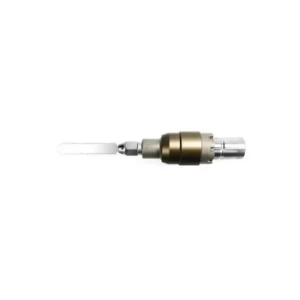
Engineered for sub-millimeter surgical accuracy, thermal osteonecrosis suppression, and long-term reprocessing resilience across neurosurgical and orthopedic operating theaters.








Analyzing procurement cycles, epidemiologic drivers, transition bottlenecks, and regulatory landscapes shaping craniotomy motor system adoption worldwide.
The global craniotomy drill machine marketplace is undergoing rapid structural transformation driven by an escalating prevalence of traumatic brain injuries (TBI), intracranial oncological resections, and complex neurovascular bypasses. With over 69 million individuals sustaining a TBI annually worldwide, acute decompression workflows demand high-reliability, instant-response surgical power systems. Simultaneously, the expanding geriatric cohort is accelerating elective cranial base approaches, microvascular decompressions, and deep-brain stimulation (DBS) burr-hole formations across tertiary neurosurgical units.
Historically, pneumatic cranial perforators dominated neuro-trauma theaters due to high stall torque and baseline mechanical simplicity. However, contemporary hospital infrastructure is moving aggressively away from centralized compressed medical air pipelines due to massive operational overhead, pneumatic hose drag, and micro-droplet contamination risks. Next-generation Brushless DC (BLDC) motors offer superior torque-to-weight ratios, fully programmable acceleration profiles, closed-loop thermal monitoring, and silent operating noise under 62 dB(A), ensuring surgeon comfort during ten-hour skull-base resections.
| Performance Vector | Pneumatic Systems (Legacy) | Standard Carbon-Brush Electric | Advanced SNK Brushless Electric (OEM) |
|---|---|---|---|
| Rotational Speed Range | 20,000 – 40,000 RPM (Variable under load) | 10,000 – 14,000 RPM (Subject to brush wear) | 500 – 80,000 RPM (Continuously Configurable) |
| Torque Stability & Deviation | ±8.5% (Air line pressure fluctuation) | ±4.2% (Brush resistance drop) | < ±1.5% (Microcontroller Closed-Loop) |
| Reprocessing Durability (134°C Steam) | Moderate (O-ring drying, vane seizure) | Low (Carbon particulate fouling) | Superior (200+ Validated Autoclave Cycles) |
| Dural Safety Disengagement | Purely Mechanical (Spring-loaded slip) | Manual Clutch Integration | Dual-Action Auto-Stop Sensor + Clutch Disengage |
| Infrastructure Dependency | Requires Dedicated 6–7 Bar Air Compressors | Standard AC Outlet / Heavy Console | Universal Smart Battery + Multi-Voltage Smart Station |
Examining the critical biomechanical failure points during skull penetration and the engineering countermeasures ensuring immediate mechanical disengagement.
The single most dangerous moment in neurosurgical access is the transition between the inner skull table (lamina interna) and the underlying dura mater. Our OEM craniotomy perforator chuck incorporates an ultra-sensitive axial load-sensing drive clutch. The inner drill tip senses axial bone resistance. The moment the inner bit penetrates the inner table and counter-pressure drops below 4.5 N, the drive springs instantly uncouple the rotational pin in less than 12 milliseconds, arresting forward rotation even if the surgeon maintains axial pressure.
Bone tissue necrosis occurs rapidly if intraosseous temperature exceeds 47°C for more than 60 seconds. Our custom OEM cranial mill cutters and perforator drill flutes are machined using 5-axis Swiss CNC profiling with variable-pitch rake angles. This specialized geometry expedites bone chip evacuation (marrow clearing), dramatically diminishing frictional resistance. Combined with high-efficiency motor controllers that limit housing heat rise to < 2.5°C above ambient, the risk of non-union or post-operative bone flap necrosis is statistically eliminated.
Repeated autoclave cycles at 134°C and 2.2 bar pressure cause microscopic vapor penetration in conventional handpieces, leading to short-circuited stators and bearing pitting. Our OEM surgical handpieces leverage medical-grade titanium and 316L stainless steel enclosures sealed with custom fluoroelastomer micro-gaskets and laser hermetic micro-welding. Bearing assemblies feature silicon-nitride ceramic balls (Si3N4) lubricated with perfluoropolyether (PFPE) grease, ensuring absolute zero bearing play (<0.03 mm radial deviation) across over 200 sterilization cycles.
Optimizing neurosurgical power system configurations to match local surgical team demands, infrastructural limitations, and varying procedural complexities.
In acute subdural or epidural hematoma emergencies, minutes dictate cerebral viability. The SNK OEM rapid-response burr-hole kit features an instant quick-connect perforator chuck and pre-calibrated torque parameters, enabling emergency surgical teams to achieve decompression in under 4 minutes. With integrated single-use or reusable sterile perforator bits, surgical preparation times drop by 35% compared to multi-console configurations.
Skull base approaches such as expanded endonasal or retrosigmoid craniotomies demand extremely slender, high-speed milling tools (up to 80,000 RPM) capable of working in narrow surgical corridors without obstructing the operating microscope or neuro-endoscope. Our extended-shaft cranial milling handpieces offer vibration-free maneuverability, internal cooling fluid lines, and micro-flute burs designed for delicate petrous bone carving.
Healthcare facilities across developing regions frequently face fluctuating mains voltages and inconsistent autoclave access. SNK delivers robust, dual-voltage battery-powered craniotomy platforms compatible with both high-pressure steam and cold ethylene oxide (EO) sterilization. The optional carbon-brush motor platform provides a durable, cost-effective alternative with simple modular maintenance protocols that require no cleanroom servicing.
Bridging traditional mechanical drills with active sensing, optical surgical navigation telemetry, and intelligent real-time robotic integration.
Incorporating ultra-high-frequency piezoelectric sensors inside the handpiece head. The embedded microcontroller analyzes bone cutting sound waves and torsional density curves, automatically adjusting motor speed to prevent dural burns and alerting the clinician via tactile haptic pulses when approaching diploic marrow.
Standardizing universal optical navigation tracker mounts and passive tracking arrays directly onto the craniotomy handpiece chassis. Firmware interoperability with leading surgical navigation suites permits automatic motor cut-off (geo-fencing) if the drill tip crosses preoperative MRI/CT boundaries near venous sinuses or carotid structures.
RFID and Bluetooth Low Energy (BLE) micro-transponders integrated into the titanium drill casing. Sterilization Central Sterile Services Departments (CSSD) can automatically log autoclave cycle counts, thermal peaks, and motor run-time hours via wireless readers, scheduling preventive bearing replacements prior to procedural failures.
End-to-end medical device manufacturing infrastructure designed to de-risk market expansion for global neurosurgical brands and regional distributors.
Operating 16 automated high-precision production lines, 5-axis Swiss-type turning centers, and wire EDM technology. Every handpiece component is produced within sub-micron tolerances. Final motor assembly, ultrasonic degreasing, and sterile packaging are conducted inside ISO 14644-1 Class 7 cleanrooms to prevent pyrogenic particulate contamination.
Navigating regulatory scrutiny is the primary barrier for medical equipment distributors. SNK provides full technical dossier support: biocompatibility data per ISO 10993, electrical safety validation under IEC 60601-1, EMC test certifications per IEC 60601-1-2, and usability engineering documentation under IEC 62366, accelerating domestic registrations.
Offering comprehensive private labeling programs with lead times of only 3 weeks from approved technical drawings to finished units. We support custom torque curves, exterior ergonomic surface anodization, personalized brand laser markings, bespoke silicone molded transport trays, and localized Instructions for Use (IFU) in over 18 languages.
In-depth engineering answers addressing compliance, sterilization regimens, motor architectures, and global supply logistics.
The safety auto-stop mechanism operates via a dual-action concentric clutch. When cutting through bone, the axial load forces the inner pilot drill to engage the outer cutting blade. The instant the inner cutter pierces the internal lamina of the cranium and contacts pliable dural tissue, axial counter-pressure vanishes (< 4.5 N). The internal spring system instantly drives the drive pins out of engagement within 12 ms, arresting rotation while the motor winds down safely.
Brushless DC (BLDC) motors eliminate mechanical commutators and carbon friction. This provides four crucial clinical benefits: zero carbon particulate emissions in sterile fields, an operating temperature reduction of up to 40% (preventing thermal osteonecrosis), virtually silent acoustic profiles during extended microneurosurgical procedures, and complete immunity to repeated high-temperature autoclave degradation.
Our cranial and orthopedic manufacturing systems are fully audited and certified under EU-MDR (EU) 2017/745 (Class IIa and IIb medical devices), ISO 13485:2016 Medical Device Quality Management Systems, and MDSAP (Medical Device Single Audit Program). Device dossiers are fully traceable via the EUDAMED portal, and Free Sale Certificates (FSC) are available across 21 global jurisdictions.
Our handpieces are validated for moist heat steam autoclaving (134°C / 273°F for a 4–18 minute cycle at 2.2 bar) as well as Ethylene Oxide (EO) and low-temperature hydrogen peroxide gas plasma sterilization. With our hermetic titanium sealing, gearboxes and brushless stators endure over 200 high-temperature sterilization cycles without mechanical degradation or loss of torque accuracy.
Yes. As a pure OEM/ODM developer, we customize speed parameters from 500 RPM (for sensitive cannulated drilling) to 80,000 RPM (for high-speed cranial base milling). We offer bespoke coupling adaptors compatible with Hudson, Stryker-style, Aesculap-style, or custom proprietary quick-connect latches.
Standard OEM private label programs require approximately 3 weeks from technical validation to dispatch. For customized mechanical chassis or novel adapter coupling development, prototype delivery is achieved within 25 working days, supported by complete 3D CAD modeling, dynamic torque bench testing, and ISO 10993 biocompatibility test files.
Explore specialized modular attachments, high-frequency cutting saws, and precision micro-motors complementing our craniotomy and orthopedic drilling lineup.